Follow Us on Google
Title: The Dual Heritage of a Corporate Czar
Author: Onyekwere Okpara, Ezechi Onyerionwu, and Jensen Okereke.Publisher: PKraft Books, Ibadan, 2024
Pagination: 268
Reviewer: Onwuchekwa Jemie
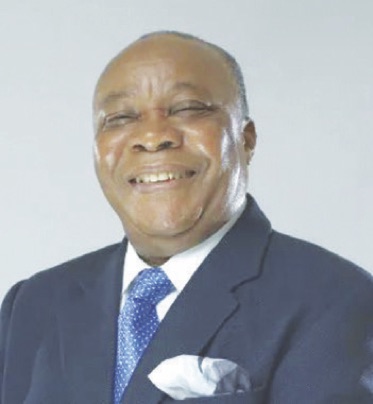
Emmanuel Akwari Ukpabi: The Dual Heritage of a Corporate Czar is a biographical account of the exemplary career of the man, Emmanuel Akwari Ukpabi, and of Flour Mills of Nigeria, Plc, which he helped to construct and consolidate into the industrial colossus it became.
Flour Mills of Nigeria was born just a few hours before Nigeria itself was born as an independent nation on 1st October 1960. The three brilliant young authors of this biography may not have so intended, but their work provides the sensitive reader many “lessons learned” and a chance to compare and contrast the “twins” (Flour Mills, and Nigeria) in the progress they have made in their 65 years of coexistence.
The biography is deep, detailed and comprehensive. Especially pleasing is the steady, consistent middle-learned idiom in which it is written—with no hint of flamboyance, and no excess of the lingo of the trade they are discussing. Most befitting, certainly, of the man Ukpabi, who (to a fault, some might say) is fastidiously unassuming, straight-spoken, simple, and confident.
Ukpabi spent 50 unbroken years in Flour Mills of Nigeria. He entered as a Management Trainee in February 1972; spent years as Manager of one Division after another, Director of one Service after another, sometimes with diverse responsibilities piled one on top of the other. Through it all, he was recognized both by his colleagues and by the Owners of the company as a thorough-going professional, knowledgeable in every aspect of the company’s business, efficient, impeccable, dependable and trustworthy. When the date came to select a new top Manager of the company—the Group Managing Director/Chief Executive Officer—no one should have been surprised that Ukpabi was the natural choice.
How did he do it? The answer is: Discipline. Spine. Stamina. Integrity. Twin commitment to the company’s success and the employees’ well-being. No greed. No reaching for corrupt ways to enrich himself. Just a single-minded determination to operate by the system and rules laid out by the Managers (himself included) and endorsed by Greek-American Founder/Chairman George Stravos Coumantaros.
Ukpabi is a man who went through ups and downs that might have destroyed many. He started life as a village boy who “had everything”—thanks to his elder brothers who were making good in the commercial city of Aba. Then, suddenly, everything crashed: the brothers lost all their goods through an overnight burglary, and it took them years to get back on their feet. Ukpabi was just lucky to complete primary school; but getting to secondary school proved to be a mountain too high.
By the time he managed to secure help from his maternal uncle, he had fallen three or four years behind his classmates. Starting late in the school recruiting season, he was just lucky to slip into West African People’s Institute (WAPI) in Calabar. After a year he transferred to the better established Holy Family College in Abak (now Akwa Ibom State). Then, for his A-Levels he went to St. Patrick’s College, Calabar.
The man who nearly missed secondary school received, in the end, a sound education in the best schools. His academic record was exceptional, as always; and he went on to the University of Ibadan for a degree in Chemistry. However, by the end of his first year at Ibadan, his progress was interrupted once again—this time by the civil war. He was lucky to run home safely—home to the destruction and death that was everywhere in the South East.
Thirty months later, when the war ended in January 1970, Ukpabi straggled out from the forests, alongside his fellow villagers, owning nothing but the rags over his bones. Then he returned to school—this time to University of Nigeria, Nsukka.
Two years later, now given the life-changing opportunity at Flour Mills, it makes sense that a man like that might have a voracious appetite for work. Great, but not enough. Ukpabi also had a high intelligence, and common sense. First of all, in his years as Manager and Director he enshrined “team work” and “collective leadership” in his work ethic. No “one-man show” or “lone ranger” for him. Ukpabi routinely and consistently consulted “everyone,” listened to views and complaints of subordinates, and sought the input of colleagues above and below him, so that every policy, every initiative was thereby balanced and enriched. The man had greatness in him; and his Chi guided and prodded him to mold and bring out his greatness.
Most importantly, in all his decades as Manager and Director, Ukpabi made a habit of keeping Founder/Chairman Coumantaros fully informed, especially if he was out of Nigeria—fully informed of each and every step taken in any project or policy. That way, the Chairman participated in the planning and execution of every act—as actively as if he sat in Lagos the entire time. Which means that Coumantaros gave nothing but “fully informed consent” to everything the company did, and was in fact a co-architect with his managers of the company’s many successes as well as its few failures.
In Ukpabi’s eleven years as Group Managing Director, followed by his nine years as Vice-Chairman —during which years Ukpabi undertook and accomplished an enormous program of merging, acquisition and expansion that put finishing touches to the Conglomerate which Flour Mills of Nigeria has become—Ukpabi briefed his absent Chairman by phone twice every day, morning and evening. The tenacity of it is rare in corporate governance anywhere. Some might wave it aside as “silly” or “unnatural”; but the pure common sense of it is unimpeachable. And more than anything else, it is probably the ultimate secret of Ukpabi’s overwhelming success.
Three Happy Cheers, my good friend!!! I hope you will arrange to deliver a series of Webinars on Corporate Governance for the benefit of our up and coming youth.
************
*Professor Onwuchekwa Jemie was the founding Editorial Page Editor of The Guardian newspaper. He was also Editor-in-Chief of BusinessDay, Nigeria’s leading business and finance daily. Jemie is the author of Langston Hughes: An Introduction to his Poetry (1976); the raucous folklore collection Yo’ Mama!: New Raps, Toasts, Dozens, Jokes & Children’s Rhymes from Urban Black America (2003); and Toward the Decolonisation of African Literature (1980), coauthored with Dr. Chinweizu & Dr. I. Madubuike.