Follow Us on Google
By Merit Ibe
As Nigeria intensifies efforts to increase revenue, the Alliance for Economic Research and Ethics Ltd/GTE (AERE) has stressed the importance of protecting taxpayers and ensuring accountability in tax administration through a strong and effective Tax Ombud.
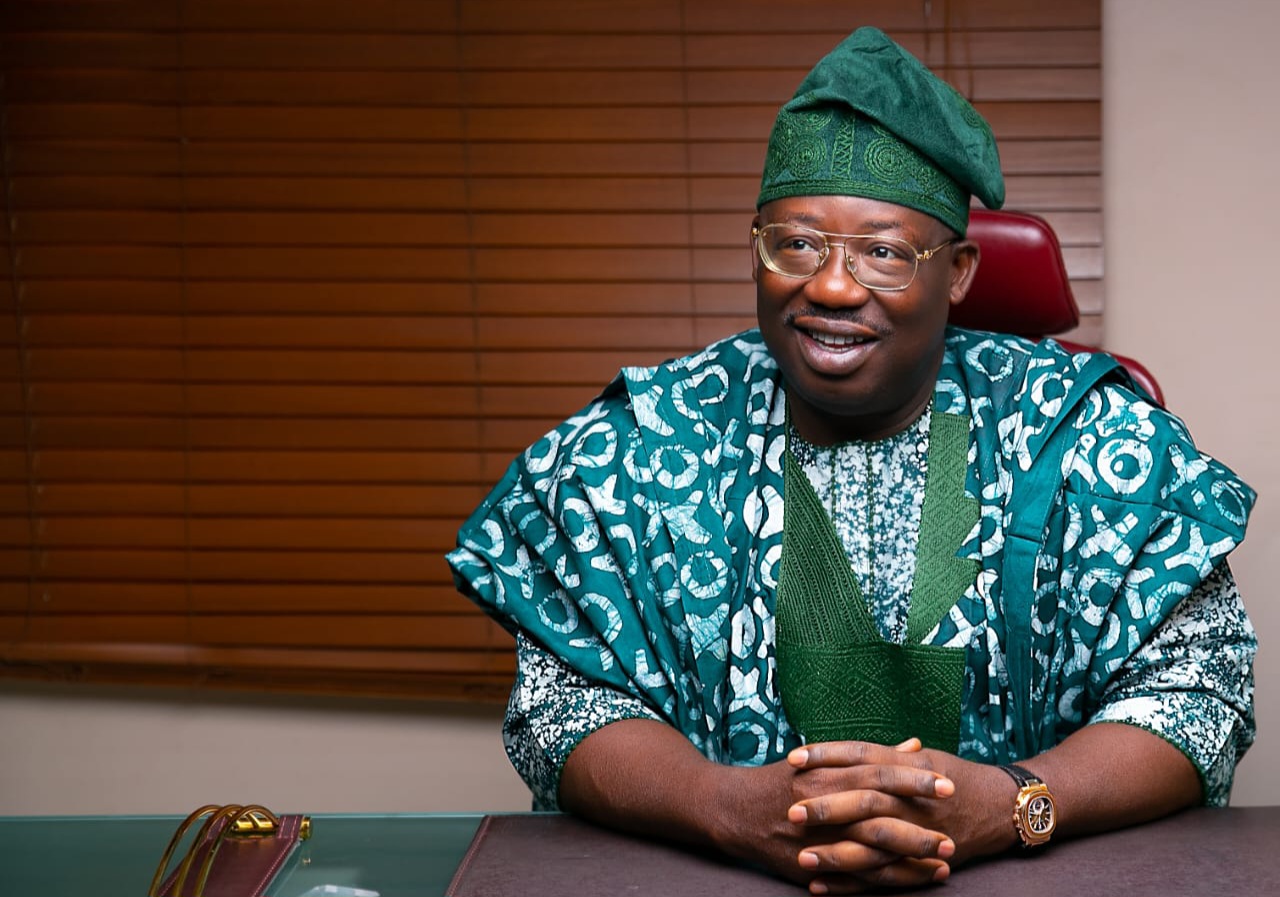
In a policy brief titled “Tax Justice Must Have a Human Face: Why Nigeria’s Tax Ombud Matters in the Age of Digital Assets and Multiple Taxation,” Chairman of AERE, Kelvin Dele-Oye, said taxation could not be sustained by legal authority alone, but also required legitimacy and public confidence in the system.
According to him, taxpayers must have confidence that government will act lawfully, explain its decisions fairly and provide meaningful avenues for redress when tax administration fails.
“Taxation is not sustained by legal power alone. It is sustained by legitimacy—the confidence that the state will act lawfully, explain itself fairly and give citizens a meaningful avenue of redress when administration fails,” he said.
Dele-Oye noted that Nigeria’s tax system was entering a more complex phase, driven by the emergence of digital assets, multiple taxation and growing revenue demands, which were placing increasing pressure on both taxpayers and government.
He said the early activities of Nigeria’s Tax Ombud, Dr. John C. Nwabueze, demonstrated the relevance of the institution, noting that the office had reportedly received more than 20 genuine complaints within three months and resolved eight within the statutory investigation framework, with several complaints involving state revenue services.
He described the figures as more than administrative statistics, saying they demonstrated the importance of giving taxpayers a clear and accessible mechanism for seeking redress.
“A taxpayer who can lodge a complaint, receive a tracking identity and know where a matter stands is treated as a participant in public administration—not as an inconvenience at the gate,” he said.
According to him, the introduction of digital complaints channels, case-management tools, a toll-free call centre and SMS callback services should be viewed as more than technological improvements, but as mechanisms for restoring dignity and accessibility to taxpayers.
Dele-Oye said the growing taxation of virtual assets would further test the capacity of Nigeria’s tax administration and make the role of the Tax Ombud increasingly important.
He noted that guidelines issued by the Nigeria Revenue Service covering virtual-asset registration, reporting, record-keeping, valuation and taxable transactions would bring more businesses and individuals in the digital-asset ecosystem into contact with a technically complex tax system.
He, however, warned that complexity should neither be used as a justification for tax evasion nor become a source of administrative uncertainty.
“New technology must not become a licence for evasion, and new taxation must not become a licence for administrative uncertainty,” he said.
The AERE boss explained that taxpayers facing delayed registration, unexplained penalties, mishandled records, inadequate notices or inconsistent procedures needed an institution capable of examining the quality of the administrative process.
Such a role, he said, fell within the mandate of the Tax Ombud, but must be exercised within clearly defined legal boundaries.
Oye stressed that the Ombud was not a replacement for revenue authorities, the Tax Appeal Tribunal or the courts, explaining that its strength lay in investigating complaints about administrative conduct, facilitating resolution, identifying systemic failures and making recommendations.
Other News
“The strongest ombudsman is not the one that promises to decide everything. It is the one that knows exactly what the law permits, acts firmly within that mandate and uses evidence to persuade the institutions that can deliver lasting change,” he said.
On the issue of multiple taxation, Dele-Oye said many Nigerian businesses, particularly small and medium-sized enterprises, were confronted not with a single tax obligation but with an accumulation of levies, permits, charges and demands from different levels of government.
He said this could create a tax environment that was fragmented and unpredictable.
He cautioned against expecting the Tax Ombud to simply abolish every disputed levy, stressing that tackling multiple taxation required a structured and evidence-based approach.
“Multiple taxation is not solved by rhetoric. It requires a disciplined process of mapping demands, identifying duplication, examining the legal basis of each charge, hearing affected businesses, and bringing federal, state and local actors into the same conversation,” he said.
According to him, the Ombud could play a strategic role by documenting recurring complaints, identifying systemic problems and presenting evidence to institutions capable of changing policies and administrative practices.
Dele-Oye proposed five priorities for the Office of the Tax Ombud.
He urged the office to strengthen public guidance on the distinction between administrative complaints that fall within the Ombud’s mandate and substantive tax disputes that should be taken to the Tax Appeal Tribunal or courts.
He also called for the publication of anonymised quarterly data covering complaints received, sectors affected, types of administrative failures, processing times, recommendations and the status of their implementation.
The AERE chairman further recommended that the office develop specialised expertise in digital-asset complaints, including blockchain evidence, virtual-asset service providers, valuation and cross-border transactions.
He said multiple taxation should also be treated as a national coordination issue, with the Ombud gathering evidence from businesses across sectors and regions and presenting practical solutions to relevant authorities.
Finally, he urged the office to preserve the qualities that make an ombudsman effective, including independence, impartiality, accessibility, restraint and courage.
Dele-Oye acknowledged the need for government to mobilise revenue to provide infrastructure, public services and create the conditions for economic growth.
He, however, maintained that revenue mobilisation and taxpayer protection should not be viewed as competing objectives.
“A taxpayer who understands the rules, can access the administration and receives a fair hearing is more likely to comply than one who experiences the tax system as arbitrary, fragmented or unreachable,” he said.
He stressed that Nigeria needs a tax system that does more than collect revenue, but also commands the confidence of taxpayers.
“For taxpayers, revenue authorities and policymakers alike, that principle should remain the human face of tax justice.”