Follow Us on Google
• Events that shaped education in 2025
From Fred Ezeh, Abuja
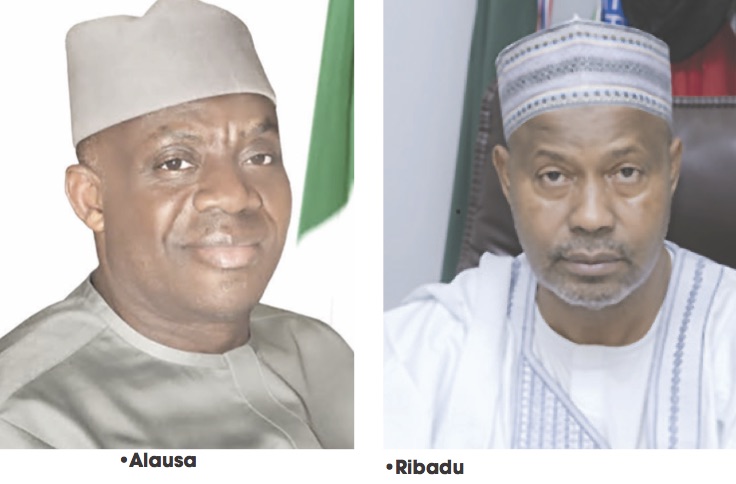
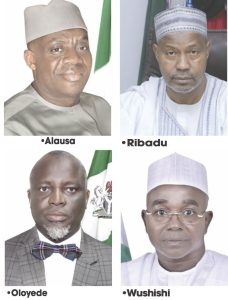
Minister of Education, Dr. Tunji Alausa, took full charge last year, having spent a few months at the “learning curve” the previous year. He was redeployed from the Ministry of Health and Social Welfare in October, 2024.
The sector had its fill of the good, the bad and ugly. It was a year it witnessed some ups and downs. There were multiple cases of industrial actions, attacks on school facilities, abduction of students, and a few other interventions from local and international partners that brought some good tidings.
About 60 per cent of Federal Government Colleges (FGCs) in unsafe locations were shut abruptly following the sudden abduction of over 300 students in a school in Niger State. There was another intelligence report indicating a possible terror attack and abduction which could spark more national outrage.
The sector also witnessed the introduction and implementation of several key policies instrumental to reforms. Some of the policies generated national concerns and reactions. Alausa launched two initiatives, Luminah Girl Child Initiative, and the Broader Quality Education and Learning Outcomes Programme, targeted at addressing out-of-school children and boosting girl-child education. Minister of State for Education, Prof. Suwaiba Ahmed, championed the policy.
The ministry also brought smiles on the faces of students when the minister declared that students in Technical Colleges, Federal and State, would, henceforth, enjoy free education package, including free tuition, accommodation, and feeding, including monthly stipend of N22,500 to students as part of measures to encourage Technical and Vocational Education and Training (TVET).
Alausa also announced an end to pen and paper examination, thus paving the way for the introduction of the Computer-Based Test (CBT) system of examination. The announcement drew national outrage, with parents, teachers and students voicing their opinions and registering their concerns.
In addition, the debate for the minimum admissible year into the tertiary institutions ended at 16 years. The minister said the new decision overrode the 18-year taken at the JAMB Policy Meeting in 2024.
The ministry also announced the reversal of earlier decision on adoption of mother-tongue as language of instruction in schools particularly in basic education system, thus reintroducing English as the main language of teaching and learning.
A new intervention policy, Tertiary Institutions Staff Support Fund (TISSF), was also launched within the year. TISSF designed to offer loan opportunities to staff of government-owned tertiary institutions in Nigeria was also launched in 2024. Surprisingly, the Academic Staff Union of Universities (ASUU) and the National Association of Academic Technologists (NAAT), whose members are the target were conspicuously absent at the launch of the scheme in Abuja.
Alausa said the intervention was not just a welfare package, but a strategic empowerment platform designed to give academic and non-academic staff the financial stability they need to serve the students with renewed dedication, and to live with dignity and pride.
He said TISSF was a joint initiative of the ministry and the TETFund, implemented in partnership with the Bank of Industry (BoI): “It is a zero per cent interest loan scheme aimed at enhancing welfare, supporting career development, and promoting financial independence for staff in Nigerian tertiary institutions.”
Sadly, the academic calendar in the university system was also interrupted, though briefly, by the nationwide industrial action embarked upon by ASUU.
Government announced new guidelines for admission into universities, polytechnics, colleges of education, as well as Innovation Enterprise Academies (IEAs).
For universities, a minimum of five credit passes is required in relevant subjects, including English Language, obtained in not more than two sittings. Mathematics is mandatory for Science, Technology, and Social Science courses.
For polytechnics (ND Level): A minimum of four credit passes is required in relevant subjects, including English Language for non-science courses and Mathematics for science-related programs.
Polytechnics (HND Level): A minimum of five credit passes is required in relevant subjects, including English Language and Mathematics.
For Colleges of Education (NCE Level): A minimum of four credit passes is required in relevant subjects, with English Language mandatory for Arts and Social Science courses, and Mathematics required for Science, Vocational, and Technical programs.
Colleges of Education (B.Ed Level): A minimum of five credit passes, including English Language and Mathematics, as applicable to the course of study.
IEAs will adopt the same minimum requirements as polytechnics for the National Diploma (ND) programme. Meanwhile, the National Innovation Diploma (NID) was abolished. National Industrial Diploma (NID) previously issued by IEAs will be phased out and replaced with the National Diploma (ND) to ensure uniformity, credibility and progression opportunities for graduates.
National Commission for Colleges of Education (NCCE)
NCCE was actively engaged in education policies and programmes in 2025, indicating a clear departure from what was obtained in the past where the officials practically embark on “official slumber.”
Its Executive Secretary of NCCE, Prof. Paulinus Chijioke Okwelle, showed commitment to the cause of sanitising the Colleges of Education (CoEs), ensuring that minimum standard was maintained by all CoE. He digitalised activities at NCCE, as well as other courses that would redefine teacher-training opportunities for the betterment of the basic education system.
National Commission for Mass Literacy, Adult and Non-Formal Education (NMEC)
In 2025, the NMEC became more unavailable in the education sector. It obviously contributed little or nothing to the cause of reforms being championed by the minister. The commission was, unarguably, on top on the list of unproductive commissions in the sector.
Based on investigation, the commission only look forward to every September 8 for the World Literacy Day. Thereafter, it returns to its shell, while workers continue to draw salaries and allowances.
Even in its primary responsibility of mass literacy and adult education, it seems to have failed, as there’s no pointer or data to how many people it has pulled out of illiteracy on monthly or annual basis. Observers suggest NMEC be considered for more productive engagements.
National Board for Technical Education (NBTE)
NBTE is another agency that requires reawakening to their tasks and other responsibilities. As a regulatory body for technical colleges, particularly the polytechnics and IEIs, its weak monitoring system has made it possible for more fraudsters to invade the unprotected space defrauding students through the operation of satellite campuses for polytechnics.
The running of satellite campuses for tertiary institutions was banned in 2019. Yet, the operators are engaging in their fraudulent activities unchecked, allegedly with the aid of some insiders.
At a particular location in Abuja, consultant operates satellite campuses for more than four different institutions, defrauding thousands of innocent students of their fortunes with the promise of “certificates,” including NYSC discharge and/or exemption certificates.
National Education Research And Development Council (NERDC)
NERDC practically went into “official slumber” in 2025. The council is yet to recover from the demise of its Executive Secretary, Prof. Ismail Junaidu, in July 2024, during a meeting of education stakeholders in Yobe State.
President Bola Tinubu appointed Salisu Shehu to replace Junaidu in 2025.
Universal Basic Education Commission (UBEC)
In 2025, UBEC led by Hajiya Aisha Garba, made efforts to ensure more states access its intervention funds to invest in their basic education system. UBEC and JICA signed a pact to upgrade schools in Nasarawa, Benue states and FCT. Garba said: “The partnership will create spaces where young minds can thrive in science, technology, mathematics and pre-vocational education, ensuring that girls have continued access to education.”
The commission also championed the cause of smart schools. There were deeper engagements with key stakeholders particularly chairmen of the State Universal Basic Education Board (SUBEB)
Teachers Registration Council Of Nigeria (TRCN)
TRCN continued the campaign for an end to the era of quackery in the teaching profession. In 2025, the Registrar, Dr. Ronke Soyombo, tried to establish herself in the position, having taken over from Prof. Josaih Ajiboye.
However, the council recorded some significant achievements. It continued to sanitise the teaching profession, making it a noble profession that could attract best brains.
It demonstrated that the era of teaching being an all comers’ affair is over and that any teacher found in the classroom must be certified and registered with the council for proper monitoring.
It conducted its routine Professional Qualifying Examination (PQE) for thousands of already practising teachers across the country. Similarly, PQE was conducted for graduate-teachers in schools, a gateway to their registration and certification.
Other News
National Library of Nigeria (NLN)
In 2025, the NLN launched a five-year (2025–2030) strategic plan representing its journey of fostering literacy, education, research, cultural preservation and access to knowledge.
National Librarian and Chief Executive Officer, NLN, Prof. Chinwe Anunobi, said the strategic objectives include digital transformation of library services to enhance accessibility and efficiency through digital platforms and cutting-edge technologies; digitizing and curating Nigeria’s rich cultural heritage for global access and future generations; and promoting a reading culture, research activities, digital literacy, and dynamic learning experiences across all demographics.
Other objectives include the establishment of innovative funding models and fostering partnerships to ensure operational and financial resilience; as well as strengthening governance, workforce capabilities, and stakeholder engagement for long-term success.
She said: “Every department is expected to engage, or might have already started engaging, in activities that will ensure the realization of the goals. As we do so, our eyes must remain fixed on innovation, youth engagement, and reaching the unreached.”
She is expected to complete her five-year tenure this year.
National Business And Technical Examinations Board (NABTEB)
Not much was heard from NABTEB in 2025. However, it was gathered that it conducted its different NABTEB examinations successfully.
National Commission For Nomadic Education (NCNC)
Executive Secretary, NCNE, Prof. Bashir Usman, made some achievements geared towards promoting peaceful co-existence among farmers/herders.
With the launch of Federal Ministry of Livestock Development, some observers have suggested that NCNE work closely with the ministry of ensure collective result that would guarantee peaceful co-existence among farmers/herders, as well as growing the value chain of livestock.
National Commission For Almajiri and Out-Of-School Children
The commission was established to tackle the menace of almajiri and out-of-school children. Sadly, it is still struggling to meet the target even though it claimed it made some progress.
Nigeria Education Loan Fund (NELFUND)
Its months of sensitization in institutions began to yield positive result in 2025. Data obtained indicated that over 1.3 million applications were received from inception, while over 860,000 students benefited from the loan scheme.
As at end of December 2025, N89.9billion was disbursed as tuition fees for students in 263 beneficiary institutions. Over N72billion was disbursed as upkeep for the eligible students, while over N161.9billion was the total loan disbursed.
National Examination Council (NECO)
NECO piloted the Computer-Based Test (CBT) examination system for its candidates to herald the end of the paper and pen system of examination and the beginning of the CBT era.
It also developed a digital platform, e-verify, that simplified the verification and confirmation of candidates’ results. The online result verification solution guarantees instant authentication of academic and basic information about prospective candidates for admission and employment into academic institutions and work places respectively.
NECO established a new examination centre in London, United Kingdom, to expand its global presence. It accredited schools in Burkina Faso to participate in the Senior School Certificate Examination (SSCE) and the Basic Education Certificate Examination (BECE) in the country. This was in addition to the existing centres in Togo, Benin Republic, Niger Republic, Equatorial Guinea, Cote’d Ivoire and Saudi Arabia.
National Universities Commission (NUC)
NUC issued a few provisional licenses to state governments and private individuals to operate new universities. Benue State was granted a licence to establish and operate Benue State University of Agriculture, Science and Technology (BUSAST), becoming the second state-owned university, and located at Ihugh, Vandeikaya Local Government area.
Ebonyi State also got a licence to operate Ebonyi State University of Aeronautics and Aerospace Engineering, Ezza. It is in addition to Ebonyi State University, Abakaliki; Ebonyi State University of ICT, Science and Technology, Oferekpe Agbaja, Izzi LG.
Imo State was given licence to operate its fourth state university, the University of Innovation, Science and Technology, Omuma, Imo State.
NUC issued provisional licences to 11 private universities. The new universities are; New City University, Ayetoro, Ogun State; University of Fortune, Igbotako, Ondo State; Eranova University, Abuja; Minaret University, Ikirun, Osun State; Abdulrasaq Abubakar Toyin University (AATU), Oke-Ogba, Ganmo, Ilorin, Kwara State and Southern Atlantic University, Uyo, Akwa-Ibom State.
Others: Lens University, Ilemona, Kwara State; Monarch University, Iyesi-Ota, Ogun State; Tonnie Iredia University of Communication, Benin, Edo State; Isaac Balami University of Aeronautics and Management, Lagos and Kevin Eze University, Mgbowo, Enugu state.
NUC uncovered 32 institutions operating doctorate degree mills in Nigeria and beyond. Breakdown of the figure indicated that there are 10 unaccredited foreign universities, four unlicensed local universities, 15 professional bodies with no degree-awarding powers, and three other non-degree awarding institutions.
Its Executive Secretary, Prof. Abdullahi Yusufu Ribadu, said the award of honorary doctorate degrees is becoming increasingly abused in Nigeria.
Joint Admissions And Matriculation Board (JAMB)
JAMB successfully conducted the 2025 Unified Tertiary Matriculation Examination (UTME) for nearly two million candidates with lots of challenges particularly as it concerns examination malpractices, while adopting 16 years as the official entry age into tertiary institutions in Nigeria.
A candidate from Anambra State, Christian Chinedu Okeke, with 375 emerged as the best in the 2025 UTME. Ayuba Simon-Peter John from Gombe State with 374 emerged first runner-up, while about five candidates led by Jimoh Abdulmalik Olayinka with 373 from Kwara State emerged second runner-up.
But there was a controversy as JAMB announced that the best candidate has admission fraud related challenge that might affect him in the future.
JAMB Registrar, Prof Isaque Oloyede, said candidate was studying medicine at the University of Nigeria (UNN), Nsukka: “I contacted the Vice-Chancellor, and he stated that the student was in the Faculty of Medicine, but was recently expelled because of poor academic performance. I asked the VC to put the response in writing, but surprisingly, the VC failed to add all he said to me in the letter in response to my request as previously discussed on the phone.”
JAMB also cleared 85 underage candidates (less than 16 by September 2025) for admissions into various tertiary institutions having passed through several screening process as recommended.
Meanwhile, the University Chancellors endorsed 150 as the minimum admissible mark for admission into the university for 2025/2026 admission year. Rectors of the polytechnics endorsed 100 minimum admissible mark for admission into the university for 2025/2026 admission year, while Provosts of Federal Colleges of Education (FCE) also voted for 100 for admission cut-off; while School/Colleges of Nursing voted for 140.
Tertiary Education Trust Fund (TETFUND)
TETFUND led by Sonny Echono developed a comprehensive security master plan for tertiary institutions nationwide in response to the various threats faced by tertiary institutions, including banditry, kidnapping and cyber intrusions. The master plan will enhance threat prevention, detection, and response capabilities.
It built hostels, lecture halls and other digital and physical infrastructure. It also provided CNG buses for enhance transportation in the schools. TETFund established 18 new innovation hubs in tertiary institutions to strengthen research and innovation.
National Secondary Schools Education Commission (NSSEC)
In 2025, NSSEC commenced the “Grow What You Eat ” initiative campaign in Abuja and other strategic locations. At the launch of the campaign at Government Girl’s Secondary School, Dutse, Abuja, Executive Secretary, NSSEC, Dr. Iyela Ajayi, stated that the campaign was designed to reintroduce school farming as a cornerstone of practical learning, food security, and youth empowerment:
“We recognise that preparing our students for the challenges of the 21st century requires more than classroom theory. We must bridge the gap between knowledge and practice. This initiative is our bold step in that direction. “Grow What You Eat” is not just a school project: it is a national intervention. It is a vision of transforming school farms into hubs of agricultural learning, enterprise development, and community service.”
NSSEC challenged state governments to domestic the NSSEC Act so they could stand the chance of accessing financial grants that would be made available soon. It rolled out the National Minimum Standards for Secondary Education with a charge on state governments to implement it for improved academic outcomes.