Follow Us on Google
…Heads to Court of Appeal
From: Godwin Tsa, Abuja
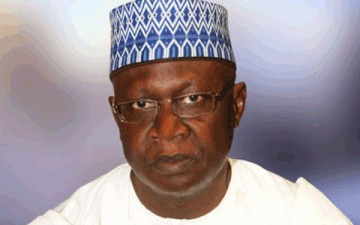
The Chairman of the Code of Conduct Bureau (CCB), Sam Saba and nine other members of the Bureau have asked a Federal High Court to stay the execution of its judgment relating to their tenure of office.
In the said judgment delivered on April 28, 2017, Justice Binta Nyako of the Abuja division of the court held that the five-year tenure of the CCB board expired on April 2015.
But in a swift reaction, the CCB Chairman and nine other board members of the bureau have lodged an appeal asking the Court of Appeal to set it aside.
In a notice of motion filed by Abubakar Mahmoud (SAN), dated May 3, 2017, the applicants asked the court for an order of injunction restraining the Respondents, their Servants, agents, privies, or any other person from effecting the judgment pending the hearing and determination of the appeal.
The motion was supported by a 6-paragraphs affidavit deposed to by Hussaini Hussieni who averred that the applicant is dissatisfied with the judgment and have filed an appeal against it.
That unless an injunction is granted pending the determination of the appeal, the appeal will be rendered nugatory.
Besides the motion for injunction, the applicant have further filed a notice of appeal dated May 2, 2017, asking the appellate court to dismiss the suit.
The notice of appeal rooted on four grounds said the trial judge erred in law in holding that the Chairman and members of the Code of Conduct Bureau have five years tenure.
It is the contention of the appellants that the five year tenure provided by Section 155 of the 1999 Constitution, is a general provisions applicable to Executive bodies.
That Part 1 of the third schedule to the 1999 Constitution provides for a specific tenure until the age of 70 years for the Chairman of the Code of Conduct Bureau.
They further argued that section 1(4) of the Code of Conduct Bureau and Tribunal Act Cap, C15 Law of the Federation of Nigeria 2004, equally provides for tenure until the age of 70 years for the Chairman and members of the Code of Conduct Bureau.
In addition, they posited that the trial judge erred in law in holding that the tenure of office of the current Chairman and members of the Code of Conduct Bureau who were appointed by the President in April 2010 expired in 2015.
The appellants further noted that the Chairman and members of the Code of Conduct Bureau were screened by the Senate and appointed in April 2010 by the President of the Federal Republic of Nigeria and in terms of the provisions of the Constitution and under Part 1, third schedule to the 1999 constitution.
They also contended that at the time of the appointment, the Chairman and members were all above 50 years of age and their tenure expires upon reaching the age of 70 years.
The judgment of Justice Nyako was in respect of a suit marked: FHC/ABJ/CS/411/2016 filed by a group – Kingdom Human Rights Foundation International (KGRFI) led by Okere Nnamdi.
Justice Nyako was of the view that by virtue of section 155 (1) (c) and Paragraph 1, Part 1, Third Schedule of the 1999 Constitution (as amended), Saba and others, all of whom were appointed in 2010, were only entitled to stay in office for five years.
The judge however declined to issue an order compelling the President to remove and replace Saba and the nine other board members, as prayed by the plaintiff.
Rather, she directed the AGF to advise the President on the state of the tenure of members of the CCB board.
Justice Nyako particularly granted the prayer for “a declaration of the honourable court that the tenure of office of the Chairman and nine other members of the Code of Conduct Bureau has elapsed since April 2015; in view of section 155 (1) (c) and Paragraph 1, Part 1, Third Schedule of the 1999 Constitution (as amended).”
The judge granted partially, the two other main reliefs in which the plaintiff sought a declaration that the AGF had failed in his responsibility by not advising the President on the expiration of the tenure of the Chairman and members of the CCB.
Justice Nyako directed the AGF to give the President the needed advice on the issue.
The judge declined to grant the consequential reliefs sought by the plaintiff, seeking orders of mandamus compelling the President to remove and appointment replacement for Saba and others.
Justice Nyako said such reliefs seeking an order of mandamus could only brought under an application for judicial review not under an originating summons as filed in the case.
Justice Nyako also rejected the plaintiff’s the prayer for an order of mandamus directing the Independent Corrupt Practices and other Related Offences Commission and the Economic and Financial Crimes Commission “to immediately arrest, investigate and prosecute the Chairman and nine other members of the CCB” for allegedly perpetuating themselves in office fraudulently.