Follow Us on Google
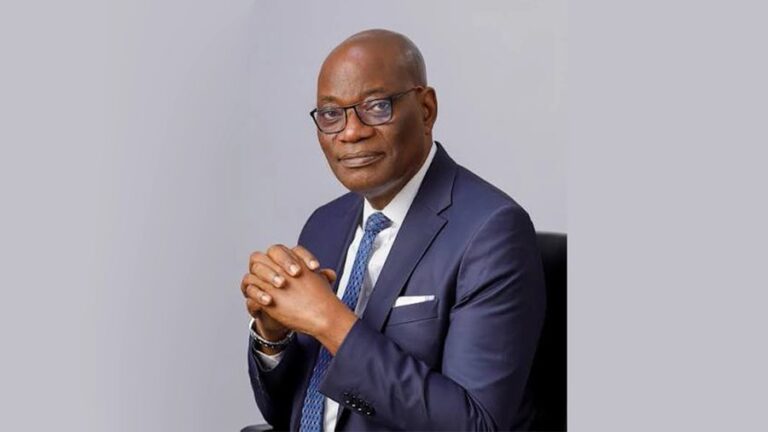
President Bola Tinubu recently appointed former Vice-Chancellor of the University of Lagos (UNILAG), Professor Oluwatoyin Temitayo Ogundipe, as the chairman of the governing board of the National Universities Commission (NUC). He succeeds Emeritus Professor Olufemi Raphael Aina, who resigned his appointment after less than one year in office. Professor Aina was appointed the NUC boss by President Tinubu in July last year, while the board members were inaugurated in November 2025.
Ogundipe, the former Vice-Chancellor of UNILAG from 2017 to 2022, is a Professor of Botany, with expertise in molecular plant taxonomy, biosystematics, forensic botany and ecological conservation. Present Tinubu had enjoined the new NUC boss to provide visionary leadership at the NUC and sustain the credibility of Nigerian university system in line with the administration’s agenda. Expectedly, Ogunde, the Pro-Chancellor of Redeemer’s University, Ede, Osun State, will oversee the regulatory task of the Nigerian university system, focusing on funding, global competitiveness and academic stability.
No doubt, Ogundipe is coming to the job with lots of experience as a distinguished academic and university administrator. He will ensure that the regulatory and other functions of NUC are executed in line with global best practices. He is coming at a time where accreditation of programmes in some universities has allegedly not followed due process.
Nigerian universities are presently burdened by critical systemic challenges, including systemic funding deficits, outdated curricula, erratic academic calendars, and diminishing global competitiveness. The NUC under the watch of Ogundipe should endeavour to restore academic stability, advance quality assurance, and safeguard the institutional integrity of Nigerian universities. The job requires balancing immediate crisis management with long-term structural reforms.
We believe that Ogundipe, as a distinguished botanist and fellow of the Nigerian Academy of Science (FAS), is eminently equipped to reposition the NUC for the tasks ahead. He should also check the undue proliferation of universities in the country. The establishment of new universities has not been matched by production of the much-needed academic staff and adequate manpower to run them. Some of the new universities do not have enough students. Despite calls by patriotic Nigerians for a moratorium on the licensing of new universities, the Federal Government has continued to approve the establishment of new universities by the government, faith institutions and private individuals.
Currently, Nigeria has not less than 312 accredited universities. These include 168 private universities, 77 federal universities and 67 state universities. Apart from the federal and state universities alongside a few private universities, most of these universities are poorly staffed and funded. Quality assurance in some of them may, at times, not conform to acceptable standard. It is also worth pointing out that some state universities are not even adequately funded and equipped.
Other News
To ensure that the 312 universities in the country are adequately equipped, staffed and funded, the NUC under Ogundipe should put on hold the licensing and establishment of new universities until the existing ones are fully developed. The provision of university education should not be seen as a profit-oriented business. Establishment of a university for the sole purpose of making profit will defeat the main aim of establishing a university, which is the promotion of advanced teaching, research, scholarship and manpower development.
The NUC should design and promote regulatory frameworks that incentivise universities to build robust corporate partnerships and commercialise internal research. Enhancing the operational efficiency of the newly introduced student loan scheme is equally critical to ensuring that tuition adjustments do not restrict access for vulnerable demographics. The commission must collaborate closely with the Tertiary Education Trust Fund (TETFund) to prioritise investments in high-impact technological infrastructure over redundant physical construction projects.
The widening gap between university output and global economic demands presents a severe challenge for graduate employability. While the implementation of the Core Curriculum and Minimum Academic Standards (CCMAS) marked a step forward, the rapid evolution of the global digital economy requires continuous adaptation. The NUC must push for a comprehensive review of academic programmes to deeply integrate digital literacy, artificial intelligence, data analytics, and entrepreneurial vocational training across all disciplines.
To elevate Nigerian universities in international rankings, the commission must improve research output and visibility by mandating open-access publication models across federal, state, and private institutions. The commission should also promote cross-border research collaborations between domestic faculties and international partners, and simplify immigration and administrative procedures to attract foreign scholars and diaspora professionals.
Accreditation processes must look beyond physical structures to evaluate actual learning outcomes, peer-reviewed research outputs, and institutional resource-to-student ratios. Furthermore, the commission must aggressively identify and shut down unaccredited satellite campuses and cross-border degree-awarding institutions that damage the prestige of Nigerian certifications.
Preserving the international credibility of local degrees is vital to maintaining the global mobility and competitiveness of Nigerian graduates. The tasks before the new NUC chairman are many but they are surmountable. While congratulating Ogundipe on his new appointment, we wish him a successful tenure.