Follow Us on Google
By Henry Uche, [email protected],
Risk management is one aspect of business that most organisations do not properly pay attention to. Just as Nigeria has been accused of poor maintenance culture, so have professionals in risk and hazards management observed with dismay that ‘Nigeria’s Reactionary Response” to issues relating to risk and hazards, are proof of Nigeria’s poor attitude and approach towards managing probable risk and uncertainties.
Since 2020, Nigeria among the rest of the world has experienced a new wave of challenging economic, political, social, and technological issues that triggered an unimaginable range of risks that have impacted virtually all organizations and this is expected to continue in year 2023 and beyond.
The outbreak of COVID-19 pandemic exposed the weaknesses of many countries including Nigeria in terms of risk and crises management. While countries with strong risk management culture proactively managed the pandemic, countries like Nigeria who were reactive struggled to survive it. Similarly countries that prepare for the “foreseen or unforeseen contingencies” were able to stay strong following the Russian – Ukraine ongoing war, while countries like Nigeria that pay less attention to risk management and have no contingency plans, suffer when others are turning threats to opportunities for progress.
Howbeit, both scenarios mentioned above provided a good feedback for Nigeria to learn proactiveness in risk management and resilience particularly on how to strategically turn challenges to opportunities for growth and development.
Having survived the year 2022, it was expected early in the year that 2023 would be better, however with the presidential election done and partly dusted, there are mixed feelings about the year under review: That of relief, anxiety, muted hopes and uncertainties. Given the precarious state of the country, the risk associated with electioneering demands a great caution to avoid a total collapse or failure of businesses, the economy and country.
Earlier, the international Monetary Fund (IMF) projected that Nigeria’s economy would grow by 3.4 percent in 2022 but decline to 3.1 percent in 2023. Reacting, economic experts have maintained that political activities would be a major trigger for the decline. They believe there are fears that many public officers would be distracted by electioneering activities to the detriment of projects implementation and economic growth.
Though this recurring scenario in many African countries including Nigeria has led to stalled contracts and major projects abandoned, a trend in Nigeria leading up to the polls, hence the need to rethink impact of risk in political period over businesses.
Because political parties would need more money even foreign currencies for campaigns, it means there would be imminent pressure on the value of the naira, thus the country may keep battling with inflation with electioneering as a contributory factor.
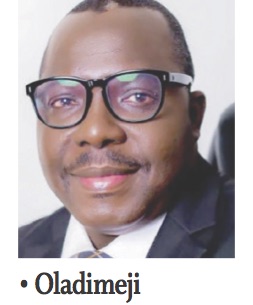
While striving to x-ray the litany of risks associated with the election year and beyond which businesses in Nigeria would likely face, the Deputy General Manager & Head of Risk Management and Compliance, at Sovereign Trust Insurance, Mr. Sanni Oladimeji, in a recent interview expressed worry over the fate of insurance industry among other sectors in a Volatile, Uncertain, Complex and Ambiguous (VUCA) business environment.
According to him, corporate organisations’ ability to establish a customised Enterprise Risk management (ERM) framework (with a view to enable long- term growth and sustained future profitability) would determine their fate both in the short and long run.
Highlighting the the need for effective mitigation strategy to cushion the effects of threats posed majorly by politics, the risk management expert revealed that Ten (10) critical risks (among others) would confront organizations at a time like this.
These risks according to him are: Fiscal and Monetary risk, Foreign Exchange volatility risk, Cyber security risk, customers attrition risk, talent shortage risk, Tech infrastructure risk, Political risk, Regulatory risk, business continuity risk and governance risk.
Since a country’s progress is a function of the viability of its economy, it is important to note that how Nigeria will further decline or grow is dependent on how economic, management and administrative experts from both sectors handle political risks (which gave birth to other forms of risks and has a heavy impact on the economy).
Oladimeji said while executing corporate strategies, risk managers should note that risk could be in form of opportunity, threat and uncertainties which much be understood, measured and effectively managed for the interest of shareholders and stakeholders alike. “We see risk in relation to returns, that’s to say, the greater the risk, the greater the potential return.
“We see risk as the potential for the occurrence of negative events such as financial loss, fraud, damage to reputation or loss of competitive advantage. Therefore we manage the risk by introducing risk management techniques to reduce the probability of these negative events occurring without incurring excessive cost or stifling the initiative, innovative and entrepreneurial flair of our staff.
“As an uncertainty, we see risk as the distribution of all possible outcomes both positive and negative. Then we either by seeking to reduce the variance between anticipated outcome and actual results. For us to be successful in the long run, we must effectively manage all sources of opportunity, threat and uncertainties”
He posited that it’s imperative that business organizations continue to critically subject business decisions to risk considerations and proceed on such decisions only when the risk is considered fair, avoiding unguarded and uncalculated risk to the capital.
One advantage of developing and implementing ERM capabilities he said was that it would continue to protect the company from losses, earning surprises and reputational damage and provide a platform for strengthening governance, decision making and regulatory compliance.
“It is a known fact that foreign investors were often deterred during election periods, either in a risk-averse or risk avoidance posture. Their appetite for investments stalls prior to elections and this reflects a mindset to gauge the outcome of the elections before further investment decisions are made.
“To hold that Nigeria is in a dire strait economically and that its incoming president has an inalienable task to fix it, is an understatement. Besides the electorate expecting an end to challenges of insecurity, they expect a leader with a magic wand to upturn fortunes of the economy, effectively deal with fuel subsidy dilemma, its seemingly intractable power debacle, weak Naira and restore hope, among others,”
He stressed that the incoming president unfortunately shall not enjoy the luxury of time to impress; nor the public patience erstwhile accorded to his predecessors.
“Were the contestants ready for this herculean task? Are they equipped for it and have they the right dose of enthusiasm to grapple with the problems?
“With the parlous state of the nation’s economy, the incoming president would need to convince the electorate on how to overcome challenges of high inflation, rising debts, dwindling revenue, high unemployment, rising insecurity among others. To a discerning mind, this is not the best time to become Nigeria’s president”
Because the environment is VUCA, the incoming president must deal with the subsidy issue and make a decision once and for all. Spending over N4 trillion that the country does not have on subsidies is one of the most expensive populist decisions made by past and current administrations.
“Presently, the next president has more questions than answers. How would he tackle the hydra of insurgency, banditry, terrorism and kidnapping? What measures will the next president take to address the galloping debts, oil revenue shrinkage and freewheeling inflation, leaving these issues unattended leave Nigeria with more risks but exposes the economy to doom.
“How will the next president provide elixir for the health sector and reduce health tourism? What are the plans to address youth unemployment? What is the plan to make Nigeria’s power sector viable and work for all? How will ASUU demands be addressed for good? How will sectional agitations and corruption be tackled? The issues the next president will have to contend with are unending. While no single government can solve Nigeria’s challenges, the time to start was yesterday.
“Nigerians look out to a leader who will lead the country through one of the worst challenging times aggravated by the COVID-19 pandemic, Russia-Ukraine and global crisis. His job will be to work for Nigerians for the Nigeria that they seek”
Brain drain is another kind of business risk that corporate organizations must keep in check. The ‘japa’ syndrome (slang for emigration) has done more harm than good to the quality of the workforce across several sectors. While some may argue that Nigeria is not the only country witnessing the exodus of youths, it should be a source of worry that those emigrating are not doing so because they want to but due to lack of environment conducive for growth. Many Nigerians are even enrolling for postgraduate programmes overseas that they do not need.
Nigerians have heard enough of electricity targets of 30,000 to 40,000MW; they need to experience it. Solving electricity and insecurity problems alone is capable of triggering real growth that can be felt by all and sundry and also taming inflation. Nigerians spend at least 30 to 40 per cent of their incomes and revenues on alternative energy. The risk posed by the duo- inadequate power supply and insecurity in the country is better imagined than experienced.
As Nigeria have a president – elect and about to elect state governors, we hope to hear some elevated thoughts on how elected officials intend to balance national interest, beneficial global presence, the foray of China into Nigeria’s economic space, the imperialistic interest of Europe and dominating spirit of the United States.
For business organisations, it should be noted that baring major external shocks, Nigeria’s economy outlook for 2023 remains fragile on the back of subsisting pressure points: FX Pressure, Inflationary Pressure, Financing the National Budget, et al.
In view of the impact of present volatile, uncertain, complex, ambiguous business environment, the challenge and survival of companies, financial institutions in particular would depend on how they reinvent their products, operations and business models to mitigate key business risks in 2023 and beyond.
Organizations need to adopt and review resilient strategies across the domains of People, Processes and Technology and continuously update their threat response strategies in an evolving, globally connected operating environment.
Managing Key Business Risks to achieve strategic objectives in 2023 and beyond.
Business leaders and other key stakeholders are realizing the benefits of increased investment in how they proactively manage potentially emerging risks. This is done by strengthening their organizations’ processes surrounding the identification, assessment, management, and monitoring of those risks most likely to impact — both positively and negatively — the entity’s strategic success.
They are recognizing the increasing complexities and real-time challenges of navigating emerging risks as they seek to achieve key strategic goals and objectives. Many organizations have embraced the concept of ERM, which is designed to assist the Board and Management to align the Company’s risk appetite to its business strategy, enhance risk response decisions, reduce operational surprises and losses, identify and manage inter -departmental risks, allow for more informed risk decisions and improve capital management.
As the entire world is facing both uncertainty and rapid change, companies risk levels are rising as are the expectations of employees, customers, shareholders, governments, and society at large. Against this backdrop, it is ideal if companies rethink their approach to risk management, to make it a dynamic source of competitive advantage. Beyond today’s travails, a strong risk culture is a critical element to institutional resilience in the face of any challenges.
From a research survey, those organizations that have developed a mature risk culture outperform peers through economic cycles and in the face of challenging external shocks. At the same time, Companies with strong risk cultures are less likely to suffer from self-inflicted wounds in the form of operational mistakes or reputational difficulties and have more engaged and satisfied customers and employees.
Organizations need to adopt and review resilient strategies across the domains of People, Processes and Technology and continuously update their threat response strategies in an evolving, globally connected operating environment.
Digital customer engagement has become the new normal and the insurance firms that would do well in 2023 and beyond are those that have invested appropriately in their Brand equity, Innovation capabilities, Talent management capabilities and Information technology capabilities.
It should be stressed that ERM is not a mere defensive mechanism to minimise financial losses and achieve regulatory compliance but a vehicle for achieving a broader range of benefits, including improvement of processes, projecting the right corporate image, enhancing competitive advantage and market share.