Follow Us on Google
From Noah Ebije, Kaduna
In a media landscape increasingly shaped by viral content, shrinking attention spans and rising insecurity, a simple truth echoed repeatedly in Kaduna recently: a headline can calm a community or set it ablaze
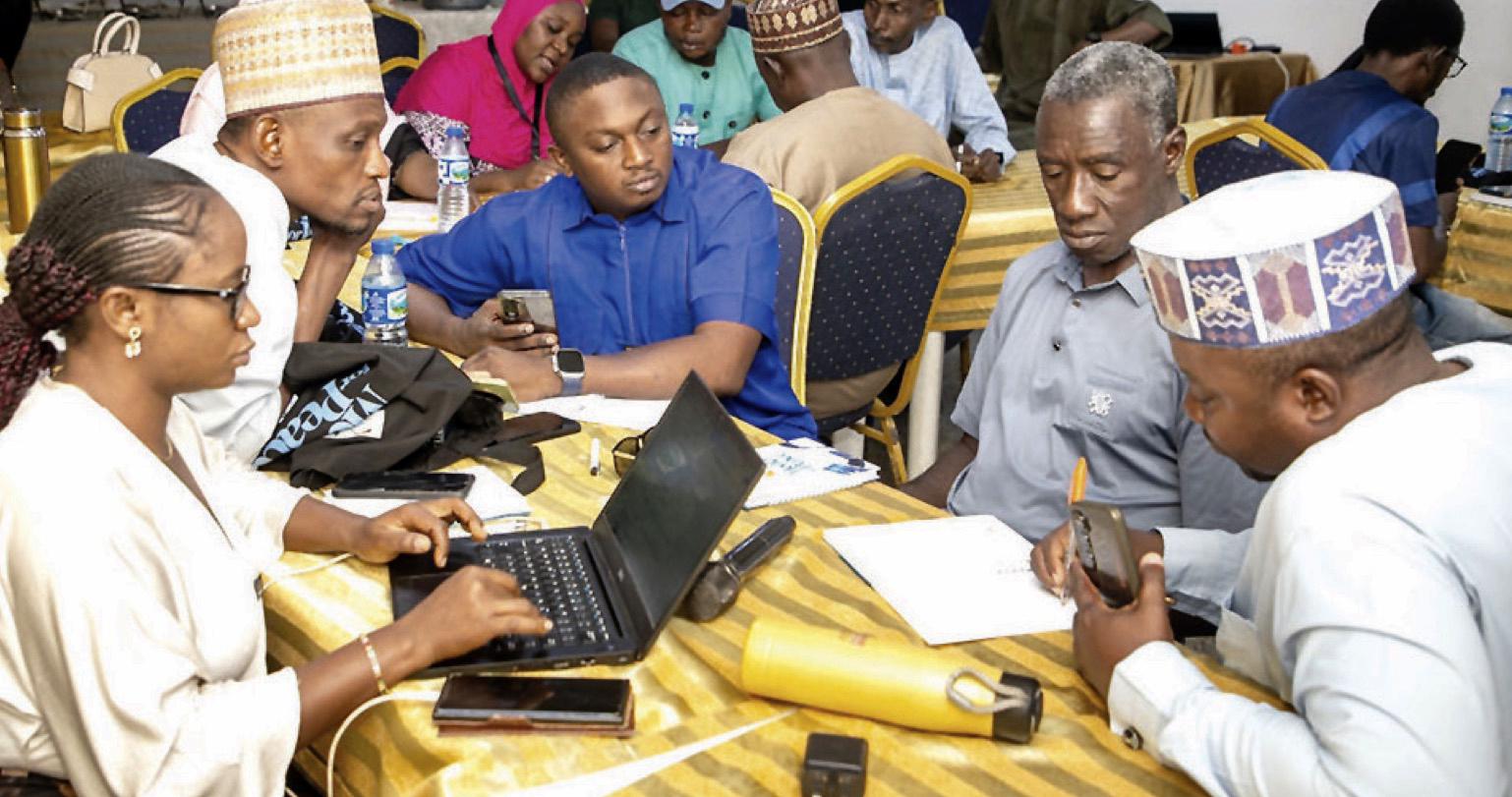
That message formed the backbone of a three-day “Media for Peace” training held from April 20 to 22, 2026, where 60 journalists, bloggers and digital influencers gathered to rethink how stories are told in fragile environments.
The workshop, supported by the German development agency GIZ and implemented by Media in Cooperation and Transition (MICT) alongside the LIDA Network, focused on equipping participants with tools to counter misinformation and report responsibly.
For conflict and security researcher, Murtala Abdullahi, the stakes could not be higher.
He said: “We equipped participants with skills to use digital tools effectively for storytelling and to counter misinformation. But beyond tools, we emphasised the power of language, how a single word choice can either promote social cohesion or deepen divisions.”
That concern about language ran like a thread through the sessions.
Participants were urged to avoid what trainers described as “extreme adjectives,” words such as barbaric or genocidal, unless backed by verified context, warning that such descriptions can inflame tensions, especially in conflict-prone areas.
The training comes at a time when northern Nigeria continues to grapple with complex security and social challenges.
According to Irene David-Arinze, founder of the LIDA Network, the initiative was designed as a direct response to these pressures.
“We want to see how we can leverage the power of the media to douse tension, especially around religious issues and ethnic crises. The media plays a critical role in shaping public perception and can either inflame or reduce conflict, depending on how information is reported,” she said.
She stressed that headlines, often the most widely consumed part of any report, carry disproportionate influence.
David-Arinze added: “Some people only read headlines, so it is important that journalists are responsible in how they tell their stories. We expect more objective and balanced reporting as an outcome of this training.”
Beyond traditional journalism, the workshop acknowledged a shifting information ecosystem where influencers, bloggers and community leaders now act as powerful “gatekeepers of truth.”
Participants called for these actors to be formally integrated into peacebuilding frameworks.
In a communiqué issued at the end of the training, attendees emphasised that misinformation thrives where trust is absent.
Other News
“There is a critical breakdown in communication. Government must move from reactive propaganda to proactive transparency to prevent misinformation from filling the trust void,” the said.
They also urged authorities to go beyond security responses and invest in consistent grassroots communication.
“Government must engage in constant communication to humanise policy and response,” the communiqué stated, adding that delayed investigations often allow rumours to spiral into violence.
“We must advocate for a completion culture where investigations are tracked until resolution.”
Another emerging threat discussed was the rise of Artificial Intelligence (AI) and its potential misuse in spreading disinformation.
Trainers warned that deepfakes and manipulated media could trigger unrest within minutes if left unchecked.
“The AI threat is real,” one session highlighted. “Without the skills to detect manipulated content, journalists risk amplifying falsehoods that can spark communal violence.”
Yet, amid the technical discussions, participants repeatedly returned to the human dimension of conflict. Sessions explored how emotional manipulation, what was described as “outrage marketing,” is used to bypass critical thinking and drive division.
The proposed solution was as much cultural as it was technical.
“We must promote a fact-checking culture where citizens learn to pause before they share,” participants recommended.
They also called for storytelling that “humanises the other,” warning that conflict often thrives on narratives that strip opponents of their humanity.
The training did not shy away from introspection within the media industry itself. Concerns were raised about editorial independence, with participants noting that ownership structures can sometimes shape narratives along political or ethnic lines.
“Journalistic integrity must be prioritised over the owner’s agenda,” the communiqué stressed, cautioning against what it termed “weaponised reporting.”
For many attendees, the workshop was as much about unlearning as it was about acquiring new skills. From early-career bloggers to veteran reporters, the mix of participants created what organisers described as “robust exchanges” on the future of journalism in Nigeria.
David-Arinze acknowledged the challenges journalists face, from political pressure to the speed of digital news cycles, but maintained that ethical reporting remains non-negotiable.
“Journalists must be objective and not one-sided. The way stories are framed can influence how audiences perceive issues,” she said.
As the sessions closed, one idea lingered: peacebuilding is no longer the sole responsibility of governments or security agencies. In an age where information travels faster than ever, the media, down to the very words in a headline has become a frontline actor.
And in places where tensions simmer just beneath the surface, that responsibility may be the difference between conflict and coexistence.