Follow Us on Google
From Taiwo Oluwadare, Ibadan
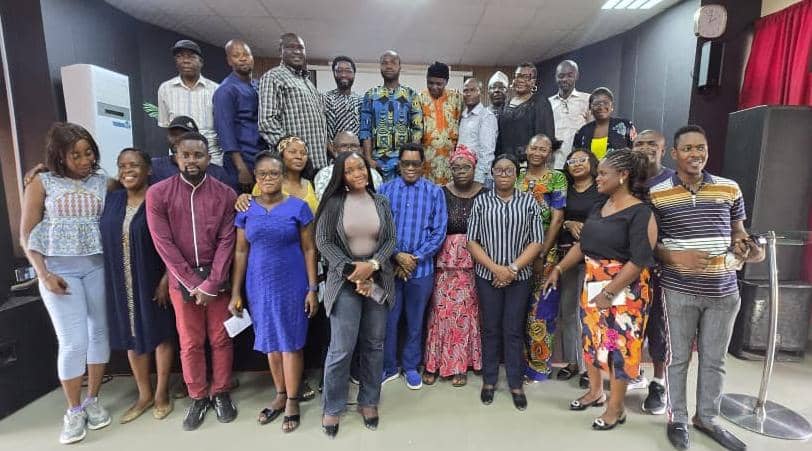
No fewer than 80 journalists in Oyo State have undergone specialised training in automotive reporting, with a strong focus on reducing road accidents through improved public awareness and safety-focused journalism.
The capacity-building programme, organised by the Nigeria Union of Journalists (NUJ), Oyo State Council, in partnership with AutoClinicNG, held on Wednesday at the NUJ Press Centre, Iyaganku, Ibadan.
Participants drawn from various chapels across the state were equipped with practical knowledge and hands-on insights aimed at strengthening their ability to report accurately on the automotive sector and its link to road safety.
Facilitating the session, the Chief Executive Officer of AutoClinicNG, Tunde Onakoya, stressed that effective automotive journalism is critical to reducing preventable accidents on Nigerian roads.
“Automotive reporting should not be seen merely as a beat, but as a critical lens for driving national development and ensuring public safety,” he said.
Onakoya explained that many road crashes in Nigeria are traceable to poor vehicle maintenance, use of substandard spare parts, and lack of accurate information among motorists, issues he said journalists are well-positioned to address.
According to him, well-informed reporting can educate the public on the dangers of fake components, improper repairs, and unregulated practices within the automotive ecosystem.
“When journalists begin to ask the right questions about brake failure, quality of parts, and compliance with safety standards, we can start to reduce the number of avoidable accidents,” he noted.
Other News
He further decried the widespread under-reporting in the automotive sector, urging media practitioners to adopt data-driven and investigative approaches that go beyond surface-level accident reports.
Despite challenges with data availability in Nigeria, Onakoya encouraged journalists to utilise resources from the National Bureau of Statistics and international bodies, alongside grassroots methods such as vox pops and stakeholder engagement.
“Talk to mechanics, spare parts dealers, and regulatory agencies. That is how you build a complete story that can influence behaviour and save lives,” he advised.
The automotive expert also highlighted systemic issues contributing to road accidents, including the proliferation of fake spare parts and poor maintenance culture, largely driven by economic realities.
He noted that addressing these challenges requires sustained public education, an area where the media plays a pivotal role.
Earlier in his welcome address, the Chairman of the Oyo State Council of the NUJ, Akeem Abas, represented by the Vice Chairman, Abiodun Atilola, reaffirmed the union’s commitment to continuous professional development.
Abas described capacity building as central to improving journalistic standards and enhancing the media’s role in promoting public safety.
He added that the turnout at the March training reflects growing interest among journalists in specialised reporting, noting that the council has already surpassed its initial target of training at least 300 journalists within three years.