Follow Us on Google
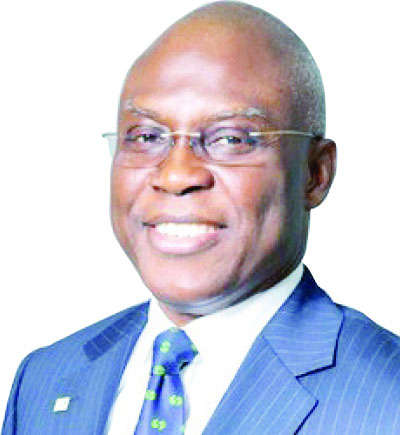

By Enyeribe Ejiogu
Dr Fidelis Akhagboso Ayebae is the chief executive of Fidson Healthcare Plc, which made history when it set up a specialised production line to produce its own brand of anti-retroviral drugs in Ota, Ogun State, at the height of the HIV-AIDS epidemic. The production plant was commissioned by then President Olusegun Obasanjo, who extolled the patriotic drive of Ayebae to put Nigeria on the global ARV map. Fidson Healthcare is about the biggest indigenous pharmaceutical manufacturing and distribution company in Nigeria. It has had to shed its first three-acre plant for one of eight acres, and that one also gave way for the new plant built on sprawling 27 acres of land. In addition to being the Chairman of the Pharmaceutical Manufacturing Group of the Manufacturers Association of Nigeria (PMGMAN), Dr Ayebae presides over the Board of Directors of NEM Insurance Plc. In this interview, he speaks on how the pharmaceutical industry can make a strategic growth into production of active pharmaceutical ingredients (APIs) in the near future.
How would you characterise the way this administration has related to the pharmaceutical industry?
This administration has a responsibility to continue and improve upon the relationship that the pharmaceutical industry had with the Olusegun Obasanjo administration. Before his administration appointed Prof Dora Akunyili (of blessed memory) as the Director General of the National Agency for Food and Drug Administration and Control (NAFDAC), the pharmaceutical industry was a dying industry. Prior to that time, Prof Olikoye Ransome-Kuti had said that the study conducted during his time as Health Minister showed that the prevalence of fake, adulterated and sub-standard drugs circulating in Nigeria at the time was over 70 per cent. Within the tenure of the Obasanjo administration, NAFDAC cleaned up the situation and brought down the presence of fake, adulterated and sub-standard drugs in the Nigerian pharmaceutical market to the barest minimum.
The agency under Dora did not only clean up the supply chain of fake drugs, but she also made sure that all the structures needed for running an enduring and viable pharmaceutical industry were created. It was about that time that Pharmaceutical Manufacturing Group of the Manufacturers Association of Nigeria (PMGMAN) became very prominent. That was also when the Association of Pharmaceutical Importers of Nigeria (APIN) came to the fore in the country; that was when Nigerian Representatives of Overseas Manufacturers (NIROPHARM) got created. It was also during that time that some pharmaceutical products were banned from importation in order to help the local pharmaceutical manufacturing companies, because there was no way they could compete with the imported brands. In essence, the Obasanjo administration did a lot for the health sector. Other administrations that came after it also sought to improve on the achievements recorded under Obasanjo with Akunyili as NAFDAC DG.
The current administration of the Muhammadu Buhari has one of the best relationships with the pharmaceutical industry. One instance that illustrates this is the Coronavirus crisis, which has made it possible for us to revive our vaccine production capacity. The government is doing this through its investment in Biovaccines Nigeria Limited in partnership with May & Baker Plc. This will make local vaccine production bigger and better. It is very commendable that this administration has pushed through the NDDG initiative. The revised NDDG policy has laid the foundation for total revamping and regulation of the drug distribution system. Achieving this would end the menace of fake, substandard and adulterated drugs currently circulating in the country.
Further, President Buhari appointed Prof Mojisola Adeyeye as the incumbent NAFDAC director general, who has sustained the legacies of Dora Akunyili while also taking the agency to a higher level in terms of consistent and transparent regulatory practices. She has taken NAFDAC from a Level 1 to Level 3 regulator, in terms of international accreditation. Without that happening, there is no way we can manufacture vaccines in Nigeria.
What does a Level-3 accreditation entail?
What that means is that the agency is very stringent in regulation; the laboratory operations for evaluation of drug samples undergoing evaluation for regulatory purposes meet global best practices and standards. It also entails that all of your procedure and quality standards are updated and in line with World Health Organisation (WHO) standards.
God bless Prof Adeyeye and protect her for us. By the time her tenure ends, I am sure that she will leave NAFDAC in a much better state than she met it. You see, nobody wants to undermine what the predecessor did; if the person before you was a shining star, you want to be a brighter shining star. Therefore, every DG after Dora has attempted to be better than their predecessor. Before Dora became the DG, the size of the pharmaceutical industry was very small, but today it is very huge, about N300-400 billion in economic size. During Dora’s time it was probably N50 billion. In other words, the Nigerian pharmaceutical industry is more complex than it used to be and Prof Adeyeye has managed the agency well. If you go to NAFDAC today you will be very proud of the directors there. They have their operational vehicles, tools of office and well trained. You have WHO inspectors among them, etc.
So the government has made genuine efforts, however, it must do more for the pharmaceutical industry.
Looking at the needs of the country, what steps need to be taken to get Nigeria to the point where it can produce active pharmaceutical ingredients (APIs) as a strategic national economic security initiative like India and China did?
One of the banes of Nigeria’s development is that we are not paying attention to value creation areas. Even when we were talking about Oil and Gas development, how much was the investment that the Nigerian government making in the sector? Our oil and gas industry is not as developed as the Saudi oil and gas Industry. At a point we stood shoulder to shoulder with these countries. Nigeria was the sixth largest producer of crude oil in the world. What did we do with the money? We messed up the entire value chain, such that we sub-optimised our investment in that area. The consequence of that is that the petrochemical industry is not developed. The refineries we had all became dilapidated. Today, we are extracting crude oil, exporting it and importing refined products. That is an aberration. Are we well? Something is clearly wrong with our head. That same problem is pervasive in other industries, including the pharmaceutical industry. We have a situation where on three occasions diseases have told us that we must develop our API industry. The first time was during the HIV-AIDS epidemic, when India and China shut their doors and didn’t allow us to import. It also happened during the SARS epidemic. And this third time when the COVID-19 pandemic came, they shut their doors again. Today, the entire global supply chain is so badly disrupted that the cost inputs have gone up by 500 per cent and in some cases by 1000 per cent. The global logistics system for shipping is so chaotic such that the cost of hiring a container to bring your goods from India to Lagos, which used to cost about US$2800 has gone up US$12,000 or more. How do you survive? These are costs we would have been able to eliminate from our input cost if we were manufacturers of APIs.
Now back to your question as how our nation can solve the problem, I can tell you that conversations are going on now with the International Finance Corporation (IFC) and African Development Bank (AfDB), which is headed by Dr Akinwunmi Adesina, a Nigerian. The goal is that in the next three years, Nigeria should begin to manufacture APIs from the intermediate level. We will not begin from the primary level. In essence, the problem we have is a peculiar Nigerian disease which is that of sub-optimising in the value chain area. The same thing happened to the cocoa industry; all we were doing with cocoa was to harvest the pods, dry the seeds and export same in the raw state. We didn’t process the seeds into value-added products. It happened with cotton and palm oil. Today Malaysia that got palm seedlings from Nigeria is the world’s largest producer of palm oil. Not just that, Malaysia processes the palm oil into hundreds of primary industrial chemicals for making all kind of products – soaps, detergents, etc. We were just content with bagging the dried cocoa seeds and exporting to countries that turned the cocoa into chocolate, which we then import at high cost to sell in classy malls like Shoprite, Spar and the others. We never bothered to process our cotton into yarn for the manufacture of textiles. Even when we tried to produce textiles in those good old days, we failed to develop the value chain, so everything collapsed.
Nigeria’s biggest drawback is the inability to start something and go through the entire value chain in an efficient and value-creating manner that will ensure that we exhaust all the opportunities that the line provides. For us, oil and gas begins and ends with extracting and exporting crude oil, whereas the huge amounts that could be derived from complete processing of the crude oil into a long list of value-added industrial chemicals and products is inestimable. If we had been producing petrochemical products, our local pharmaceutical industry would have developed long ago. The problem with Nigeria is that we are not laser-focused on getting maximum value out of everything.
When we make a little money, it gets into our head and we begin to live large. If you go the airport, you see all kinds of private jets. Nobody can tell what the owners of those jets produce in the country. Our propensity to live large instead of producing large for an unwieldy population to sustain the population, must be curbed.
Once we curb that propensity for living large, we are positioned to be a great country. But greatness does not come by word of mouth; it comes by thinking out strategies and doing things that lead to greatness. Part of what is scattering everything that we are doing is that you have a civil service that is manned by people who do not have any vision for the economic growth of the country. They give short-sighted advice on public policies that would primarily benefit them first, to the political leadership of the country. In some ministries that are responsible for something, you cannot find a man who can sit with you and the fellow will articulate to you a vision of where Nigeria should be in his area. So, how are they going to come up with progressive policies that will help such areas of the economy to grow? Instead they will come up with policies that will help government collect revenue. Collect revenue from dying people? Industries are dying, companies folding up and you are talking about further taxation. Really, government is still imposing crippling taxation on businesses that are limping in the wake of the COVID-19 pandemic.
Where are the policies that are designed to help the industries to survive and grow and generate the profits that can then be taxed? So, it the same problem that you have mentioned we have with APIs that we have with Oil & Gas. It is the same problem of non-development of the cocoa, cotton and palm oil value chains that has also affected the Hibiscus flower which women use to make local zobo. People just harvest the flower and export it instead of adding that extra value that will give you the real meat in Hibiscus flower.