Follow Us on Google
From Obinna Odogwu, Awka
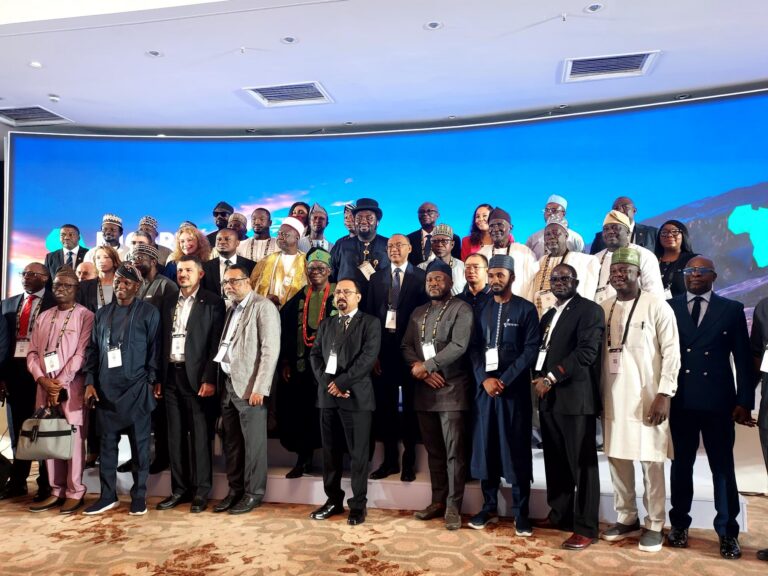
Stakeholders from select civil society organisations (CSOs), media, and the academia gathered in Abuja recently to brainstorm on possible solutions to the myriads of security challenges bedevilling Nigeria.
They came from different parts of the country. From East to West, North to South, each of the country’s six geopolitical zones had a seat in the room. And their task was simple: suggest ways to protect communities from across the federation.
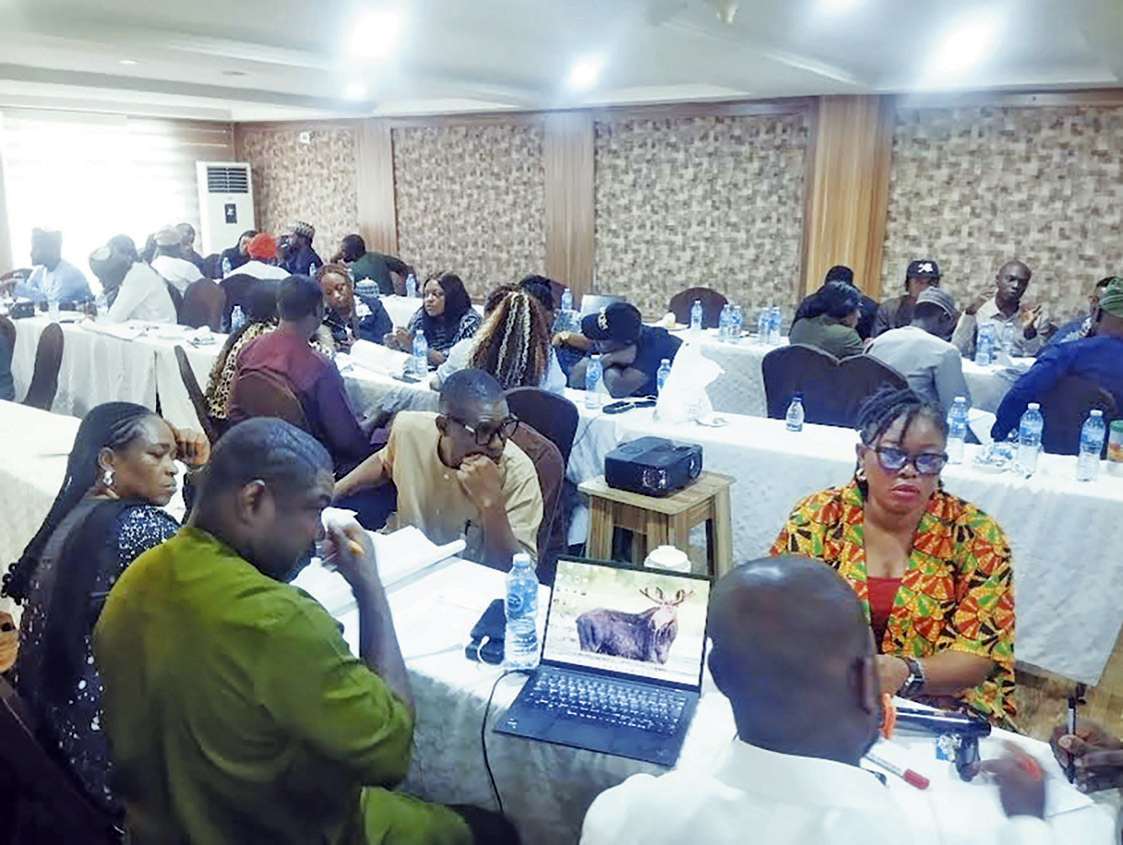
For two days, the participants, alongside the programme’s organisers, reviewed Nigeria’s security issues, and put forward a series of ideas that fits each geopolitical zone.
The gathering, tagged ‘Training for Early Warning Networks and Local Leaders on Conflict Early Warning’, was organised by Global Rights, an international organisation that champions human rights protection, justice, and equality.
Muhammad Ibrahim, Global Rights’ Programme Officer, Security and Human Rights, explained that the organisation decided to come up with the training workshop because of the country’s worsening security situation that required urgent and lasting solutions.
“When you look at Nigeria in the past decade, we have been experiencing different forms of insecurity, ranging from kidnapping, terrorism and what have you,” he stated.
“And if we can remember, go back like 10-15 years ago, you will see that the insecurity started in one region. It wasn’t even categorised as terrorism then. And many Nigerians saw it as a regional issue, as of then, which is the Boko Haram issue in the North East, which started in July 2009.”
Ibrahim argued that the insecurity in the North East escalated to other parts of the country because it was not tackled immediately. He pointed out that every region of the country now suffers different forms of insecurity.
“There are people that are experiencing more killings. Some are experiencing more kidnapping and all that,” he lamented.
He said that every violent crime in the North East region is now being attributed to Boko Haram just as other terror organisations across the country are linked to one violent crime or the other.
“If you go to the Northwest, they tag them as banditry, even though it’s a full-fledged terrorism and kidnapping also. If you come to the North Central, they have the issues of farmer-harder clashes, massive kidnapping, inter-communal clashes, and all that. So it’s like the same in the South.
“If you go to the South, when you look at the South-South, they have the massive issue of kidnapping right from the Niger Delta oil boom days, which has escalated into a major issue at some point before. At least it was tackled a bit by the government at some point.
“Unknown gunmen operate in the South East region. They are unknown gunmen the way the government tagged them. But to me, they are all full-fledged terrorism because they are killing people at will and all that.”
Ibrahim disclosed that Global Rights, with support from Open Society Foundation, decided to bring people from all states of Nigeria, to look at these security issues with a view to proffering lasting solutions to them.
“Every state is represented at this training to ensure that we have a network of local leaders that will be able to predict early warning signs, to understand what early warning signs are, and also how to be able to tackle an issue before it escalates into a full-fledged terrorism that we are dealing with.”
He argued that if the country had an early warning system in place like a decade or so ago, it probably would have prevented the widespread insecurity that is giving Nigerians sleepless nights today.
As expected, a series of topics were treated by experts who showed deep understanding of the subject matter.
Prof. Chris Kwaja, opened the floor by introducing the participants to the concept, purpose, and importance of conflict early warning and early response systems.
The Professor of International Relations and Strategic Studies from the Centre for Peace and Strategic Studies, Modibbo Adama University, explained that the relationship between early warning and early response was central to effective crisis prevention and management.
“Early warning has little practical value unless it leads to timely and appropriate action, while early response depends on the quality and credibility of the warning information,” he explained.
Kwaja defined an early warning system as an integrated system for monitoring, forecasting, communicating warnings, and enabling timely actions that reduce the impacts of conflicts or disasters.
He said that the purpose of early warning was to detect hazards on time, inform decision-makers, enable preparedness, and protect lives and livelihoods.
The professor listed the major challenges to early warning and early response in Nigeria as poor communication infrastructure, limited funding, weak coordination, inadequate community awareness, data gaps, low forecasting coverage, and climate change impacts, among others.
He argued that with better technology, satellite monitoring, mobile phone alerts, artificial intelligence, community engagement, multi-sector collaboration, capacity building, and increased investment, Nigeria could strengthen its early warning actions.
Another resource person, Mr. Laz Apir, while speaking on the topic: Dealing with False Positives: Managing Rumours, Misinformation and Disinformation, noted that in conflict or crisis management, a false positive could be an error from an early warning scan that indicates a threat or its absence, which when verified, turns out unsubstantiated.
Apir warned about the dangers of rumours, misinformation and disinformation, saying that they could lead to a serious breakdown of law and order in any given society if not checked quickly.
Speaking further on the topic, Forensic Evidence Gathering, Documentation and Preservation for Justice and Accountability, Apir encouraged the stakeholders to always gather facts from crime scenes which could be analysed through medical or technological means for the purposes of ensuring accountability.
Other News
He listed out identification, collection, preservation, examination, analysis, and presentation as steps in forensic evidence gathering.
Global Rights’ Programme Manager, Noya Sedi, led an electrifying session with her topic: ‘Essentials of Developing Gender-Sensitive Conflict Early Warning Signs.’
Every participant had one thing or the other to say on the subject matter, especially as they concern safety at the communal level. But at the end, everyone agreed on the key steps that must be taken to improve security.
Sedi, who maintained that gender sensitivity matters, said that early warning systems which often rely on indicators, though useful, could fall short when they fail to ask: ‘who is being affected, and how?’
“Gender is not just about men and women”, she pointed out. “It is about the social roles, power dynamics, and real-life experiences that shape how people feel and respond during conflict.”
Sedi argued that without understanding these dynamics, early warning efforts would be incomplete and most times, ineffective.
“For instance, a sudden drop in women going to the market might not look like a threat on paper. But if we dig deeper, we might find they’re staying home because they’ve been harassed on the road, or because rumours of bandits in the area have started to spread.”
She identified gender blindness and underrepresentation of women as some of the common gaps in conflict early warning systems, lamenting that many systems overlook gender entirely.
“They fail to disaggregate data by sex, don’t track gender-based threats like domestic or sexual violence, and they rarely reflect how women experience insecurity differently.
“As a result, women’s early warnings, such as food scarcity, increased harassment, or withdrawal from public life, are dismissed or not seen as security-related until it is too late”, she stated.
Buttressing her point on women’s underrepresentation, Sedi said that from indicator development to data collection and decision-making, women were often absent.
“Few women are involved in formal monitoring structures. Where women do participate, they are rarely given the authority or resources to influence responses; their knowledge is undervalued, even though they’re often the first to sense that something is off.”
The programme manager made it clear that conflicts’ indicators are not gender-sensitive as most early warning systems track indicators like protests and clashes, without disaggregating how these affect men and women differently.
“For example, a rise in food prices may not be flagged as a security issue, and is only treated as important if it leads to visible disruptions, whereas women are often the first to feel the impact of rising food prices, long before things turn violent.
“A rise in SGBV may go untracked entirely, even though it’s a common prelude to wider conflict”, she said.
She told the participants that what they measure shapes how they respond, arguing that if gender wasn’t in the data, it wouldn’t be in the solution. She stated that responses are not gender-inclusive as even well-meaning interventions can cause harm when gender is not considered.
“For example, there’s an alert that bandits are approaching, and people in a village are told to relocate quickly, but no one thinks about whether the evacuation routes are safe for women.
“That oversight puts women and girls at risk of harassment, sexual violence, or exploitation even though the alert was meant to protect them.
“Or a peace meeting is called with community leaders—but only men are invited, even though women may have critical information or ideas about how to calm tensions.”
Sedi reminded the stakeholders that conflict does not affect everyone the same way, arguing that gender plays a major role in shaping people’s roles, risks, and responses before, during, and after conflict.
“Yet, conflict analysis reduces gender to a narrative of ‘men as fighters’ and ‘women as victims’.”
She pointed out that men and boys are often faced with pressure to protect, fight, or retaliate, or are at higher risk of being killed while women and girls face a heightened risk of sexual and gender-based violence, and that they take on new roles as heads of households, breadwinners, and caregivers.
She stressed the importance of women in identifying risks and indicators, insisting that when gender-specific questions are not asked, one wouldn’t be able to see a rise in sexual violence, increasing restrictions on women’s mobility, and women withdrawing from markets or public life.
“Early warning systems that don’t include women in design, data collection, and response planning fail to benefit from their unique knowledge. Women often notice early changes in community behaviour, food availability, household tensions, and safety of children and girls in public spaces.”
Sedi encouraged community leaders, security operatives, and other stakeholders to develop gender-sensitive early warning indicators that alert conflict risks by showing how women (and men) are affected differently by changes in their environment.
“It recognises that women and men have different roles, vulnerabilities, and coping strategies.”
Meanwhile, the participants were encouraged to step down all that they’ve learned from the training programme to the grassroots with hopes that it would help to prevent attacks on communities if the lessons learned were practiced.