Follow Us on Google

By Kehinde Aderemi
Recently, the Federal Government announced a six-year moratorium on the establishment of new universities, colleges of education and other tertiary institutions in Nigeria.
According to the government, the measure was to strengthen quality assurance and uphold educational standards nationwide.
Minister of Education, Tunji Alausa also expressed optimism that the initiative would curb the unchecked proliferation of higher institutions and foster much-needed improvements in the nation’s education sector.
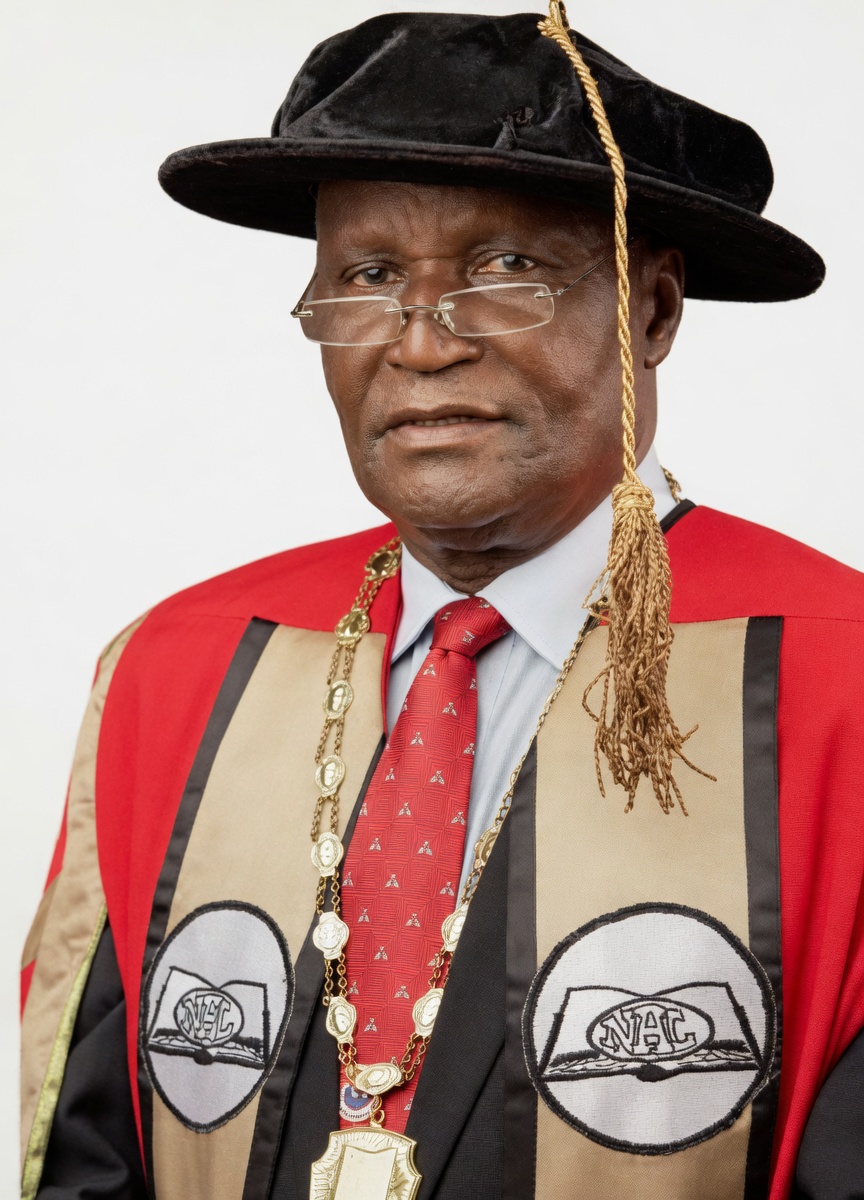
Former Deputy Vice Chancellor of the University of Lagos, Prof. Duro Oni, spoke on the new development.
He said the ban was a welcome development, but stressed the importance of robust quality control in the establishment of tertiary institutions.
Oni noted that if properly managed, the moratorium could prevent the indiscriminate creation of universities while ensuring that existing institutions meet required standards.
He acknowledged that universities often stimulate local development by creating jobs and supporting businesses such as housing, food services, transportation, and bookshops. However, he cautioned that the benefits must not overshadow the pressing challenges facing Nigeria’s education system.
According to the former university lecturer, recruitment of qualified lecturers, provision of adequate infrastructure, and creation of conducive learning environments are important components for the establishment of universities and other tertiary institutions.
He further emphasised that the National Universities Commission (NUC) already has a strong regulatory framework for approving universities. He urged the Federal Ministry of Education to support the NUC in enforcing these guidelines and resist political pressures that compromise standards.
The former DVC criticised the trend of influential individuals establishing universities in their hometowns, likening it to the past craze for setting up banks. He also warned that without strict regulation, the desire to own universities could spread unchecked, undermining quality education.
While acknowledging the developmental benefits of universities, he highlighted the deterioration of learning conditions in many public institutions, where overcrowded classrooms and inadequate staffing remain common.
Oni also insisted that the federal government must enforce clear guidelines for establishing universities, considering administrative, technical, and academic factors.
“The cost of establishing a university cannot be underfunded or managed casually. A multi-campus system with effective communication might be more sustainable than multiplying universities with insufficient resources.
“An outright six-year ban may not be the best solution. For instance, organisations already working toward establishing universities should not be forced to wait unnecessarily.
“However, there is an urgent need to empower the NUC to strictly apply its guidelines, enforce mergers where standards are not met, and thereby prevent the unchecked proliferation of universities in Nigeria”, he stated.
An environmentalist and former lecturer at University of Education,Winneba, Ghana, Professor Kolawole Raheem, said government was right with the ban on the establishment of new universities.
According to him, the ban was an attempt to make sure that the education sector provides quality education and standard.
He stated also that in the developed world, tertiary institutions, including colleges have quality standards with qualified lecturers.
Prof Raheem expressed concern about the state of the Nigerian schools. He added that many of the students that graduated from the Nigerian universities are products of the failed education system.
He pointed out that the situation was not limited to universities or colleges of education alone, noting that many of the primary schools in Nigeria also have the same problem because the nation’s education sector is not well organised,
“Go to any of the basic primary school in Nigeria and you will understand the huge gap in the way we manage the education sector in Nigeria. There is also proliferation of primary schools in the country.
“However, I think there is a need for us to understand the psychology of educating the little children in our primary schools because that is the foundation of the knowledge we are impacting.
“For instance, when basic primary school pupils study in an uncompleted building, will they be comfortable learning whatever they are taught? Education is important, but what do we do when the school system is faulty and the infrastructure decaying?
“In many of the public primary and even higher institutions, there are infrastructure deficits. The tables, chairs are broken and even the classrooms are not conducive for learning. It is not good for primary school pupils aged three and four to be taught in a dilapidated building. It is as if we are grooming vagabonds and touts because all they see in their school environment is broken chairs, tables and dilapidated buildings. And when they grow up, they become too hard to bend. That is all about the psychology of children. They tend to become what they see or hear.
“In developed societies, the quality of their education begins from the basic schools. There are different measures of trainings, the quality is fantastic, the environment is also conducive for learning. I think this kind of measure should be strictly addressed by the federal government. It is very important because we are talking about the leaders of tomorrow. If you teach them in a bad environment, this is what they will bring to their leadership.
Other News
“So, I think the federal government is right only if it is sincere with the initiative. The ban will create the standard and it will reduce the establishment of new universities and colleges of education. The NUC, as an organ of the government should be ready to see how it can help in creating a new order in the education sector.
Professor Kolawole Olamijulo Soyebo from the Obafemi Awolowo University, said the decision of the federal government to put a ban on the establishment of universities and other tertiary institutions for a period of six years was a good decision.
The don expressed worry about the state of the infrastructure in some of the public universities, even as he urged the federal government to look into how it can solve the rising decay in academic standards.
“This is my personal opinion. I don’t represent any union or any institution, but as an academic and a professor in the academic profession, I believe it is a good decision and it is welcomed for so many reasons.
“If we look at the education sector in the past few years, there has been a clamour for funding of education, which the government has not been able to provide.
“When you talk of funding, it involves all section or units of the universities and tertiary institutions, the funding we are even talking about also concerns both the basic primary schools and the secondary schools.
“For a very long time, the Academic Staff Union of Universities has been clamouring for adequate funding of our universities, also in terms of infrastructure, the salaries for the academic staff, as well as equipping the laboratories.
“Infrastructure including school buildings, classrooms, laboratories, are essential for proper leaning. For instance, if you get to my institution and other institutions, the kind of offices occupied by professors are nothing to write home about and this is because of inadequate funding. If you get to some of these institutions that we are talking about, some younger members of staff or the academics, like senior lecturers share offices.
“Do you want to talk about provision of textbooks? Academy materials are not available. Where they are available, they are obsolete. So if the federal government continue to establish universities by the day, where would they get the funding? It means we are just establishing universities to suffer.
“And when the students are not adequately equipped with the requisite materials for learning and teaching, what kind of instructions are we impacting on the students. It is a good decision for the federal government to halt the establishment of universities because we have had enough now, and the ones we have have not been taken care of adequately.
Professor Soyebo also highlighted the role of the NUC as an organ of the federal government.
According to him, the NUC cannot do anything without the consent of the federal government.
“It’s the government that gives NUC the mandate to do whatever it is doing today. And if the government itself now comes to the open, that it is banning establishment of universities and other tertiary institutions for six years, it means it is the NUC that is speaking, only that it just came from the horse’s mouth this time,” he stated.
The don described the ban as a control mechanism, but added that the problem lies in the courage to effect the ban for that period of time.
“There is no continuity, consistency and sustenance in many of the government’s policies, especially when there is a change of government.
For example, the programme of an outgoing government endures only when the administration is still in power. Once the administration is no longer in power, the new administration in power will come up with new programmes, and abandon that the programme of the previous administration.
“That’s why for the next six years now, there won’t be any new university, but I hope it will work for us,” he said.
A media and Public Relations consultant, Clement Odum noted that the six-year moratorium for the establishment of universities is a step in the right direction.
He urged the NUC and the National Board for Technical Education (NBTE) to strengthen the quality of education and not just approve new institutions at the expense of providing quality standard.
“As far as I am concerned, the six-year ban on the establishment of universities was a good decision.
“The proliferation of universities and other tertiary institutions in the country these days is alarming. This has affected the quality and standard of our education system. Some of the institutions usually cut corners to admit students. Quality should be the focus, not quantity,” he noted
Also speaking, Christopher Agwu said he was not impressed with the ban. According to him, the ban would make admission into the university or other tertiary institutions very difficult. He said though funding has remained a major challenge in education the sector, he maintained that rather than suspend the establishment of universities for six years, the federal government should commit more funds to the development of education, including research.
“I am concerned about the challenges the students would face in the next six years if the ban takes effect, I can assure you that many candidates that have been seeking admission into tertiary institutions, would not be admitted and that would affect the demand for university education.
“In Nigeria today, there are limited number of universities for the people of low income. Gaining admission into the university is not that easy with the Post JAMB examination organised by the universities.
“In advanced countries, universities and colleges admit students according to the quality and standard of their education sector. I am appealing to the federal government to lift the ban and allow the establishment of more universities for Nigerians to acquire quality education,” he stated.