Follow Us on Google
The Pan-Nigerian socio-political organisation, Afenifere, has advised the Federal Government, urging it to urgently confront Nigeria’s mounting economic, security and governance challenges.
The group made this known after its monthly general meeting held yesterday in Ilesha, Osun State.
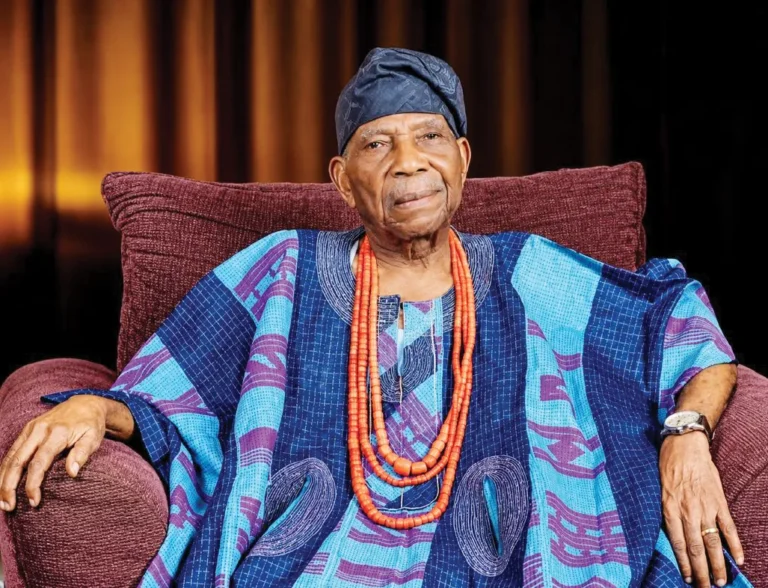
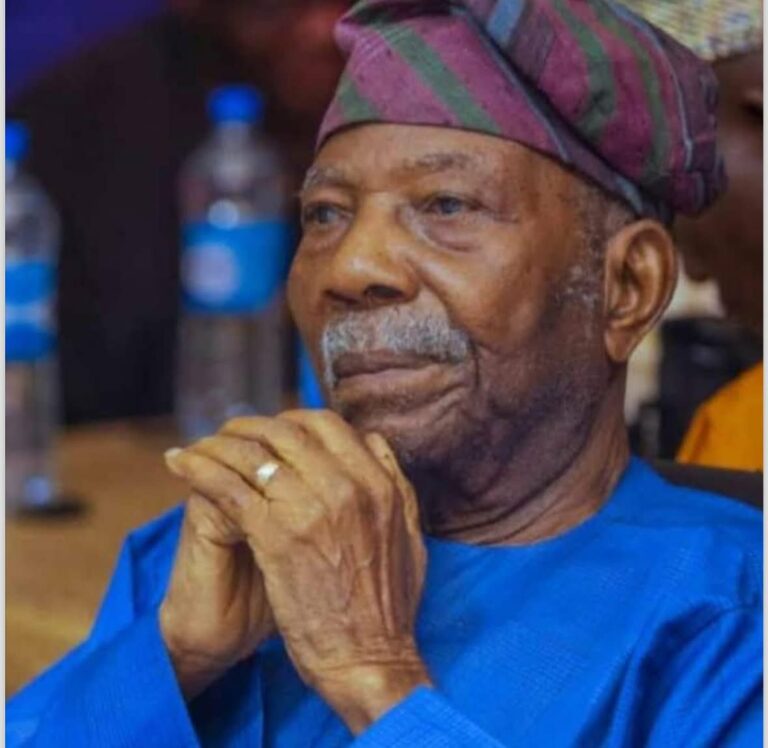
The statement was jointly signed by the Leader of Afenifere, Oladipo Olaitan, and the National Publicity Secretary, Prince Justice Faloye.
After extensive deliberations on the state of the nation, Afenifere expressed deep concern over the worsening economic situation, citing recent reports by PricewaterhouseCoopers (PwC) and the World Bank which indicate that Nigeria’s poverty rate could rise to 62 per cent in 2026, up from 38 per cent in 2023.
The group described the figures as alarming, stressing that they reflect what it termed a “continued trajectory of economic demise” under the current administration. According to Afenifere, the growing poverty levels contradict government claims of economic recovery and expose the widening gap between official narratives and the lived realities of ordinary Nigerians.
Afenifere also revisited its long-standing opposition to the controversial 2025 Tax Reform Bill, which it said has not been satisfactorily addressed. The group insisted that the reform should be withdrawn and re-presented to the National Assembly for proper debate and stakeholder engagement.
It argued that the government’s claim that the new tax regime does not further impoverish the poor is misleading. Afenifere noted that while international financial institutions such as the International Monetary Fund (IMF) and the World Bank, whose policy prescriptions the group said heavily influence the administration, place the poverty line at about ₦4,500 per day (approximately ₦1.6 million annually), the government has fixed the minimum taxable income at ₦800,000 per annum.
According to the organisation, this discrepancy means that millions of Nigerians who are already struggling below acceptable living standards would be drawn into the tax net, thereby worsening poverty rather than alleviating it. Afenifere warned that the tax reform, if implemented in its current form, could push millions more Nigerians into economic hardship.
The group further cautioned that what it described as government economic propaganda may offer temporary political cover but ultimately undermines investor and business confidence. It expressed concern over reports of political pressure allegedly being exerted on the Minister of Finance and other agencies responsible for reporting economic indicators, warning that such actions erode transparency and integrity and could stall genuine economic recovery.
On national security, Afenifere welcomed recent joint operations between Nigerian and American security forces aimed at countering terrorist activities in the country, describing the development as long overdue.
The group recalled that similar requests for international military assistance during the administration of former President Goodluck Jonathan were allegedly frustrated by political actors, including some governors in the North-East. According to Afenifere, such resistance was fueled by claims that the deployment of advanced military equipment was an attempt to target northern youths and weaken the region’s perceived electoral strength.
Afenifere maintained that international collaboration against terrorism is essential, stressing that efforts to prevent Nigeria from becoming an epicenter of global terrorism are in the best interest of national stability and sovereignty.
While reaffirming its confidence in the training, professionalism and capacity of the Nigerian Armed Forces, the group lamented what it described as permissive policies and attitudes of past and present governments, particularly during the Buhari administration, which it said contributed significantly to the current insecurity.
The organisation noted that Nigeria has increasingly taken on the features of a “state of nature,” where citizens feel unsafe and security personnel are frequently attacked and killed by armed groups allegedly emboldened by political protection.
Other News
On restructuring, Afenifere reiterated its long-standing advocacy for a restructured Nigerian federation based on the principles of true federalism. The group described restructuring as the most viable governance model for addressing Nigeria’s complex diversity and persistent governance failures.
Central to this call, Afenifere said, is the urgent establishment of state police. It argued that without state-controlled policing, the country’s security architecture would remain weak and ineffective.
The group pointed out that the free movement of terrorists and criminal elements across states, often after being displaced by military operations, would have been significantly reduced if states had their own police forces with strong local government and community-based commands.
Afenifere criticised the National Assembly for what it described as weak commitment to the issue of state police, despite what it said is an unprecedented national consensus on the matter.
The organisation also strongly condemned calls by some influential individuals, including state governors, for negotiations or amnesty for terrorists. It described such calls as treasonous and deeply troubling.
According to Afenifere, it is unacceptable for terrorists to openly brandish high-calibre weapons during negotiations with government officials and security agencies, as this undermines the state’s monopoly over the instruments of coercion and weakens national sovereignty.
The group insisted that neither the Nigerian state nor its subnational governments should negotiate with non-state armed actors on equal terms or from a position of weakness.
Looking ahead to the 2027 general elections, Afenifere expressed concern over what it described as rising do-or-die politics and growing socio-political tension across the country. It warned political actors to adhere strictly to democratic rules, stressing that no individual or group is greater than the collective will of the Nigerian people.
The group also urged the Independent National Electoral Commission (INEC) to not only be fair but to be visibly fair in its conduct, particularly in its dealings with political parties and the management of internal party disputes.
On the political crisis in Rivers State, Afenifere warned that unresolved local crises have historically threatened national stability. It called on the actors involved to place the interests of Rivers State and Nigeria above personal ambitions and temporary political gains.
While commending the intervention of the Pan Niger Delta Forum (PANDEF), Afenifere urged all parties to cooperate with the forum to achieve a peaceful and lasting resolution to the crisis.
Overall, the group stressed that Nigeria stands at a critical crossroads, warning that failure to act decisively on economic reform, security restructuring and democratic integrity could deepen the nation’s challenges and endanger its future.
Prominent members and leaders who attended the meeting included Olusola Ebiseni, former Deputy Governor of Lagos State, Kofoworola Bucknor-Akerele, Pekun Awobona, Prince Supo Sonibare, Mr. Olutola Mobolurin, Dr. Gbola Adetunji, Pastor Olajuyinu, Mrs. Oluwatoyin Falade, Prince Elias Matiminu, Arc. Omigbodun, Hon. Lucia Alake, among others.