Follow Us on Google

From Juliana Taiwo-Obalonye, Abuja
In an effort to address the issue of malnutrition, the Presidency has called for a multi-stakeholders’ approach, stating that better nutrition is essential for both economic growth and national development.
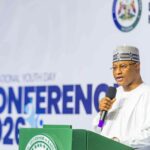
Deputy Chief of Staff to the President, Ibrahim Hadejia, made the call, yesterday, during a press conference ahead of a high-level dialogue with faith leaders on nutrition scheduled to be held tomorrow at the State House Conference Centre, Abuja.
Vice President Kashim Shettima, who chairs the National Council on Nutrition (NCN), will deliver a keynote speech at the event.
In a statement issued by the spokesperson to vice president, Stanley Nkwocha, Hadejia emphasised that cooperation between the government, religious organisations, traditional leaders, and development partners is essential.
While stressing that the government cannot afford to neglect the issue of nutrition, as it “directly impacts human capital development, economic productivity, and our overall trajectory as a country.”
The deputy chief of staff commended the efforts of the Accelerating Nutrition Results in Nigeria (ANRiN) Project funded by the World Bank for its innovative approach to leveraging the influence of faith leaders in promoting positive behavioural change and sustainable nutrition practices.
“President Bola Tinubu is passionately committed to advancing initiatives that promote sustainable nutrition activities in our nation.
“The event will bring together state governors, ministers, development partners, and apex bodies of faith and traditional institutions to align efforts with the Renewed Hope Agenda of President Tinubu’s administration,” he said.
He said the upcoming high-level dialogue between the NCN and the faith leaders will provide a platform for strategic discussions and commitments towards sustainable nutrition investments for the benefit of all Nigerians.
Earlier, the National Project Manager of ANRiN Project, Ojuolape Solanke, observed the administration’s prioritisation of malnutrition, recognising its impact on growth, development, and economic prosperity.
“The first 1,000 days of a child’s life are crucial for their development, and missing this window of opportunity will result in the loss of a significant population vital for economic growth,” she said, adding that “the vice president, as the chairman of NCN, has the energy and determination to keep the issue of malnutrition on the agenda,” Solanke said.
Kaduna Programme Manager for ANRiN, Zainab Muhammad-Idris, emphasised the project’s implementation at the local community level where nutrition services are accessed.
“Faith leaders play a crucial role in ensuring the right messages reach the people. We work closely with them to promote improved nutrition practices, even in times of food abundance,” she said.
Executive Director of the Centre for Communication and Social Impact (CCSI), Babafunke Fagbemi, said faith leaders play an important role in institutionalising efforts to address malnutrition by maximising their influence.
“We have identified religious, gender, and social norms that hinder the adoption of best practices. Faith leaders have been able to reach over six million members of their congregations with messages that build self-efficacy in respect to improved nutrition in their communities,” Fagbemi said.