Follow Us on Google
Unveils pact with manufacturers on energy, capital, markets, security
____________________________________________________________
The Federal Government has declared that Nigeria must move decisively from being Africa’s warehouse to becoming the continent’s workshop by producing the goods needed across the African market and exporting them with pride.
The government also pledged to deepen collaboration with manufacturers through improved energy supply, affordable long-term financing, preferential public procurement, trade facilitation and secure industrial corridors.
President Bola Tinubu made the commitments at the 6th Odutola Lecture and presidential luncheon of the Manufacturers Association of Nigeria (MAN), as part of activities marking the 54th Annual General Meeting of the association, themed “Leveraging National Industrial Policy to Position Nigeria as Africa’s Industrial Hub.”
He challenged manufacturers to expand production capacity, deepen backward integration and aggressively target the African market.
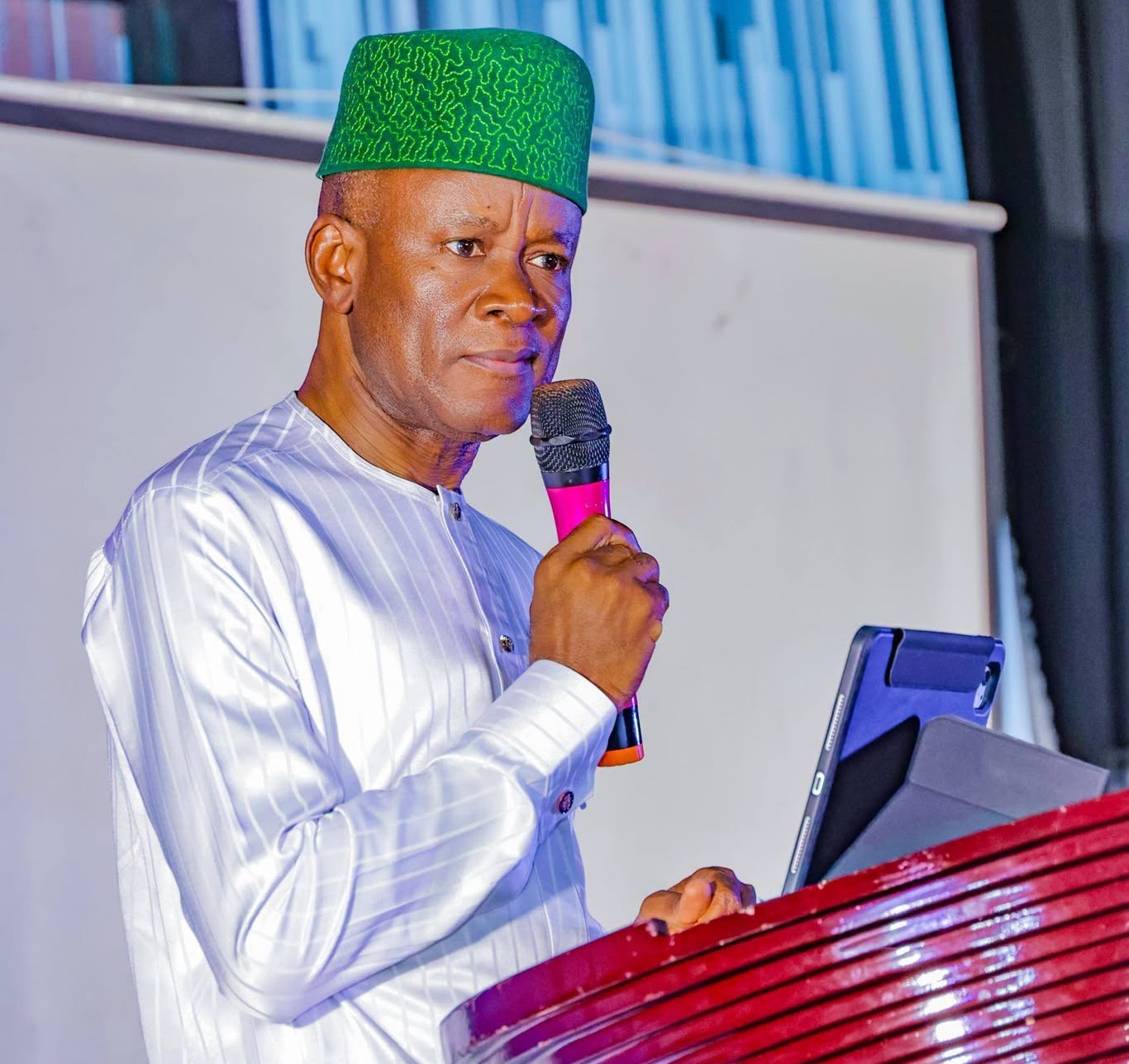
The president, who was represented by the Minister of State for Industry, Trade and Investment, John Owan Enoh, said the Renewed Hope Act policy would ensure that when Nigerian manufacturers produce goods to the required standard, government institutions would patronise them rather than import competing products.
He stressed that no public institution should import products that Nigerian companies can produce to standard.
He noted that Nigeria had already demonstrated its capacity for large-scale industrial ambition, pointing to the construction of the largest single-train petroleum refinery in Africa by a Nigerian enterprise.
The president argued that the development had demonstrated that “no one should ever again tell us what we cannot manufacture.”
Turning to the wider African market, the president noted that although Africa is home to nearly one billion people, the continent accounts for only about 3.2 per cent of global GDP and two per cent of global manufacturing value added.
He said Africa’s manufacturing output is projected to reach $3.2 trillion by 2035, describing the projected growth as significant but insufficient to constitute true industrial transformation.
According to the president, the gap represents a major opportunity for Nigeria, particularly with the African Continental Free Trade Area (AfCFTA) creating a single market of about 1.4 billion people with a combined GDP of approximately $3.4 trillion.
“The question is simple: who will make what that market buys?”
Other News
The president said Nigeria had a strong claim to that opportunity, being one of only five African countries whose manufacturing value added exceeds $10 billion, while possessing a large population, entrepreneurial capacity, natural resources and a policy framework designed to support industrialisation.
However, he expressed concern that despite Nigeria’s export potential, only 3.4 per cent of the country’s non-oil exports in 2025 went to fellow ECOWAS member states.
Tinubu described the situation as an indication that some of Nigeria’s biggest untapped markets are actually its immediate neighbours.
He therefore declared a new national industrial ambition: “Nigeria will not be Africa’s warehouse, storing what others make. Nigeria will be Africa’s workshop, making what Africa needs and sending it with pride across the continent and beyond.”
To achieve this, he offered manufacturers a four-point compact centred on energy, capital, markets and security.
On his part, MAN President, Francis Meshioye, called for consistent implementation of the National Industrial Policy, institutional coordination and measurable outcomes to position Nigeria as Africa’s industrial hub.
He said Nigeria’s growing export earnings had not translated into significant growth in manufactured exports.
According to the National Bureau of Statistics (NBS), Nigeria’s total exports rose to N85.13 trillion in 2025, while manufactured exports accounted for only N2.53 trillion, representing 2.94 per cent of total exports.
Meshioye said the situation underscored the need for Nigeria to move beyond dependence on primary commodities and strengthen domestic productive capacity.
He identified high energy costs, expensive production inputs and logistics, policy and regulatory uncertainty, unfair trade practices, inadequate infrastructure, limited access to long-term industrial finance, weak domestic value chains and skills and technology gaps as major constraints to industrial growth.
The MAN boss, however, said the challenges were not insurmountable, stressing that deliberate policy action, institutional coordination and sustained commitment to implementation were required to unlock the potential of Nigeria’s manufacturing sector.