Follow Us on Google
Introduction
For the past two weeks, we have dealt extensively on this treatise. We discussed the following themes:
i. Assault on economic rights in Nigeria under the military juntas;
ii. Social rights;
iii. Cultural rights and
iv. Justiceability or otherwise of economic, social and cultural rights.
This concluding part of the treatise will examine human rights under other relevant international/universal instruments such as the African Charter on Human and Peoples Rights. Please read on.
Other international universal instruments
There are various International Instruments that recognize economic, social and cultural rights of people. Article 1 of the Universal Declaration of Human Rights, 1948, declares that:
“All human beings are born free and equal in dignity and right. They are endowed with reason and conscience and should act towards one another in a spirit of brotherhood”.
The position of African charter on human and peoples rights
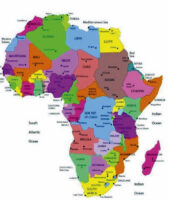
The African Charter on Human and Peoples Rights, 1981, also recognizes the position of human rights severally among others, and thus provide for the right to peace, development, satisfactory environment and the right to respect the common heritage of mankind. This is as provided for in Article 20 of the African Charter on Human and Peoples rights, which guarantees:
“Freedom, equity, justice and legitimate aspirations of African peoples”
To give effect to these rights, the leaders of the then Organization of African Unity (OAU), now African Union (AU). also reaffirmed the pledge solemnly made in Article 2 of the said Charter, to eradicate all forms of colonialism from Africa, to co-ordinate and intensify their co-operation and efforts to achieve a better life for the peoples of Africa and to promote international co-operation having due regard to the Charter of the United Nations and the Declaration of Human Rights and taking into cognizance, the virtues of their historical tradition and the values of African Civilization, which should inspire and characterized their reflection in the concept of human and people’s rights.
They are also recognized on the one hand, that Fundamental Human Rights stem from attributes of human beings, which justify their international protection; and on the other hand, that the reality and respect of people’s rights should necessarily guarantee human rights. To achieve this, it should be borne in mind that the enjoyment of rights and freedoms also implies the performance of duties on the part of every citizen.
The leaders were convinced that it was essential to pay particular attention to the right to development and that civil and political rights cannot be dissociated from economic, social and cultural rights as a guarantee for such civil and political rights. This position is well encapsulated in Article 22 of the African Charter on Human and People’s Rights, which provides that:
i “All peoples shall have the right to their economic, social and cultural development with due regard to their freedom and identity and in the equal enjoyment of the common heritage of mankind”
ii “States shall have the duty, individually or collectively to ensure the exercise of the right to development”
Nevertheless, the duty to achieve the total liberation of Africa, the peoples of which are still struggling for their dignity and genuine independence and undertaking to eliminate colonialism, neocolonialism, apartheid, Zionism and to dismantle aggressive foreign military bases and all forms of discrimination, language, religion or political options, were then the major pre-occupation of African leaders. They were firmly convinced of their duty to promote and protect human and people’s rights and freedoms, taking into account the importance traditionally attached to these rights and freedoms in Africa.
It is therefore submitted with respect, that by the provisions of all the international instruments on human rights, man has been significantly elevated to the echelon of a subject of international law beyond municipal or State laws.
Conclusion
It is obvious that the economic, social and cultural rights of Nigerians have been violated severally by various successive governments and such violation is encouraged by their non-justiciability by virtue of the provisions of Chapter II the Constitution of the Federal Republic of Nigeria, 1999, as altered. The question thus posed as a result of this ugly trend would be: Does this mean that we should all fold our hands and watch these rights violated? Is there nothing the Nigerian people can do to litigate these rights?
The answer in conscience is that there is much we can do. We must encourage and promote the enforcement of all the fundamental objectives and directive principles of state policy as they are meant to enhance the living conditions of man. It is noteworthy however, that all international Human Rights Instruments recognize economic, social and cultural rights of the people. Nigeria not being an island unto itself cannot be cocooned in self-defeatism and haplessness. She must move with the civilized world and render ECOSOC rights justiciable and enforceable. It is the duty of Civil Society and every affected citizen to challenge violation of the provisions of Chapter II of the 1999 Constitution of the Federal Republic of Nigeria, as altered.
Thoughts for the week
“True freedom requires the rule of law and justice, and a judicial system in which the rights of some are not secured by the denial of rights to others.” – Jonathan Sacks
“the The sacred rights of mankind are not to be rummaged for among old parchments or musty records. They are written, as with a sunbeam, in the whole volume of human nature, by the hand of the divinity itself; and can never be erased or obscured by mortal power.” – Alexander Hamilton