Follow Us on Google

Agatha Emeadi
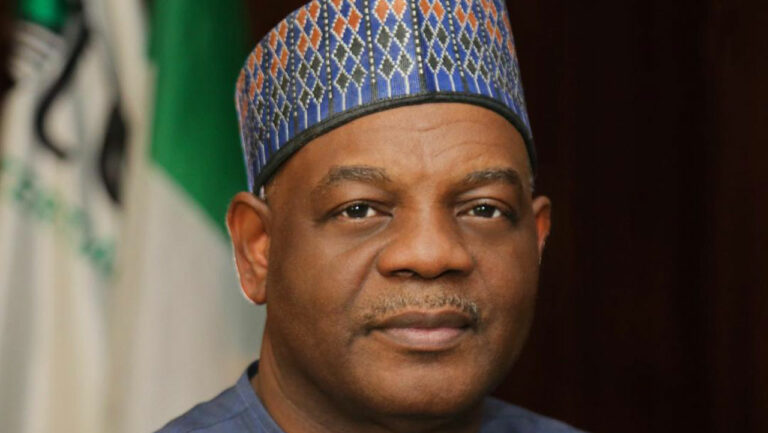
Comrade Anthony Emmanuel Nted is the chairman, Maritime Workers Union of Nigeria’s Advisory Council (MWUN). He was also the immediate past President-General of Maritime Workers Union of Nigeria, and former Vice President of Nigeria Labour Congress (NLC).
Recently, the industry rose in unison to celebrate the man who was denied education from infancy, but decided to give education free to other people immediately he rose to enviable heights through determination.
Nted spurred by the love for education sponsored over 5,000 dock workers at various times to different parts of the world in search of education.
In this interview, he shared his thoughts on how he embraced educational pursuit, his leadership style, welfare of Maritime workers and Nigeria, among others.
How did you conquer education?
It is a long journey so far. My father did not believe in education rather he believed in fishing. I forced myself out of fishing when I went to Warri through personal struggle because I believe that education is the bedrock of life. So, while working as a dockworker, I tried to go to school, but it was not an easy task combining dock work and studies. I dropped out from Bristo Commercial Institute and kept managing until I joined the Maritime Workers Union which was a cut-edge then. I still struggled to write my examinations through the independent examination bodies until I passed my Ordinary National Diploma (OND) and my Higher National Diploma (HND). While still working, I enrolled into Ado Ekiti State University for my Post Graduate Diploma (PGD) and got my Master’s Degree in Business Administration. Through the mercy of God, this was how I struggled to conquer illiteracy.
How was growing up as a fisherman who bolted away from the shackles of the rivers to become a frontline unionist?
I was born and brought up in Facados, Warri in Delta State. My father was a fisherman who lived and died as one of the richest fishermen around. But for me, my father was one of the poorest men because he did not send me to school. I was seeing other children going to secondary and university then, but there I was a fisher man trying to end up a bigger fisher man like my father. I said to myself, no, I cannot continue being a fisher man, I need education. One day, I saw some boats leaving Facados to Warri, I just jumped into one of them in search of education and better opportunities. I had no money, no brother and no friend. But when I landed at Warri waterside, God prepared people who took me in, I joined them in doing menial jobs. We became friends and they accommodated me in one small room. From there, I saved money for my personal accommodation which I eventually rented and moved in with water proof as curtain and mat on the floor, yet my full focus was still on education. I also got another job with Challarams and enrolled into another school in Warri known as the Institute of Continuing Education before Challarams closed down and life became a bit tougher. Another job opportunity came calling from the Nigeria Ports Authority, NPA, as a dockworker; loading and off-loading at the key Ephron. As God would have it, one day, I came to work in the morning and saw workers fighting in the ports. I enquired the reason for the fight, and discovered that the leadership of the Warri Branch Dockworkers has been over thrown. There were allegations and counter accusation of fraudulent activities and leadership personal interests more than the workers’ welfare and so on. Later that night, some of my friends called me that some executives came from Lagos and we met them at the hotel. As the grace of God would have it upon me, Warri Branch sent Pouyibo and myself to Lagos. That was my turning point in life and the first time I saw Tin-Can and Apapa ports. We addressed the dockworkers and went round. We came back to Warri to set up a caretaker committee and I was made the chairman of the committee. That was how I started my union career. During the elections, other dockworkers insisted that I should contest as the zonal vice chairman which I did and won. From zonal vice chairman, I became the district chairman and a branch president of the dockworkers branch of the Maritime Workers Union of Nigeria. From being the branch president, I became the President General of Maritime Workers Union of Nigeria (MWUN) and at the same time, the Vice President of Nigeria Labour Congress, NLC, during the first tenure of Abdulwaheed Omar.
You brought in a lot of reforms to the dock workers during your tenure, are you satisfied with what you see today in terms of training, sponsorship and their welfare?
First, education remains the best legacy in life. From my experience in pursuit of education, I think the government should provide free education to every citizen or at least subsidize the fees to accommodate children of the poor. What we are seeing today in terms of education is not encouraging at all. The churches that should offer quality education to the people are even more expensive than the private schools. My belief in education was the reason I gave my best and all when I was the President General MWUN. I did everything within my power to ensure that the dockworkers were educated both locally and internationally.
We took the first 40 dockworkers to Starfield Consulting -London, United Kingdom in 2011. Another 50 dockworkers to the Maritime Institute of Technology and Graduate Studies Maryland in 2014. We also took other dockworkers to United Kingdom, South Africa and Dubai, these were areas conquered in the pursuit of educations. Locally, we trained over 5,000 workers and over 1,000 internationally. If I am satisfied with what I am seeing today; well, we had series of meetings with the former Minister of Works and Labour, and they promised to do something, including the COVID-19 palliatives which they promised to do, up till now, they did not do anything. Nothing is happening to the ports, to the nation’s economy. Everybody believes in oil. All our hope is to invite foreign companies to come and drill oil and give us some percentage, it does not work that way. One day, oil will dry up like the one in Oloibiri, but the port remains the heartbeat of the nation’s economy because people must always import and export. For me, I think that port is better than the oil industry in the future.
You were born on October 1, 1960, the day Nigeria gained Independence from British rule, are you happy with the development of your country at 60?
I am 60 years today because I was born on October 1, 1960. I am celebrating alongside my country and that calls for happiness for all. But then, with dead infrastructure, education, health, energy, agriculture, aluminum and textile industries all gone. Why should we celebrate? Over the years, leadership style is the reason for the poor growth of the country. It is sad that for 60 years Nigeria cannot find solution to its leadership challenge. What is there to celebrate, a country that cannot give 12 hours of electricity to its citizens, a country that is one of the leading oil procuring countries in the world, yet imports petroleum products, a country that cannot provide motorable roads for its citizens, a country that cannot provide free and quality education to its citizens, a country that cannot feed its citizens, or a country that cannot protect its citizens? Can people who have no job, no accommodation, no cheap and reliable means of transportation system, no affordable and quality health services, afford the basic necessities of life to celebrate?
As a former labour l0Leader, what do you think Nigerians need?
We need leaders that have foresight, vision, energy, youthfulness, among others, to lead the country. We need leaders who can find out the true position of things without sycophants deceiving them. President Muhammadu Buhari is a good president. He is not corrupt. But we cannot say so about those working with him. In a situation where people are referred to as cabals who shield the president from the truth, it’s a major problem. We need a president that is youthful and mobile that can decide on his own to wake up and visit ports, factories, inspect road projects, slums or shanties and access the situations of things on his own. He can decide to see the access roads to the ports, or go to Abakiliki, Aba, Ogoni, Southern Kaduna, Niger, Oshogbo, Isolo, visit industrial areas to have first hand information and not relying on sycophants. We need a president who will not steal, but has the interest of the nation, believe in Nigeria, not sectional, tribal or religious bigot.
What would you be remembered for as a unionist?
When I became the PresidentnGeneral of the union, dockworkers had no conditions of service. We were able to set up what is called the minimum standards and it results into the conditions of service for the dockworkers today. After my tenure, Prince Adewale Adeyanju continued from where I stopped and improved on the foundation of peaceful industrial environment. Most of the work stoppages in the ports during my tenure were ordered by NLC over national issues. If there is no industrial action, it means the leadership is doing well. But when the dockworkers are not happy, there will be restiveness in the ports. So, those foundations we laid are yielding fruits and sustaining industrial peace. Again, during my tenure I brought in dockers’ restoration where we preached peace, moral values and productivity and so on. We also organized several seminars locally and internationally. We took some of the workers to the Maritime School of Technology in Maryland, USA. In essence, we tried our best to make the workers happy. In the dock, before we assumed the position of leadership, most of the workers were seen as illiterates. But before the end of my tenure, we had over 150 graduates and post graduates.