Follow Us on Google
From Obinna Odogwu, Awka
Efforts being made to end malaria or at least stem it down to the lowest level in the world have started yielding fruits. From the development of a vaccine to that of monoclonal antibodies, and more keep coming.
The impact of malaria in the world is devastating. It has so far consumed many lives and the costs of its treatment trap families across the world in a cycle of illness, suffering and poverty.
In Nigeria, many families are counting their losses. The country has the highest burden of malaria globally, accounting for nearly 27 per cent of the global malaria burden, according to the World Health Organization.
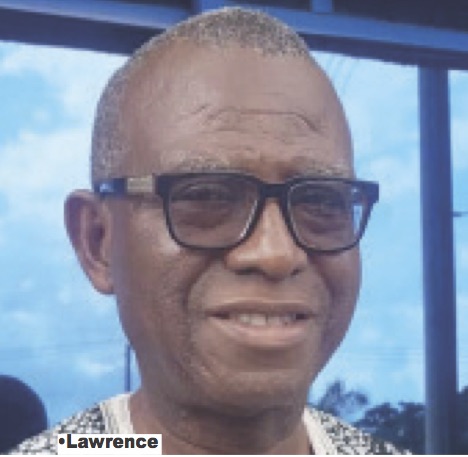
The Dean, Faculty of Clinical Medicine, Ebonyi State University, Abakaliki, Prof. Lawrence Ogbonnaya, said that malaria constituted 60 per cent of all outpatients’ consultations in the country’s hospitals.
Ogbonnaya, a Professor of Infectious Diseases Control Policy, however, described the various efforts being made to fight the scourge, especially the recent success recorded with the trial of monoclonal antibody, CIS43LS, as a welcome development.
“Part of you pressmen setting the agenda will be to highlight where we are with that and then we’ll compare it with the alternative that is available.
“And then we’ll be urging the government to put money in this clinical trial locally so that we can produce our own evidence.
“If our evidence shows that it is comparable to the vaccine that is already on, then the next thing we will be talking about is cost effectiveness. If we use this one and use that one, which one is more cost effective?
“So, all of this evidence, if it’s filtered, we can produce a policy brief that we can now advocate on to cause the government to adopt it”, Ogbonnaya said.
The professor said that there was need for the Nigerian government to fund research into the monoclonal anti-bodies discovery so that there would be some local inputs into it.
“If a pharmaceutical company has invested so much as to get to phase III clinical trial, then they must have their evidence.
“So, the only thing we will be talking about is locally here, because you know genetics and everything has a role to play in how drugs work.
“Locally here, will that monoclonal anti-body work as effectively as it has worked in Mali where the clinical trial was done?
“That’s what we should be asking otherwise if it comes out, whether we participated or not, it’ll be in the market. The pharmaceutical industry is a multi-billion dollar cat-eat-dog kind of market place.
“They will aggressively push it into our own market knowing that the population of Nigeria is, perhaps, five times the population of Mali. So, they will make more money from Nigeria than Mali, for instance.
“That is the advantage of Nigeria keying in at this stage. And the only way we can key in is by funding research”, Ogbonnaya said.
WHO had in October 2021 recommended a widespread use of the RTS,S/AS01 (RTS,S) malaria vaccine among children in sub-Saharan Africa and in other regions with moderate to high P. falciparum malaria transmission.
It said that the recommendation was “based on results from an ongoing pilot programme in Ghana, Kenya and Malawi that has reached more than 900,000 children since 2019.”
On the flipside, further efforts by a team of researchers to end malaria gave birth to CIS43LS which is a monoclonal antibody.
CIS43LS is built to prevent malaria infection by interrupting the lifecycle of the Plasmodium falciparum parasite. It binds to and neutralizes sporozoites, the stage of the parasite transmitted from mosquitoes to humans.
Monoclonal anti-bodies (mAbs), according to WHO, are immunoglobulins derived from a monoclonal cell line and which have a defined specificity.
Mayo Clinic explains that they’re are laboratory-produced molecules engineered to serve as substitute antibodies that can restore, enhance, modify or mimic the immune system’s attack on cells that aren’t wanted, such as cancer cells.
A clinical trial of CIS43LS in Mali showed that the monoclonal antibody could protect against controlled Plasmodium falciparum infection, reports The New England Journal of Medicine 2022.
A group of researchers who carried out the trial added that the success was recorded “without evident safety concerns.”
The researchers reported that in the trial phase, a single intravenous infusion of CIS43LS provided up to 88.2 per cent protective efficacy against P. falciparum infection in adults over a six-month malaria season in Mali, during which 78.2 per cent of the participants in the placebo group became infected.
“These data provide proof of concept that a monoclonal anti-body with an extended half-life can protect against P. falciparum infection during intense transmission for a defined time period.
“These results provide a foundation for considering several clinical-use cases for antimalarial monoclonal antibodies”, the team reported.
The researchers, however, said that the trial had limitations and that additional trials were needed to assess the safety and efficacy of anti-malarial monoclonal antibodies in children and pregnant women across diverse transmission settings.
In an interview published by Nature in June this year, Robert Seder and Kassoum Kayentao gave further insights into the monoclonal antibody, CIS43LS.
Seder is an immunologist at the National Institute of Allergy and Infectious Diseases (NIAID) in Rockville, Maryland while Kayentao is a malaria epidemiologist at the University of Bamako in Mali.
Asked how the antibodies they tested work, Seder said that the first anti-body that the team isolated was CIS43 from people who had taken part in a prior vaccine trial that he had overseen.
“This binds a protein that is highly conserved on the sporozoite form of the Plasmodium falciparum parasite, which is what mosquitoes deliver when they bite people.
“Our antibody quickly binds and neutralizes the sporozoites before they travel to the liver to develop further.
“But antibodies have a short half-life – only about 21 days — which limits their usefulness. So, we added the LS mutation, creating CIS43LS. This allows the antibody to last around 60–80 days”, Seder explained.
He also revealed that: “Before we even had our first results from CIS43LS, we had already discovered another antibody, L9LS, that is two to three times more potent in animal studies.
“Kassoum and my NIAID colleague Peter Crompton have completed a phase II trial in Mali in which L9LS was given in one subcutaneous injection, and protection was assessed over six months during seasonal transmission in children aged six -10 years.
“We also have an ongoing phase II study of L9LS in children aged five months to five years in Kenya. Transmission there occurs all year, so we can compare that with data from areas with seasonal transmission and assess the effect of giving one dose compared with two doses, over a year.
“We’re trying to look at all the major clinical use cases: infants, children, pregnant women and other adults who are at risk of developing severe disease.
“Eventually, we will look at entire communities. But for our first phase III trial of L9LS, the target population will be those under five years old.”
On his part, Kayentao said that “monoclonal antibodies are a feasible alternative” to the RTS,S malaria vaccine.
Malaria is a life-threatening disease mostly spread to humans through the bites of some infected female Anopheles mosquitoes.
Its symptoms can be mild or life-threatening and if left untreated, P. falciparum malaria can progress to severe illness and death within 24 hours.
Apart from some infected female Anopheles mosquitoes, malaria can also spread to people through blood transfusion. Contaminated needles may also transmit it.
Health experts said that there are five Plasmodium parasite species that cause malaria in humans. Two of them – P. falciparum and P. vivax – pose the greatest threat.
They said that P. falciparum is the deadliest malaria parasite and the most prevalent on the African continent while P. vivax is the dominant malaria parasite in most countries outside of sub-Saharan Africa.
This is in addition to P. malariae, P. ovale and P. knowlesi which they say are other malaria species which can also infect humans.
According to the 2022 World Malaria Report published by WHO, there were 247 million cases of malaria in 2021 compared to 245 million cases in 2020.
WHO said that the estimated number of malaria deaths stood at 619,000 in 2021 compared to 625,000 in 2020.
Of these deaths, 77 per cent were children under five years of age according to UNICEF. It lamented that nearly every minute, a child under five dies of malaria.
Unfortunately, the WHO African Region continues to carry a disproportionately high share of the global malaria burden.
“In 2021, the region was home to about 95 per cent of all malaria cases and 96 per cent of deaths. Children under five years of age accounted for about 80 per cent of all malaria deaths in the region.
“Four African countries accounted for just over half of all malaria deaths worldwide: Nigeria (31.3 per cent), the Democratic Republic of the Congo (12.6 per cent), United Republic of Tanzania (4.1 per cent) and Niger (3.9 per cent)”, it said.