Follow Us on Google

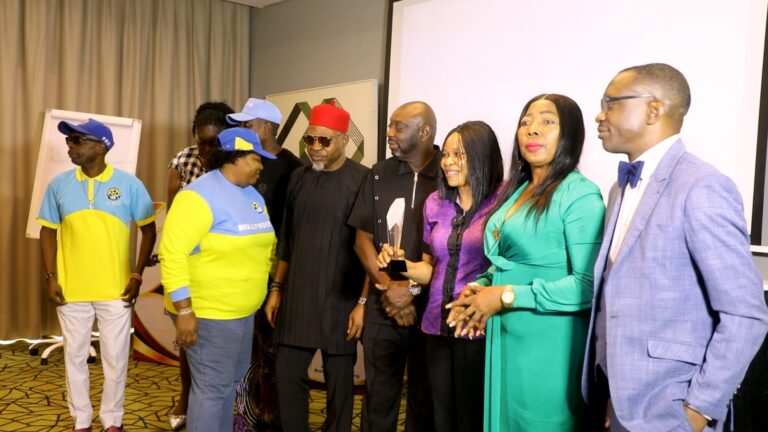
Minister of Humanitarian Affairs and Poverty Reduction 2nd right and his team during a high-level meeting in Brussel.
The Minister of Humanitarian Affairs and Poverty Reduction, Dr. Bernard M. Doro, has called for sustained international humanitarian financing and stronger strategic partnerships to support vulnerable populations, particularly in countries facing growing humanitarian and development challenges amid declining global aid resources.
The Minister made the call during a series of high-level engagements in Brussels, Belgium, where he met with Leire Pajín and Hana Jalloul Muro, Members of the European Parliament, as well as senior officials of the European Union, to discuss the future of humanitarian response, social protection, and poverty reduction.
This was contained in a statement issued on his behalf by his Senior Technical Adviser on Information Systems and Data Analysis, Dr. Abimbola Fasanu.
During the meetings, Dr. Doro highlighted the need for governments and development partners to maximize limited development resources by transitioning from fragmented interventions to more coordinated, efficient, and results-driven systems capable of delivering sustainable outcomes for vulnerable populations.
The Minister presented Nigeria’s flagship reform, the One Humanitarian–One Poverty Response System (OHOPRS), describing it as a transformative framework that integrates humanitarian assistance, social protection, and poverty reduction into a single coordinated national response. According to him, the reform is designed to improve coordination, reduce duplication, strengthen accountability, and create sustainable pathways from vulnerability to resilience and prosperity.
“Our objective is to build smarter systems that maximize available resources and deliver lasting impact for vulnerable communities. Through stronger coordination and strategic partnerships, we can achieve greater efficiency and better development outcomes,” the Minister said.
Other News
Dr. Doro also drew attention to Nigeria’s humanitarian realities, particularly the growing challenges posed by insecurity, internal displacement, food insecurity, and climate-related shocks, which continue to affect millions of vulnerable Nigerians.
He noted that the Federal Government, under the leadership of President Bola Ahmed Tinubu, has continued to strengthen social protection, humanitarian response, and economic empowerment initiatives through the Renewed Hope Agenda. However, he stressed that addressing the scale of current humanitarian needs requires sustained collaboration between national governments, development partners, humanitarian agencies, and the international community.
The Minister advocated increased investment in durable solutions for Internally Displaced Persons (IDPs), including skills development, livelihood support, social inclusion, and community resilience programmes that enable displaced populations to rebuild their lives with dignity.
Dr. Doro further sought enhanced cooperation through technical assistance, institutional capacity building, knowledge exchange, and strategic partnerships to support the implementation of OHOPRS and strengthen Nigeria’s national humanitarian architecture.
He welcomed the European Union’s continued commitment to humanitarian action and expressed confidence that ongoing discussions on future humanitarian financing would reinforce global efforts to protect vulnerable populations, support host communities, and promote long-term resilience.
The Minister reaffirmed Nigeria’s commitment to working closely with the European Union and other development partners to build more coordinated, evidence-driven, and sustainable humanitarian systems capable of responding effectively to emerging challenges while accelerating poverty reduction across the country.