Follow Us on Google
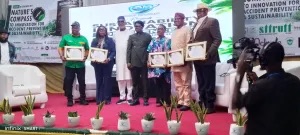
Dr. Julius Akpong, convener of the Sustainability Innovation Conference 2.0 and author of a new book on biomimicry, has called on governments at all levels in Nigeria to adopt innovative approaches inspired by nature to reduce accidents and improve safety across various sectors.
Akpong made the call at the Sustainability Innovation Conference 2.0 and book launch, which focused on the theme, “Biomimicry: Nature’s Compass to Innovation for Accident Prevention and Sustainability.”
He said the conference was designed to explore how lessons from nature could be applied to address workplace safety challenges in sectors including healthcare, construction and oil and gas.
Akpong, one of the founders of the Centre of Excellence for Innovation and Leadership and a professional with Azurra Ltd., explained that the organisation was established to contribute to the achievement of the 17 Sustainable Development Goals of the United Nations.
According to him, the initiative began as a corporate social investment outfit that visited different communities, including correctional centres, while working with partners to address social and developmental challenges.
He said the initiative evolved into a conference in 2025, leading to the establishment of the Sustainability Innovation Conference.
“At Sustainability Innovation Conference 1.0, we talked about how to use artificial intelligence to prevent brainwashing, and we thought it was a very important conversation,” he said.
Akpong said his attention later shifted to the alarming rate of workplace accidents and deaths globally, prompting him to revisit the subject of biomimicry, which formed part of his PhD research.
He said the research eventually became the foundation for his new book, which examines how principles found in nature can be adapted to prevent accidents and promote sustainability.
“The book itself is on biomimicry. It talks about how you can learn from nature and prevent accidents in healthcare, construction, oil and gas, among other sectors,” he said.
Akpong explained that biomimicry involved studying the systems, structures and processes found in nature and applying them to human challenges.
He cited ants, termites, birds and the human immune system as examples of natural systems from which valuable lessons could be drawn.
“What we are doing is to help people learn from the ants, termites, different structures in nature and even our own immune system that nature has built to keep us alive,” he said.
According to him, nature demonstrates the importance of redundancy and safety mechanisms, which can be incorporated into human systems to prevent disasters.
He cited the human body, which has two eyes and two kidneys, as an example of redundancy, noting that the failure of one does not necessarily result in the collapse of the entire system.
Other News
Akpong also pointed to aviation, explaining that aircraft design drew inspiration from birds and incorporated multiple engines to ensure that an aircraft could continue operating when one engine failed.
He said such principles should be incorporated into workplace systems from the design stage rather than waiting until accidents occur.
“Preventing accidents is not when people know; it starts when you are building the system,” he said.
Akpong expressed concern over the economic cost of accidents, noting that millions of people die globally every year from work-related health and safety incidents.
He said reducing workplace accidents would not only save lives but also protect families, businesses and national economies.
“One accident means one breadwinner not coming back home to their family. It means a lot to the economy,” he said.
Also speaking at the event, Mr. Tokunbo Odebumi, a member of Safety Plus Nigeria, described biomimicry as an innovative and natural approach to solving everyday safety challenges.
Odebumi said the concept offered a different way of communicating safety principles and influencing behaviour.
He explained that the word biomimicry was derived from “bio,” referring to life or nature, and “mimicry,” meaning to imitate.
According to him, the approach encourages people to observe how organisms and natural systems function and apply those lessons to human activities.
He cited bees and birds as examples, noting that they demonstrate remarkable organisation without conventional human forms of communication.
Odebumi also criticised unsafe human behaviour, particularly disregard for traffic regulations and other safety rules, saying society needed to rethink its values and approach to safety.
He urged Nigerians to consider how their actions affect the wider environment rather than focusing solely on personal economic gains.
He said the lessons from nature could help individuals, organisations and governments develop stronger safety systems, improve communication and encourage responsible behaviour.
The conference therefore sought to promote biomimicry as a practical tool for accident prevention, sustainability and innovation, while encouraging stakeholders to apply nature-inspired solutions to some of the country’s most persistent safety challenges.