Follow Us on Google
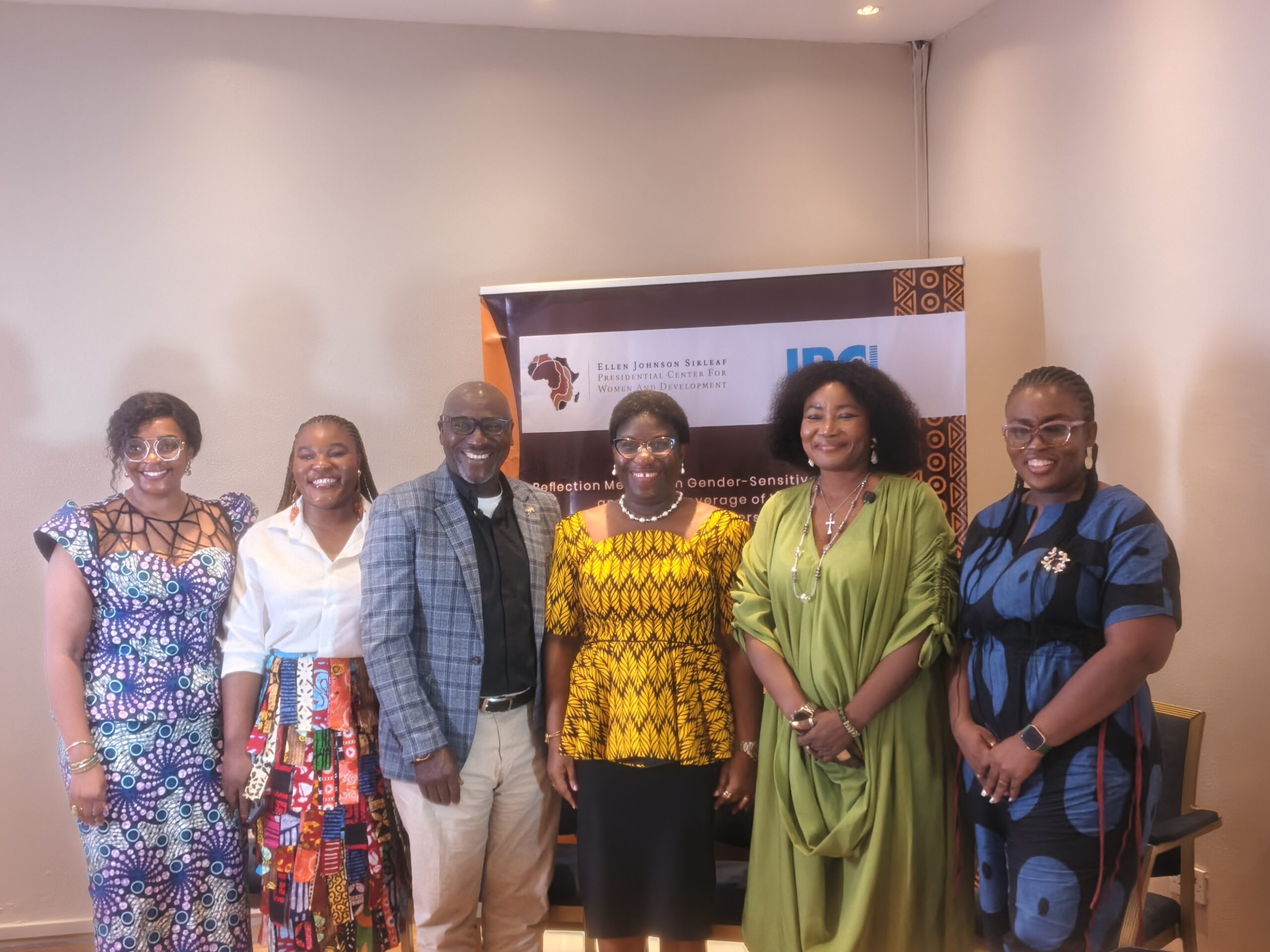
Media professionals have been urged to move beyond simply reporting women in public leadership and deliberately project their achievements, qualifications and contributions, particularly as Nigeria approaches the 2027 general elections.
The call was made in Lagos on Wednesday at a three-day reflection meeting and interactive dialogue on gender-sensitive reporting and media coverage of women in public leadership, organised by the Ellen Johnson Sirleaf (EJS) Presidential Center for Women and Development, Liberia, in partnership with the International Press Centre (IPC), Lagos.
The event, themed “Reporting on Leaders: See Her, Hear Her, Cover Her — Nigeria Edition,” brought together about 35 media stakeholders, editors, journalists, media gatekeepers and other key actors to examine how the media shapes public perceptions of women in leadership.
Speaking at the event, Executive Director of the International Press Centre, Lanre Arogundade, said the meeting should provide an opportunity for media professionals to exchange ideas on new approaches to gender reporting rather than simply treating it as another training programme.
Arogundade said IPC had a long history of promoting gender-sensitive journalism, noting that gender issues had been part of the organisation’s thematic focus since its establishment.
He recalled that IPC published a booklet on the union rights of female journalists as far back as 2001 and had continued to strengthen the capacity of women journalists through various training programmes.
He said the organisation had also implemented women-focused journalism training programmes ahead of elections, covering areas including fact-checking and conflict-sensitive journalism.
Arogundade, who disclosed that he had worked extensively in Liberia since around 2002, said his experiences in the country after the civil war strengthened his conviction that the media needed to do more in reporting issues affecting women.
He recalled meeting a young Liberian woman who became a mother as a teenager after suffering sexual violence during the war and later returned to school alongside her daughter and granddaughter.
According to him, the experience demonstrated the long-term social and psychological consequences of conflict on women, which he said were often inadequately reported.
He also spoke about former Liberian President and Nobel Peace Prize laureate, Ellen Johnson Sirleaf, recalling the prejudices surrounding her political leadership and the importance of fair media coverage of women seeking public office.
Arogundade said the media also had a responsibility to provide impartial coverage of political and electoral processes in ways that would allow more women to participate in leadership.
He said the issue was particularly important ahead of the 2027 elections.
“We should also be doing impartial reporting of the political and electoral processes to pave the way for the election of more women,” he said.
Earlier, Communications Lead of the EJS Presidential Center, Noëlla Ngunyam, said the initiative was not about asking journalists to be sympathetic to women, but about ensuring fairness and consistency in the coverage of women and men in public leadership.
She said women leaders should be subjected to the same standards of accountability as men while urging journalists to avoid focusing unnecessarily on issues such as a woman’s marital status, number of children or reproductive history when those issues were irrelevant to her public role.
“We are not here to ask you to be kind to women. We are asking you to be fair, to be consistent and to cover women leaders as much as you cover men leaders,” Ngunyam said.
She said the media played a critical role in determining who was recognised as a leader and whether such individuals were perceived as credible.
Ngunyam said Nigeria’s low level of women’s political representation made the conversation particularly important.
Other News
Figures cited during the session showed that women remain significantly underrepresented in Nigeria’s political leadership, with women accounting for only a small proportion of members of the National Assembly.
She also drew attention to Nigeria’s 35 per cent affirmative-action commitment for women, noting the gap between policy commitments and actual representation.
Ngunyam said the media should therefore examine how its own reporting practices could contribute to changing the narrative around women in leadership.
“Data is not our fault. As journalists, as media people, as watchdogs, the numbers are not our fault. What we do with the numbers, that is what concerns us,” she said.
She challenged journalists to examine what they had done throughout their careers to project women and their achievements.
The discussion was moderated by Kathleen Ndongmo of News Central TV.
Representing the Guild of Corporate Online Publishers (GOCOP), Publisher and Editor-in-Chief of Supernews Online, Ngozi Onyeakusi, said professional journalism remained important in an era where social media had made it possible for almost anyone to publish information online.
She said GOCOP was committed to professionalism, ethical journalism and the promotion of women within the online publishing industry.
Onyeakusi said the Guild also promoted mentorship, networking, professional development and recognition of women journalists, while advocating for the welfare and safety of media practitioners.
She urged journalists to maintain professional standards and ensure that information published online could be verified and trusted.
On her own part, Chairperson, National Association of Women Journalists (NAWOJ) Lagos State Chapter, Mrs Jumoke Falayi-Johnson, said the organisation had been working to celebrate and project women across different sectors, rather than limiting its focus to women within journalism.
She questioned the limited presence of women on major television breakfast programmes, arguing that women should be invited to discuss a broader range of national issues rather than being predominantly associated with subjects such as childcare and breastfeeding.
She said sustained coverage of women’s achievements and leadership would help shift public conversations away from irrelevant personal questions when women eventually seek political office.
The three-day dialogue, holding from September 16 to 18 at the Sheraton Hotel, Ikeja, Lagos, is expected to examine the role of the media in shaping public narratives around women in leadership and identify approaches for more balanced, inclusive and gender-sensitive reporting.
——-