Follow Us on Google

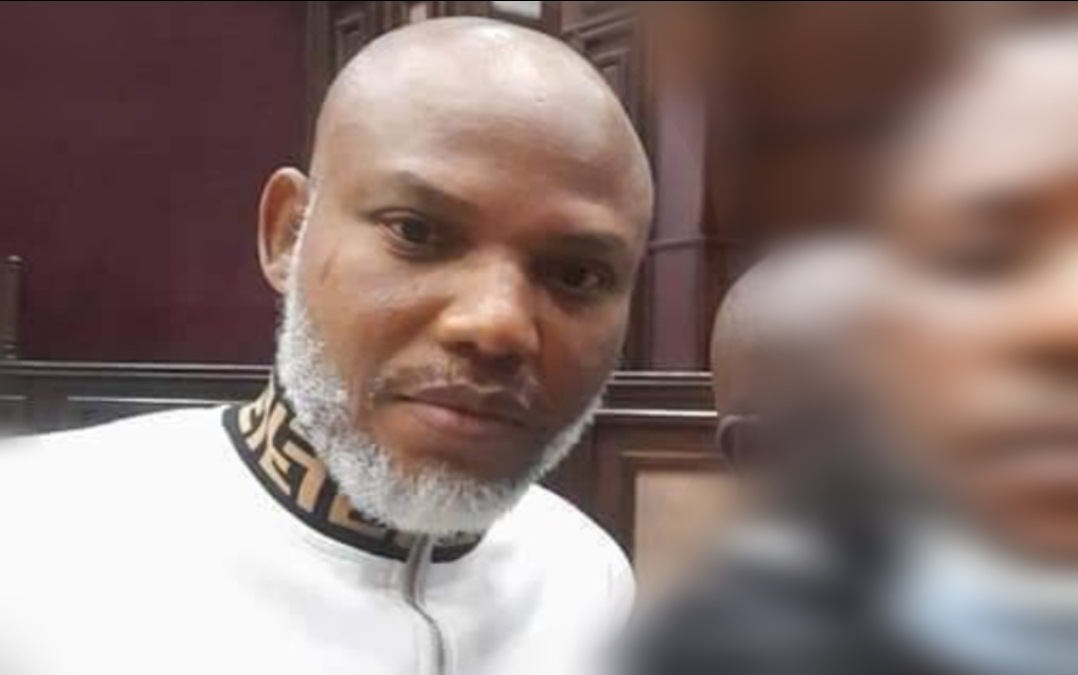
From Godwin Tsa, Abuja, and Okey Sampson, Umuahia
Prince Emmanuel Kanu, younger brother of the convicted leader of the Indigenous People of Biafra (IPOB), Nnamdi Kanu, has blamed his brother’s continued incarceration for worsening insecurity, economic losses running into trillions of naira, growing distrust of the Federal Government, and the emergence of more violent armed groups in the South East.
He alleged that the Federal Government had suffered greater political, economic, and reputation damage from keeping the separatist leader in custody than Kanu himself, describing the continued incarceration as a self-inflicted wound that has neither restored peace to the region nor strengthened national unity.
In a statement posted on his verified Facebook account, Emmanuel identified six areas in which he claimed Nigeria has paid heavily for his brother’s incarceration, including damage to the country’s international image, the cost of military deployments, disruption of economic activities, alienation of Igbo youths, proliferation of armed groups, and increased sympathy for the IPOB leader.
He claimed that the five South East states lost more than N10 billion every Monday as a result of the sit-at-home disruptions affecting commercial activities, schools, banks, markets, and transportation, estimating that cumulative losses over more than four years had reached trillions of naira.
“Every Monday, five states lose over N10 billion in trade, school, banking and markets. For over four years of sit-at-home, the South East has lost trillions. That is Nigerian GDP destroyed because of one man’s incarceration,” he said.
Emmanuel argued that the economic consequences extended beyond the region because disruptions to commerce, production, and transportation also affected the wider Nigerian economy. He maintained that the Federal Government had compounded the situation through continued security deployments, which he claimed cost billions of naira and could have been avoided through dialogue.
“Before his extraordinary rendition, the South East was the most peaceful region in Nigeria. Since his incarceration, the region has been locked in Monday sit-at-home, fear, killings by unknown gunmen, and military checkpoints everywhere.
“The Nigerian government spends billions deploying soldiers to the South East every week for a problem that dialogue would have solved cheaper,” he stated.
He also accused the government of damaging Nigeria’s international reputation through the circumstances surrounding Kanu’s return from Kenya in 2021 and its handling of the subsequent legal proceedings.
He said Nigeria’s claim to respect democratic principles and the rule of law had been undermined by what he described as his brother’s extraordinary rendition and the government’s failure to release him following an earlier Court of Appeal judgment.
“Nigeria tells the world it is a democracy that respects the rule of law, but the world saw how Kanu was extraordinarily renditioned from Kenya, and how the Court of Appeal discharged him and the government refused to obey it.
“This has painted Nigeria as a country that disobeys its own courts, which foreign investors and human rights bodies have noticed,” he said.
Other News
Emmanuel further alleged that his brother’s incarceration has deepened feelings of marginalisation among sections of the Igbo population and increased sympathy for the separatist leader, including among people who had previously opposed IPOB’s activities.
He said the development has eroded confidence in the Federal Government, particularly among young people who viewed Kanu’s continued imprisonment as evidence of unequal treatment.
“For millions of Igbo, his incarceration proved what he has been saying, that Igbo are not fairly treated in Nigeria. Even Igbo who did not support IPOB before now sympathise with him. The government has lost the trust of an entire generation of Igbo youths,” he claimed.
The younger Kanu also linked the emergence of more violent armed groups in the South East to the prolonged incarceration of his brother, arguing that the absence of the IPOB leader has created a leadership vacuum exploited by groups operating outside his control.
“When you jail the leader who was preaching a non-violent referendum, you create a vacuum. That vacuum was filled by more violent and uncontrollable groups enforcing sit-at-home with guns. The government now has a bigger security problem than IPOB,” he said.
He maintained that the government’s handling of Kanu’s case has inadvertently increased his political influence, turning him into a symbol of resistance among supporters rather than diminishing his relevance.
“They are making Kanu more powerful. In prison, he became bigger than outside. He is now seen as a political prisoner and a martyr. Every day he stays in prison custody, his influence grows. The government tried to silence a man, but amplified his voice worldwide,” he stated.
Emmanuel insisted that the continued imprisonment of the IPOB leader has failed to achieve the government’s stated security objectives, arguing that the economic, political, and social consequences have, instead, become increasingly costly.
He said the government has paid for the incarceration through damage to its international image, increased security expenditure, disruption of economic activities, and deterioration of public confidence.
He concluded that Kanu’s detention “has not brought peace, has not brought unity, and has not strengthened Nigeria,” adding that the country has suffered greater consequences than the individual it sought to prosecute.
He ended his statement with the Igbo expression, “Agbaruo Ngene, e kuru Ngene … We remain visible.”
Nnamdi Kanu was convicted of terrorism-related offences by the Federal High Court in Abuja on November 20, 2025, and sentenced to life imprisonment by Justice James Omotosho. He is being held at the Sokoto Correctional Centre and has challenged his conviction at the Court of Appeal.
The Federal Government has maintained that Kanu was lawfully prosecuted for terrorism-related offences, while the trial court rejected his argument that the circumstances of his return from Kenya invalidated the proceedings.