 Follow Us on Google

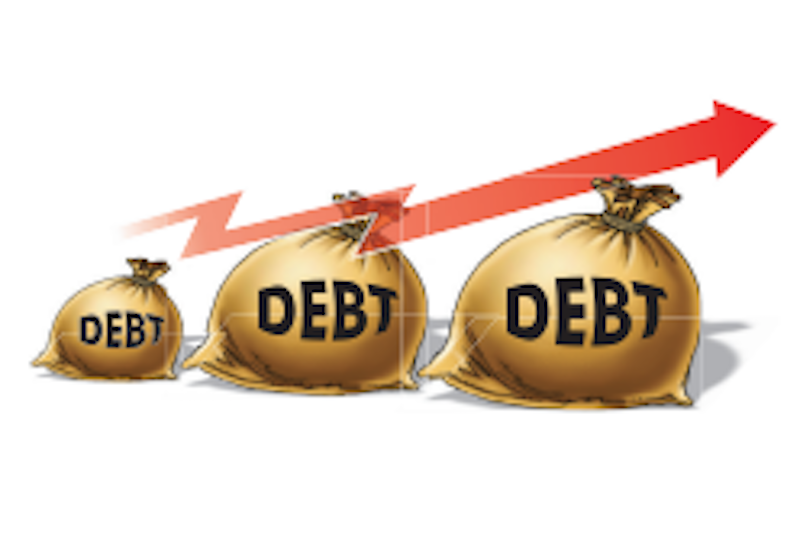
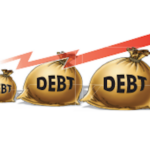
With public debt standing at N166.79 trillion as at June 2026 and the federal government seeking approval for another $21.7 billion in external loans, experts are genuinely raising red flags over the situation, calling on economic handlers to make a detour before the country is boxed into a debt trap.
According to them, the level of borrowing is unhealthy when compared to revenue generation.
They said the wide mismatch between debt and income creates a scenario that suggests the country may be gradually borrowing away its fiscal future and ultimately stall its development goals.
However, they noted that the growing concern is not necessarily that Nigeria is on the brink of sovereign default, but that the rising cost of servicing the existing obligations could progressively restrict the government’s ability to finance development, respond to economic shocks and meet the expectations of its citizens.
According to the Debt Management Office (DMO) data, Nigeria’s public debt comprised N91.59 trillion in domestic obligations and N75.20 trillion in external debt, representing 54.91 per cent and 45.09 per cent of the total portfolio, respectively.
The external debt position is particularly noteworthy, having increased by $2.6 billion quarter-on-quarter and $7.5 billion year-on-year to $54.5 billion in Q2 2026.
Last week, the federal government proposed a $21.7 billion borrowing programme, comprising $20.5 billion and €1.0 billion in external facilities under the 2026–2027 debt framework, as it aims to further expand the country’s exposure to foreign-currency obligations if fully utilised.
While the government maintains that the funds are necessary to address Nigeria’s infrastructure deficit and stimulate economic growth, the scale of the proposed borrowing raises questions about repayment capacity, fiscal flexibility and the long-term implications for public finances.
Indeed, the International Monetary Fund’s June 2026 assessment projected that the federal government’s interest payments would absorb approximately 53.7 per cent of government revenue in 2026 whilst highlighting the growing competition between debt obligations and development expenditure.
In practical terms, the more revenue a government commits to servicing existing debt, the less fiscal room it has to finance public services, invest in productive sectors and cushion households against economic shocks.
The proposed borrowing programme also carries significant financing costs. According to Finance Minister Taiwo Oyedele, approximately $7.9 billion would come from multilateral and bilateral lenders, while the remaining $13.77 billion would be raised through commercial channels.
Based on assumed interest rates of 2.3 per cent for concessional facilities and 7.8 per cent for commercial borrowing, the programme could carry a weighted average interest rate of approximately 5.8 per cent. Full utilisation could translate into additional annual interest payments of about $1.26 billion.
This would increase the pressure on public finances, particularly given Nigeria’s exposure to exchange-rate fluctuations. Since external obligations are largely denominated in foreign currencies, further naira depreciation could increase the domestic-currency cost of servicing the debt.
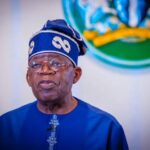
However, the government’s argument for infrastructure financing cannot be dismissed. President Bola Tinubu has identified projects including the Lagos-Calabar Coastal Highway, Sokoto-Badagry Superhighway, Trans-Sahara Superhighway, electricity grid upgrades and modernisation of commercial ports as critical investments expected to improve connectivity, reduce logistics costs and strengthen productive capacity.
Other News
The administration argues that these projects will unlock economic opportunities, attract private investment and support its ambition of building a $1 trillion economy by 2030.
But economic experts who spoke to Daily Sun at the weekend, stressed that the central question would be whether the economic returns from these investments will be sufficient to justify their financing costs.
Borrowing for infrastructure, they said, can support long-term growth, but only when projects are properly selected, transparently executed and completed within reasonable cost and time limits.
The Managing Director, Decof Investments Ltd, Moses Igbrude, said without effective project management, revenue reforms and accountability, additional borrowing could leave the country with expensive obligations but insufficient economic returns.
“Nigeria’s debt challenge, therefore, extends beyond the size of its obligations. Weak revenue mobilisation, dependence on oil earnings and rising interest payments remain significant structural constraints.
Ultimately, the country risks entering a cycle in which additional borrowing is required to meet existing fiscal obligations, further narrowing the resources available for development. The government’s priority must be to ensure that every borrowed dollar translates into productive assets, stronger economic activity and sustainable revenue”, Igbrude said.
He added that the real measure of Nigeria’s borrowing strategy should not be how much money it can secure, but whether it can build an economy capable of repaying it without sacrificing the future of its citizens.
Sharing the same sentiment with Igbrude, analysts at Cowry Research, said that although the infrastructure deficit provides a compelling case for additional
investment, borrowing must be matched by fiscal discipline, improved revenue mobilisation and sound project management.
“Without meaningful progress on these fronts, rising debt-service commitments, currency exposure and competition for domestic liquidity could further narrow fiscal space and complicate monetary policy management”, they said.
The research and investment firm added that Nigeria has not necessarily reached a point where it cannot meet its obligations but warned that the country’s exposure to foreign-currency obligations creates an additional layer of risk.
“Nigeria needs sufficient FX earnings to service its external obligations, but its export earnings remain heavily concentrated in crude oil. Consequently, fluctuations in international oil prices, production disruptions and exchange-rate pressures can complicate debt management.
First, revenue mobilisation must become a central component of the government’s economic strategy. Expanding the tax base, improving tax administration, reducing leakages and strengthening non-oil revenue generation are essential to reducing dependence on borrowing.
Also, the government must exercise greater discipline in project selection. Borrowed funds should prioritise projects with demonstrable economic returns, strong development linkages and the capacity to stimulate private-sector investment”, they said.