Follow Us on Google

Prominent African leaders, former presidents, traditional rulers and business executives have adopted a 19-point declaration calling for reparatory justice, deeper economic integration, greater African ownership of natural resources and creative industries, and institutional reforms aimed at accelerating the continent’s development.
The declaration, adopted at the third Elevate Africa Convening in Accra, Ghana, also seeks easier movement of people across African borders, stronger economic relations with the diaspora, improved infrastructure, greater participation of young people and women in governance, and increased investment in education, healthcare and innovation.
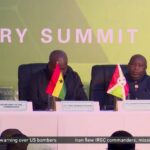
Known as the Accra Declaration of Commitment, the document was signed by participating leaders in their personal capacities at a Presidential Roundtable on October 28, 2026, with the signatories calling on African governments, the African Union, the African Continental Free Trade Area (AfCFTA) Secretariat and regional institutions to translate the proposals into policies and programmes.
The two-day gathering, themed “Africa: Defining Her Future,” was co-founded by the Olu of Warri, Ogiame Atuwatse III, and his wife, Olori Atuwatse III, and brought together political leaders, traditional rulers, investors, academics, entrepreneurs, development practitioners and representatives of the creative industries.
Among the participants were former Nigerian President Goodluck Jonathan, Sierra Leonean President Julius Maada Bio, former Malawian President Joyce Banda and former Mauritian President Ameenah Gurib-Fakim.
The declaration groups its commitments around three broad priorities: addressing the historical consequences of the transatlantic slave trade and reconnecting Africa with its diaspora; accelerating trade, investment, economic integration and ownership of creative assets; and strengthening leadership, public accountability and opportunities for future generations.
On reparatory justice, the signatories called for recognition of the continuing consequences of slavery, including the return of ancestral remains and cultural property, access to historical archives, formal apologies where appropriate and consideration of measures to restore affected communities.
They maintained that reparations should be distinguished from remittances, philanthropy, investment and development assistance, arguing that historical justice could not be substituted with ordinary financial transactions.
The declaration also advocated policies to facilitate the return of Africans in the diaspora through improved access to citizenship, residency, land ownership and recognition of professional qualifications.
On continental integration, participants called for faster implementation of the AfCFTA, visa-free and visa-on-arrival arrangements, mutual recognition of qualifications and the eventual introduction of an African passport.
They also sought improvements in roads, ports, electricity and digital infrastructure to enable African businesses to operate more efficiently across national borders.
The signatories urged governments to ensure that African countries derived greater benefits from their natural resources through transparent mining contracts, local processing of minerals and equitable treatment of communities hosting extractive industries.
They also advocated stronger African control over data, investment in artificial intelligence infrastructure and digital skills, and policies that would enable the continent to participate meaningfully in emerging technologies.
Addressing the gathering, the Olu of Warri challenged African leaders to shift their development priorities from dependence on natural resources to investment in human capital and productive institutions.
“The true wealth of any nation lies not beneath its soil, but within its people,” he declared.
The monarch warned that Africa’s expanding population would not automatically translate into prosperity without deliberate investments in education, healthcare, agriculture, technology and innovation.
With projections indicating that more than one in four people worldwide would be African by 2050, he said the continent must prepare its young population for opportunities in an increasingly knowledge-driven global economy.
The question of African ownership also featured prominently in discussions on the continent’s growing influence in music, film, fashion and other creative industries.
Olori Atuwatse III challenged African governments, investors and business leaders to ensure that the international popularity of African creative products translated into greater economic returns for their creators and countries of origin.
She said Africa earned only about one dollar from every 100 dollars generated through global trade in creative goods, describing the imbalance between cultural influence and commercial returns as a major challenge requiring stronger intellectual property protection, financing and African-owned distribution platforms.
“Our soft power should do more than make the world lean in. It should make the world buy in,” she said.
Referring to the global popularity of Afrobeats, Nollywood and African fashion, she added: “The rhythm is ours. The colour is ours. Too often, the receipt is made out to someone else.”
Speaking on behalf of Dr Osahon Okunbo, founder of The Osahon Okunbo Foundation, the foundation’s Director of Partnerships and Communication, Nicole Asinugo, also emphasised the need to protect Africa’s cultural heritage and ensure that the economic benefits of its creative achievements remained accessible to future generations.
Okunbo maintained that international recognition of African artists would have limited long-term value without institutions capable of protecting intellectual property, preserving cultural knowledge and supporting emerging talents.
Drawing on his experience growing up around Benin artworks belonging to his late father, he described cultural heritage as a repository of history, identity and knowledge that should be preserved and developed for the benefit of succeeding generations.
The convening also produced an initiative aimed at connecting African creative talent with business development opportunities.
Elevate Africa announced a partnership with the Centre for Business Innovation, Entrepreneurialism and Management at National University to provide a year-long mentorship programme for four winners of the Threads of Africa Fashion Film Prize.
The programme, valued at approximately $25,000 in in-kind support, will provide training and guidance in entrepreneurship, marketing, branding and business development.
It complements the $25,000 non-dilutive grand prize awarded to the overall winner, Adekola Emmanuel.
Ghana’s Minister of Tourism and Creative Arts, Abla Gomashie, also called for a change in the global perception of Africa, arguing that the continent should be recognised not merely as a source of raw materials but as a centre of human capital, creativity and innovation.
Beyond economic development, the Accra Declaration called for transparent and accountable governance, greater citizen participation and deliberate inclusion of young people, women and persons with disabilities in decision-making.
It also advocated constructive cooperation between elected governments and traditional institutions, while recognising the need to uphold constitutional authority and democratic accountability.
To monitor implementation, Elevate Africa is expected to serve as the secretariat for the declaration, maintaining records of commitments and individual pledges made by the signatories.
Within 12 months, the organisation is expected to prepare a progress report in consultation with the signatories for presentation at the next convening.
The arrangement is intended to establish a mechanism for assessing progress and determining whether the commitments are being translated into practical interventions.
Although the declaration does not constitute a binding governmental agreement, its signatories expressed the expectation that African governments, regional institutions, investors and development partners would support its implementation.
The participants maintained that Africa’s development prospects depended on building effective institutions, protecting its cultural and economic assets, expanding opportunities for its young population and ensuring that the benefits of natural resources and economic growth were more widely shared.