Follow Us on Google
From Juliana Taiwo-Obalonye, Abuja
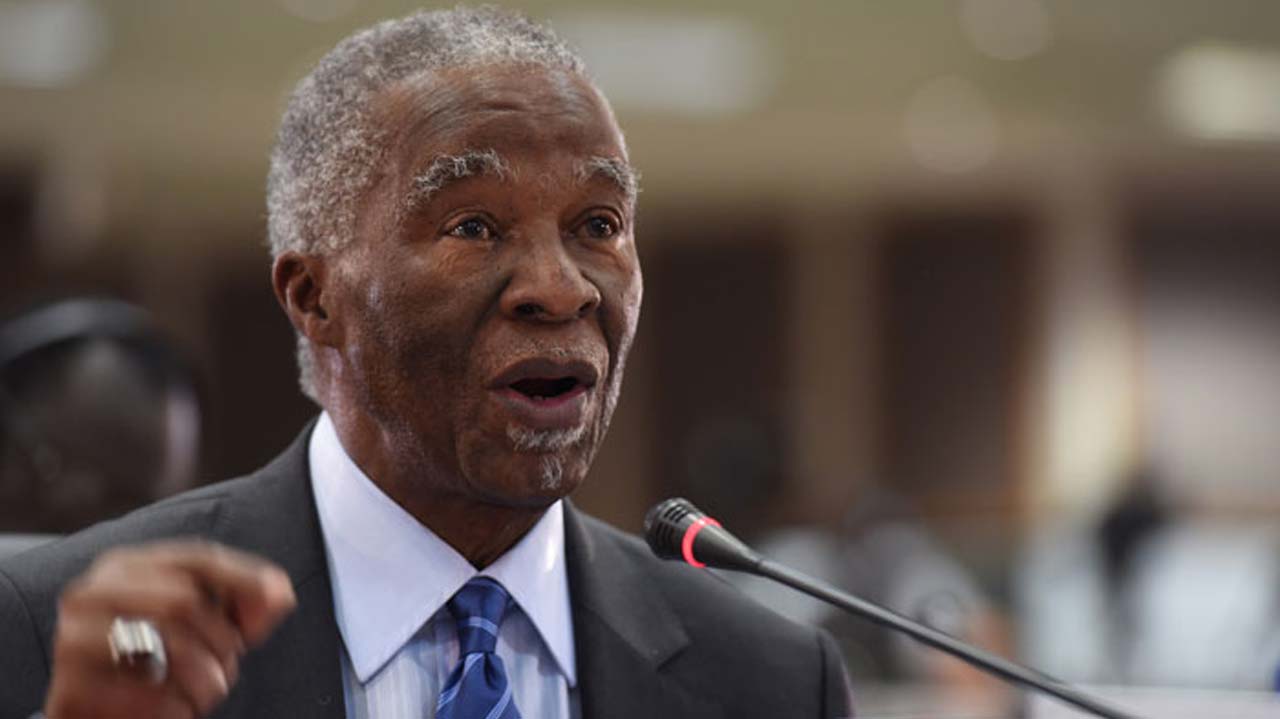
Former South African President Thabo Mbeki has credited former Nigerian Head of State General Abdulsalami Alhaji Abubakar with fast‑tracking Nigeria’s return to democracy in 1999, describing the speed and integrity of the 1998–1999 transition as an exceptional act of statesmanship that reshaped Nigeria and set a benchmark for Africa.
Speaking virtually at the public launch of three books honouring General Abdulsalami on the eve of his 84th birthday, Mbeki said the retired general’s decision to commit to an 11‑month transition after assuming power in June 1998 was not just prudent politics but a decisive break from the pattern of prolonged military rule that had long plagued the continent.
Mbeki highlighted the chaotic circumstances that brought Abdulsalami to power following the sudden death of former Head of State General Sani Abacha on 8 June 1998.
“Following his appointment as head of state by the Provisional Ruling Council, he recognized the urgent need for stability and democratic governance and hence chose to commit to a short transition period,” Mbeki said.
Unlike many military leaders who consolidate power, Mbeki argued, Abdulsalami’s response was defined by restraint and national interest:
“His response to the political uncertainties that followed the sudden demise of General Sani Abacha… demonstrated great wisdom, foresight, and statesmanship.”
He said Abdulsalami “placed the interests of his country first and overcame the temptation and allure of power.”
Mbeki described how Abdulsalami, within days of taking office, announced he would conduct elections and hand over to a civilian government within 11 months.
“By recognising this achievement, we are not only acknowledging a fact of history. But indeed also paving the way for the consolidation of our aspirations for peace and inclusive development all over our continent,” Mbeki said.
He called the 1998–1999 tenure “significant not only for its brevity, but also for the cascading impacts that it created in the history of democratic transition in Africa.”
Mbeki said the speed of the transition was matched by deliberate institutional reforms: “His administration immediately upon coming into office, set about providing [a] constitution for Nigeria along the necessary electoral and governance reforms leading to free and fair elections in 1999.
“He ensured the strengthening of institutions necessary for sustaining democratic rule in Nigeria, thereby paving the way for Nigerian civilian government,” he added.
Mbeki acknowledged the apparent contradiction in a military officer becoming a champion of democracy.
“Given some of Africa’s history since independence, it would be natural to expect that a man of his background from the military profession who rose to become general and head of state while in a soldier’s uniform would not be associated with the idea of democracy.”
He then contrasted expectation with reality: “However, the beauty lies in the fact that he performed both duties with a keen sense of justice and history, responsibility and distinction, leaving many in awe of his ability to organize a political transition in his country as quickly as he did.”
Mbeki said Abdulsalami’s conduct defied the usual pattern of military rule in Africa: “Admittedly, Africa’s history and its political evolution have been characterized by periods of military rule, of one‑party states, of authoritarianism, and protracted struggles for democratic governance.”
Yet he argued that Abdulsalami’s actions broke that cycle: “The example set by General Abdulsalami in Nigeria offers several key lessons for African leaders and institutions. His commitment to democracy, peace, and stability must stand out as his greatest legacy.”
Mbeki highlighted that the fast‑tracked transition was not a rushed exercise but one that built enduring institutions. “Without doubt, he has laid the foundation for the sustenance of the democratic ethos and card on the credibility of elections, respect for constitutional term limits, and adherence to democratic principles, which have now become the norm in Nigeria,” Mbeki said.
“The constitutional framework and electoral institutions that he helped to create still serve as the bedrocks of Nigeria’s democracy,” he said.
He noted that the transition also established a critical precedent: “He not only swiftly paved the way towards democratic governments in Nigeria, but also laid the foundation for subsequent peaceful transfers of power in Nigeria, for which not only you Nigerians, but the rest of us Africans are immensely proud.”
Mbeki framed this as a continental achievement: “By recognizing this achievement, we are not only acknowledging a fact of history. But indeed also paving the way for the consolidation of our aspirations for peace and inclusive development all over our continent.”
Mbeki insisted that the three books launched at the event are essential to preserving the narrative of Abdulsalami’s fast‑tracked 1998–1999 transition.
The publications are: Call of Duty: An Autobiography of Gen. Abdulsalami Alhaji Abubakar; Nigeria’s Grand Patriot: Gen. Abdulsalami Alhaji Abubakar; Mediating for Peace in Africa: A Festschrift in Honour of Gen. Abdulsalami Abubakar
“The three books that we’re launching today testify to the richness of the life of Abdulsalami Abubakar and his odyssey as a soldier, a husband, a father, a leader, and a statesman of global record,” Mbeki said.
He warned that without proper scholarship, history would be distorted: “The paucity of scholarship and research leaves room for discussion and misrepresentation, which leads to the adoption of wrong policies.”
“Writing books and leaving behind us correct narratives and testimonials for present and future generations matters greatly,” he said.
Mbeki saluted the authors and the general: “I therefore salute the authors of the three books being launched today, including the man of the movement, General Abdulsalami Abubakar, who has contributed a very informative autobiography, Call of Duty.”
Mbeki framed the story of the 11‑month transition as a generational lesson for African leaders and youth.
“The duty of advancing democratic transition and building peace and security in Africa must be a generational endeavor, involving present and future leaders of the continent,” he said.
“In doing so, we must imbibe the legacies of leaders like Abdulsalami and read about their lives as we find them in books such as the three that we are launching today.”
He urged that young people be taught their responsibilities: “Educating our youth and instilling in them the duties of patriotism and good conduct must entail holding up the examples of leaders like General Abdulsalami to build and perpetuate the active interests and participation of the youth.”
Mbeki also called for familiarity with continental policy instruments: “This must include familiarization of the youth with the African continental policy positions binding on all member states of the African Union… These policies are included in such important documents as the African Charter on Democracy, Elections and Governance, as well as the protocol… establishing the Peace and Security Council of the African Union.”
Mbeki concluded with a personal address to General Abdulsalami on his 84th birthday. “I congratulate my dear brother, friend and companion in Pan‑Africanism… on attaining the right age of 84,” he said.
“More than being blessed with attaining such an age, we must celebrate his lofty stature as an eminent African statesman, a global leader, an accomplished and principled soldier, a family man and a man for all seasons, who has dedicated his life to peace, to the cultivation of harmony in his country and beyond, and achieving shared development throughout Africa.”
Mbeki summed up the essence of Abdulsalami’s leadership:
“His selfless service, commitment to national unity and exemplary leadership remain a model for others to follow.”
He ended with a quote from Nelson Mandela: “Real leaders must be ready to sacrifice all for the freedom of their people. May we all remain committed to this noble perspective.”