Follow Us on Google
•Advocate jail term for non-compliance
By Steve Agbota [email protected]
On Wednesday, April 10, 2024, a boat accident involving a commercial speedboat and a fishing canoe on the Anam River in Anambra State, claimed the lives of five movie stars, inlcuding Nollywood actor, John Paul Odonwodo, popularly known as Junior Pope.
Daily Sun learnt that Junior Pope‘s death was as a result of his refusal to wear a lifejacket during the boat trip.
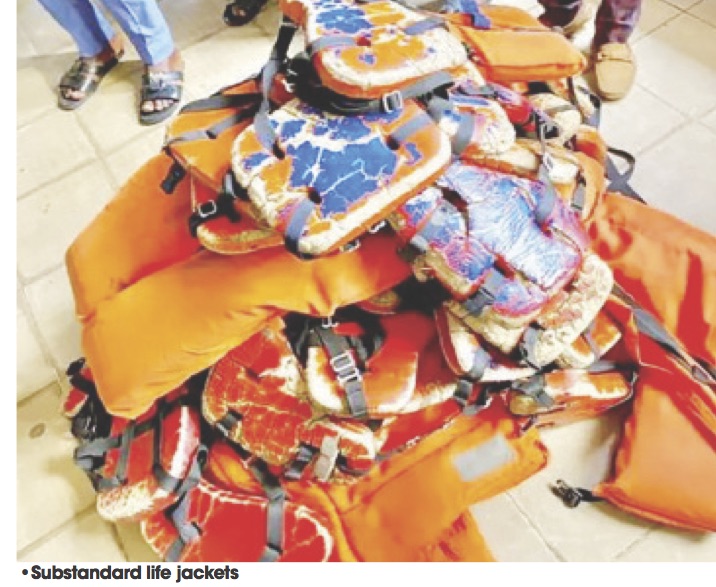
This incident happened barely 48 hours after a pregnant woman and two other female passengers lost their lives following a devastating boat accident involving 11 passengers from Bonny Island to Port Harcourt, Rivers State. The Passengers blamed the boat operator for being tipsy before the trip in addition to providing substandard life jackets to passengers on board.
Over the years, many Nigerians have lost their lives as a result of boat mishaps on inland waterways. Some of these incidents according to industry observers involved ordinary Nigerians trying to avoid traffic gridlock, which have become a common feature on most of the nation’s busy roads as a result of bad roads, leaving them with the boat option as their only means of transportation, especially those living in the littoral areas.
The boat accidents have majorly occurred in riverine communities in all the 22 out of 36 states that engage in water transportation system in the country.
Frequent boat accidents on the nation’s waterways have been blamed on substandard use of life jackets, refusal of passengers to wear life jackets, substandard boats, over-loading of passengers and goods, disregard for safety guidelines and lack of boat maintenance culture.Others are; water hyacinth, night voyages by ferry operators, obstruction on waterways, violation of route usage, faulty ferry and boat engines, fueling of boat on the water, among others.
In spite of campaigns being carried out by National Inland Waterways Authority (NIWA), the Nigerian Maritime Administration and Safety Agency (NIMASA) and other agencies to engage in enlightenment and education of ferry operators and passengers on safety, rules and regulations, some recalcitrant boat owners and drivers are still flouting the rules not leaving out some stubborn passengers.
The act of defiance of these boat operators have sent thousands of innocent people to their earlier grave.
Nigeria has some unpleasant statistics of boat accidents where loss of lives could have been prevented if the safety vests were worn. Some of these statistics are not captured by the National Berau of Statistics (NBS) and the media.
Several boats accidents have happened in the first quarter of 2024 that claimed lives. Between January 4–5, 2024, boat mishap happened in Umumu Umuenwelum Anam, Anambra West Local Government Area, Anambra State which claimed the lives of eight passengers.
On January 15, eight passengers were confirmed dead and an estimated 100 were missing after their overloaded boat capsized in north-central Nigeria. There are there many of these accidents on the nation’s waterways but the latest one that happened in the Anam River in Anambra and Port Harcourt, Rivers State remains fresh.
Also, 15 children drowned and 25 others were missing when a boat capsized in a river in Sokoto state, northwest Nigeria, in May 2023.
Another eight persons were said to have died in a boat accident that occurred in Gusau, Zamfara, in May 2023. In June 2023, more than 106 people were killed in the Kwara boat accident. Also, on June 26, three students from Calabar, Cross Rivers State died in a boat accident.
12 people were killed in a boat accident at a river, Kogi Kungra Kamfani, in Arikiya, Lafia LGA of Nasarawa on August 24, 2023.
Also, 15 persons were confirmed dead in Adamawa boat mishap on September 9 and another 11 died two days later.
30 persons, mostly women and children, have been confirmed dead; over 30 people were rescued in a boat accident on September 10, 2023, in the Mokwa local government area of Niger state.
On October 29, 2023, over 30 persons died, while 61 bodies were declared missing after a boat conveying over 100 persons across the stretch of River Benue in Karim Lamido local government area of Taraba state capsized.
But, experts who spoke to Daily Sun on enforcement of life jackets and other safety rules on inland water transportation recommended that the Federal Government should prosecute and jail boat owners, operators and passengers who refuse to abide by the laws of water transport in the country, adding that prosecuting and jailing offenders will reduce loss of lives and the frequent boat mishap.
An expert, Dave Calistus, said it was sad that too many accidents occur on the nation’s inland waterways and too many lives have been lost across the littoral communities in the country.
He urged government agencies, including NIMASA, NIWA and others, totake responsibility and ensure compliance on the nation’s waterways.
According to him, due to the inefficiency in management and personnel, many people in their productive years have lost their lives to boat mishaps in recent years.
While the precarious nature of water transportation in Nigeria is not restricted to managerial inefficiency and manpower ineptitude, he lamented that the ignorance of boat riders and passengers in taken safety measures haveproven to be worse.
He said there was the need for government to establish an institution where operators will be mandated to attend boating education training to learn the rudiments of the business.
He said boating laws and regulations, navigation rules, knot tying, trailering and what to do in a weather-related emergency are topics that must be included in the training.
He said government must prosecute and jail those who violate inland waterways laws to serve as deterrent to other recalcitrant boat operators and passengers as part of enforcement.
Also commenting, a maritime and culture tourism development expert, Mr. Frank Meke, said the issue in Nigeria is just like the enforcement of road traffic issues in Lagos, where people are warned not to cross the bridge.
‘‘Do you know that a lot of Lagosians still cross the highway instead of using the bridges.
Like I used to explain, people are yet to understand that in the littoral communities, a lot of them still do business on water as a matter of culture. Culture in the sense that, their fathers and mothers are inside the waters even though they fall inside the water, they can come out in three hours or four hours and there will be no water on their body. So they have those false beliefs about the water ecosystem.
And that, I feel, they will not be able to work off their mind. That’s why I said it’s cultural. So where, possible, I will say that NIWA should consistently talk about it through sensitization. Enforcement sometimes is part of the ecosystem. But actually, when you have a cultural issue, then you need to approach it differently by reaching out to people, talking to them, these are the values, these are the benefits and these are the dangers. Consistently, not just once in a while,” he said.
He said their cultural belief is not justifying why they should not use life jacket but rather that is one of the hindrances to enforcement.
According to him, that people believe that they live on water and their fathers have been there, get birth to them there, grew up there does not mean they shouldn’t take safety precaution before boarding the boat.
“It happens across the Niger Delta. I mean this is very difficult to enforce. You know most of them are very violent. And you see what happens with the army and all. Before anything, they jump inside water and disappear and you see them reappear within. So they have that false hope.
And those are times when their fathers know how to handle nature. You know, you can handle nature,” he added.
He therefore decried that most of littoral states in Nigeria don’t use life jacket because they believe that they know everything about the waters
For enforcement, he said: “The question now is, what did the law say about somebody who is not using life jackets or somebody who is boating or who is on the boat or owns the boat and there’s no life jacket in it or no necessary safety equipment on it, what did the law say? I think you know it.
“You must have gotten to saturate information.You must have gotten to reach out to people both the state and local government to sensitise people save your life first.
Use life jackets.
“Here in Lagos, some of them will just go and get foam and sew it as life jacket. If they fall inside water, there is no way they can be saved. It is ordinary foam. Do you know how many that NIWA has seized and burnt.
We are talking about palliative now in Nigeria. My brother, how much it will cost to buy genuine life jackets?
He said boating is an economic issue and it has its own economy. He said to get an authentic life jacket for a boat on eight passengers, is running into a million of naira.
He advised government to budget money for NIWA to embark on vigorous sensitisation, training and retraining because it takes money and time.
He urged all the politicians and local governments in the littoral communities should start buying life jackets for their people to save their lives as part of their community projects, they should buy new boat or good engines for them.
He said even the marine police doesn’t have boat, when they have boat they don’t have fuel even some of them are not properly kitted.
Also speaking with Daily Sun, the President of the Association of Tourist Boats and Water Transporters Operators of Nigeria (ATBOWATON), Mr, Gani Tarzan, said to have effective enforcement of life jackets nationwide is that all boat operators must insist all passengers must wear life jackets properly either they like it or not.
According to him, If anybody refuse saying he doesn’t want to wear life jackets, they should not allow him to join the boat
“That all boat operators must insist all passengers must wear life jackets before they cast off. Although there were some passengers after the boat leave the jetty they to remove the life jacket, they used to do that and I have seen that so many times but boat operators must insist they wear life jackets.
“Maybe they must be a penalty for the boat operators and the passengers. Not that alone, some people can intentionally creating problems for the boat operator and if anything happens, the boat operators will be responsible. For instance, in my own jetty where I operate, I told boat driver he must not move if anybody does not have the life jacket on. And if they do, they will pay N5000 as a fine.
“So, you know, no driver wants to pay N5,000. We can’t charge the customer to pay before they don’t wear that jacket, but we can stop them from entering our boat. In my jetty, it’s written there, we have the right to refuse you from entering our boat if you don’t cooperate with our boat operator, if you are drunk. This is for safety reasons and that is what I think we can do for now,” he explained.
He revealed that even when the life jacket is there, some of the passengers will refused to wear it, adding that some boat operators have life jackets while some don’t have, which is the fact.
“I go round and monitor things. Anybody who doesn’t want to wear life jackets should collect their money back and leave the jetty that nobody will be allowed to join the boat without life jackets,” he said.
Speaking on the sanctions for violators of life jackets enforcement, he said for now a lot of things have to be put in place or have to be changed.
“The regulatory bodies that license boats, I don’t think they are the ones who are supposed to be arresting boats on the waterways. We should leave that for the marine police who doesn’t know me, who doesn’t know you, who doesn’t know who has come to register or not?
“Just like on the road, when you go and register your car at the local government or wherever you register, it’s not the local government staff that come on the road. It is the highway patrol or whatever. They stop your car. Where is this? Where is that? They don’t know you and they don’t want to know you. What do they want, are you complying with the laws or the rules?
“So I would say that the marine police should be allowed to carry out inspection. And also at the jetty, before the boat moves, whoever, they must ensure everybody are on life jackets because government is trying, but they can’t cover everywhere. It’s not possible. But there should be a kind of law that every jetty must have someone that his job is just to make sure that they wear their life jacket properly before boarding the boat,” he said.
However, he hinted that if everybody enters the boat and removes the life jacket, the boat captain can report when he gets to the other side that this one on their way coming, maybe he wanted to commit suicide because he removed his life jacket.
“That has happened before. I have seen that and I have experienced it before from Ikoyi, somebody wanted to enter the boat. He seated on the wrong place but the captain said he can’t sit there, come and sit here.
The guy said no, the captain said I can’t move on. Let him come and sit here. The passenger is sitting down. After sitting down, the captain said you must wear life jacket.
“He put it on and when they get to the middle of the water, the man removed his life jacket. About four of them that was on the boat. The other three people were telling him, Mr. why are you so problematic? Why are you removing your life jacket? We have not got to where we are going. He told them, what’s your business?After removing the life jacket, he jumped into the water,” he said.
He said it was the third day they found his corpse and inside his pocket, they found a letter that actually stated he had issues with his wife and that is why he committed suicide.He said they should be a law that anybody found on the boat not only the boat operator even the passengers should know that they must be on life jacket and if anybody refuses to wear it, the law will take its course.
He said government needs to do a lot of sensitisation on radio, television, newspapers and all other medium, saying even when a boat operator don’t give life jackets, the passengers have every right to ask for it.