Follow Us on Google
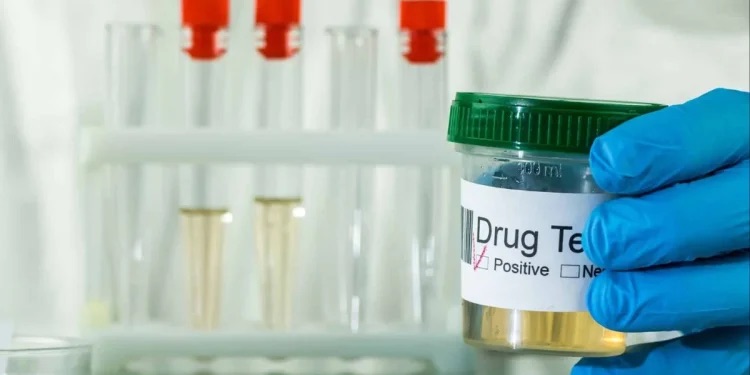
In a bid to curb drug and substance abuse among young people, the Federal Government recently approved mandatory drug integrity test for students in secondary schools across Nigeria. It also approved temporary suspension of those who repeatedly test positive after undergoing treatment and rehabilitation procedures. This is coming at a time when some young persons, including secondary school students, are hooked on drugs.
The United Nations Office on Drugs and Crime (UNODC) estimated in 2018 that the prevalence of drug use in Nigeria was 14.4 per cent. This approximates to 14.3 million people between the ages of 15 and 64, which is roughly three times the global average. Different studies indicate that there are substance abuse rates of between 20 per cent and 40 per cent among youth and secondary school students in urban areas. The most commonly abused drugs include Codeine, Tramadol, Cannabis (Marijuana), sedatives, cough syrups, glues, spirits, and ammonia.
Academic stress, peer pressure, high rate of unemployment and poverty are the primary drivers of drug abuse among these young people. Others are curiosity to experiment with hard drugs, bad influence of parents using drugs, and easy accessibility of these drugs, among others. Sadly, the health of these youths is seriously affected. These drugs damage the liver and other internal organs, including cardiovascular strain. Other health complications leading to high rate of psychiatric admissions also occur.
Besides, their academic performance is usually so poor that some of them drop out of school. There is also increased breach of security in the school environment. Most gang violence, cultism, armed robbery and other crimes in high schools and tertiary institutions are directly linked to substance abuse.
The mandatory drug test, which happens to be the idea of the Ministry of Education and the Nigerian Drug Law Enforcement Agency (NDLEA), will apply to newly admitted students in secondary schools at the point of entry. The measures are contained in the National Implementation Guidelines Against Drug and Substance Use in Schools in Nigeria for secondary schools. It is aimed at curbing substance abuse and creating safer learning environment in the country.
At least, once every academic session, schools are expected to conduct unscheduled, random, and periodic screenings for both new and returning students. To ensure standardized and accurate procedures, tests are to be administered in partnership with state or federally approved health facilities and procedures.
Commendably, there are structured three-stage intervention and rehabilitation process for students who test positive. The first offence attracts mandatory pre-test and post-test counselling and school recommended treatment. Second-time offenders are referred to professionals for further treatment and specialized attention. The affected students can only face temporary suspension from the school environment if they continually test positive after undergoing prescribed rehabilitation programme.
Other News
Also, to teach students about the dangers of substance use, including early warning signs of addiction and life skills to resist peer pressure, age-appropriate drug education modules are being integrated in school curriculum. Students who require controlled medication for medical conditions are expected to declare such medications through their parents or guardians during admission. These are all good policies.
But there is need to do more. The return of moral instruction in schools is inevitable. The get-rich-quick syndrome is affecting the youths badly. They need attitudinal change and value orientation. The dangers of drugs should be part of the school curriculum in value orientation and moral education. Parents and guardians should set good examples for their children and wards. Schools, civil society and faith-based organizations should play a role in the moral upbringing of school children.
Let the drug test be thoroughly implemented. Students found to be in drugs must be adequately rehabilitated. They must be saved from substance abuse because if we lose the youths, we lose the future.
Beyond schools, the NDLEA and the National Agency for Food and Drug Administration and Control (NAFDAC) must beef up the fight against the illegal importation, manufacturing or sale of illicit drugs in the larger Nigerian society.
Let all states emulate the Anambra State Government’s example. The state’s Homeland Security Law is against the use, manufacture or sale of illicit drugs and other hard substances in the state. Citing this law, the Special Adviser to the Governor on Community Security, Ken Emeakayi, recently warned that any property, including markets and halls, where hard drugs are used, manufactured, or sold in any part of the state would be subject to forfeiture and demolition by the state government.
Government should not relent in efforts to curb use of illicit drugs. It should find ways of creating job opportunities or engaging the youth so as to take their minds off illicit substances. Government agencies such as the National Orientation Agency (NOA) should engage in continuous campaigns and awareness creation on the dangers inherent in the use of illegal substances.