Follow Us on Google
From Jude Chinedu, Enugu
In a modest but hopeful gathering to mark World Malaria Day, 28-year-old Amaka Nnamani (not her real name), clutched her antenatal card a little tighter than usual.
Pregnant with her second child, she knows what malaria can do. She lost her first pregnancy to complications worsened by the disease.
Now, she is among 1,000 pregnant women newly enrolled into Enugu State’s health insurance scheme, a lifeline that offers not just treatment, but reassurance.
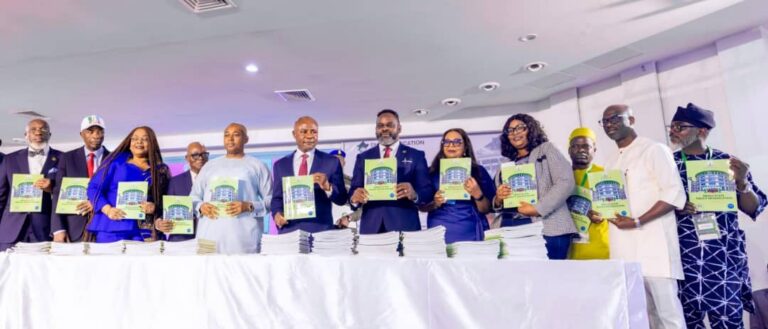
The Enugu State Government, in partnership with Excellence Community Education Welfare Scheme (ECEWS), rolled out the initiative as part of intensified efforts to eliminate malaria, especially among vulnerable groups.
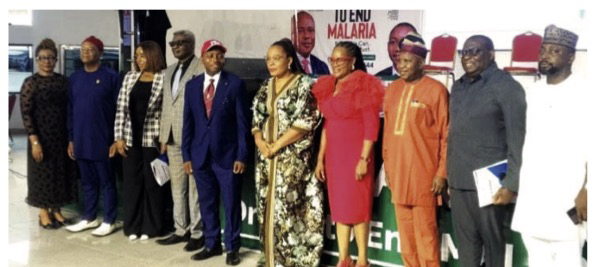
The event was held at the International Conference Centre, Enugu on April 29, 2026.
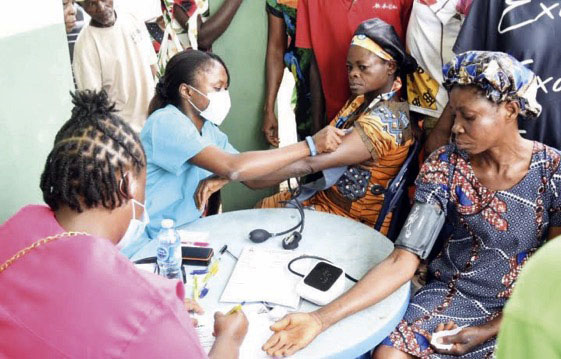
For beneficiaries like Amaka, the support goes beyond mosquito nets. It includes free malaria testing and treatment, antenatal care, delivery services, and post-natal care for both mother and child, a full circle of protection at a time when it matters most.
Speaking through the Wife of the Speaker of the Enugu State House of Assembly, Chinyere Ugwu, the Wife of the Governor, Nkechinyere Mbah, framed the intervention as a grassroots fight that must begin at home.
“We will empower women as frontline warriors to ensure concrete actions are taken even at the household level, and with the concerted efforts of all, the anticipated victory of malaria elimination is within reach,” she said.
Her words show a shift in strategy, one that recognises that malaria is not just a medical issue, but a social one, deeply tied to awareness, prevention, and access to care.
According to the Commissioner for Health, Prof. George Ugwu, Enugu has recorded a significant drop in malaria prevalence, from 25.5 per cent to 9.9 per cent. Behind those numbers are years of coordinated interventions, partnerships, and increasing community participation.
He said: “It is highly possible there will be a reduction to malaria prevalence below five percent in 2027 and a total elimination of malaria in its entirety in a few years to come in the state.
“We are also getting support from some council areas that procured and distributed insecticide-treated nets and some that have enrolled thousands of their residents into the state health insurance scheme free of charge.
Other News
“The state is still expecting insecticide-treated nets from the National Malaria Elimination Programme and involvement of more partners, as well as residents keying into all malaria prevention, testing and treatment programmes”.
Across the state, access to care has also widened. Free malaria testing and treatment are now available in 527 health facilities, both public and private, bringing services closer to communities that once had to travel long distances.
Beyond malaria-specific interventions, the government’s broader investment in healthcare infrastructure is also shaping outcomes. New primary healthcare centres, secondary and tertiary hospitals, and a 300-bed international hospital in Enugu metropolis are gradually redefining access to quality care.
Development partners have played a critical role in this progress. Organisations such World Health Organisation (WHO), UNICEF, and others continue to support the state’s malaria response through funding, technical expertise, and community engagement.
The Chief Executive Officer of ECEWS in Nigeria, Dr Andy Eyo, said the organisation’s intervention has helped scale up malaria services across the state.
“We carried out free medical outreach in five selected health facilities in Enugu State. Today, we are supporting the state in enrolling 1,000 pregnant women into the state health insurance scheme,” said the Project Director, Chief Ayodele Alegbeleye.
“Through strengthened collaboration, community driven action, and sustained advocacy, ECEWS remains committed to supporting Nigeria’s path to a malaria free future.
“Today, services have been taken to all health facilities across Enugu State. People can now get tested and treated for malaria free of charge,” Eyo said.
He explained that the programme is supported by the National Malaria Elimination Programme, with funding from the Islamic Development Bank (IsDB), in collaboration with the state government.
Eyo added that the organisation has also enrolled over 1,000 pregnant women in a health insurance scheme to improve maternal care and access to malaria prevention services.
“Our board and management approved health insurance coverage for 1,000 pregnant women. We are paying their premiums, which means they can access antenatal care, deliver in hospitals, and receive malaria prevention and treatment services at no cost,” he said.
The event also served as a moment of recognition. Beloved-Dan Anike of Enugu East Council Area was honoured as Best Malaria Elimination Supportive Local Government Chairman, while Kyrian Ezeh of Udenu LGA received the award for Best Malaria Elimination Supportive LG Focal Person.
For Amaka and many other women in Enugu, the fight against malaria is no longer just a government campaign. It is real, it is close to home and, for the first time in a long while, it feels like something that can truly be won.