Follow Us on Google
•How non-state actors are squaring up against kidnappers, other criminals
By Oluseye Ojo
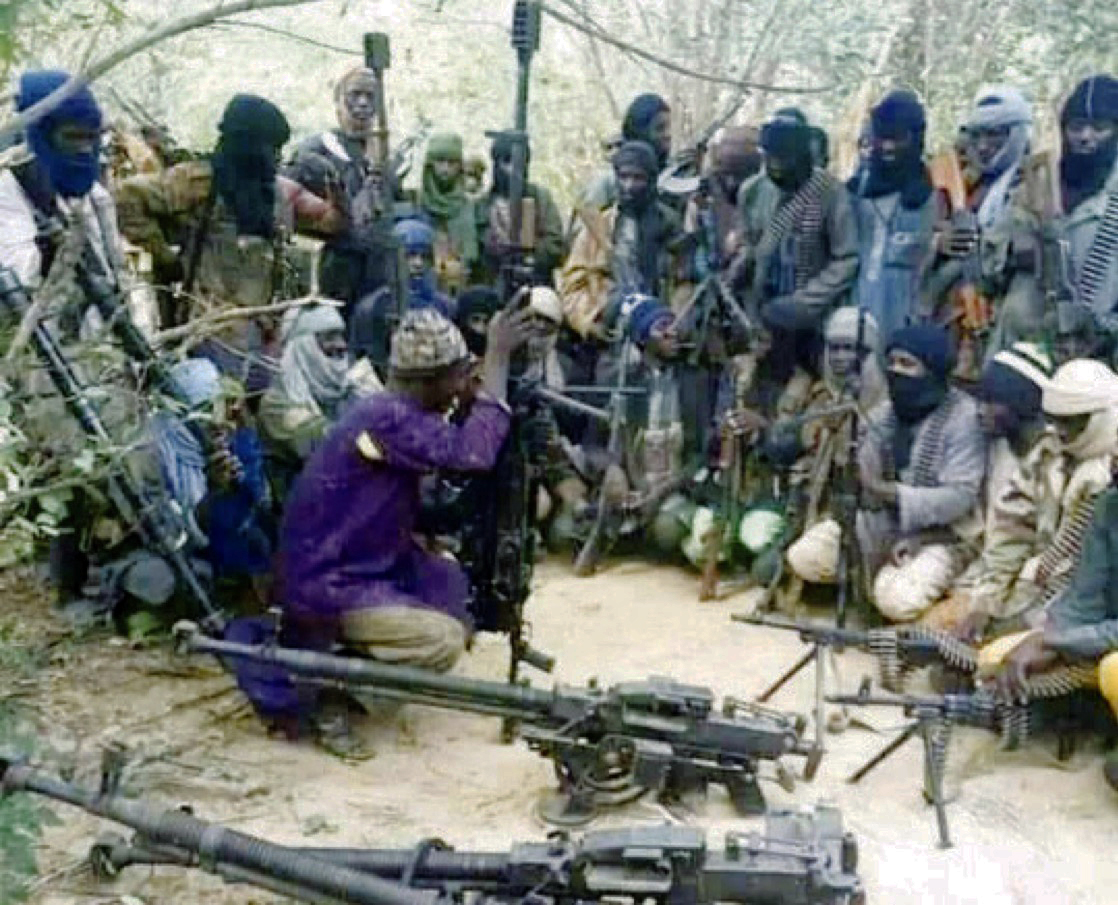
Nigeria, by all constitutional definitions, has one police force. In reality, however, the country is increasingly being policed by dozens of shadow forces..
It is an alternative security ecosystem that has emerged across vast forest reserves, federal highways, isolated agrarian farm settlements, ancient villages, riverine creeks, and urban neighbourhoods.
The entity is neither fully official nor entirely informal. It is a multi-layered network of vigilantes, regional security outfits, community guards, private security contractors, and volunteer militias that have become the first responders whenever danger strikes.
They are the men who know every hidden footpath in the thickest forests, women who notice and identify strangers, and local hunters who can track kidnappers through the dense bush in the dead of night, using nothing but ancestral knowledge and intuition.
When communities stopped waiting
Nigeria, according to available records, has a population exceeding 220 million people. But the country’s police-to-citizen ratio remains far below the internationally recommended minimum standard of one police officer to 450 citizens.
The centralised Nigeria Police Force (NPF), numbering fewer than 400,000 personnel as at last count, has no doubt been depleted by bureaucratic assignments, VIP protection details, and severe logistical deficits.
As gathered, vast swathes of rural Nigeria are completely unpoliced. Massive forest corridors, such as the notorious Kamuku, Falgore, and Sambisa forests as well as the Old Oyo National Park, have turned into sovereign safe havens for heavily armed kidnappers and bandits. Communities separated from federal security formations by rugged mountains or broken roads often have to wait hours, sometimes days, for state intervention after an attack.
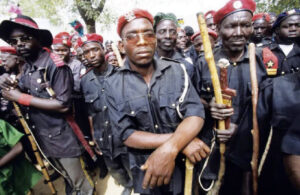
Into this yawning vacuum stepped local actors. What initially began as an isolated and defensive community vigilante arrangements, and neighbourhood night watchmen, armed with whistles and old single-shot Dane guns, gradually evolved into highly organised paramilitary security structures, complete with distinct uniforms, marked patrol vehicles, sophisticated radio communication systems, and varying degrees of statutory backing from state governments.
The Inspector General of Police, Tunji Disu, has repeatedly maintained that the NPF is entering a new era of intelligence-led policing. He stressed that security must be a shared responsibility, rooted in community trust rather than force alone.
North-East
At the height of the Boko Haram insurgency between 2012 and 2015, communities in Borno, Yobe, and Adamawa states faced an existential threat of total annihilation. Towns were being systematically overrun, residents were being mass-abducted, and conventional security agencies struggled immensely because they could not distinguish embedded insurgents from local civilians. Then, out of sheer desperation, local youth in Maiduguri stepped in. Armed initially with little more than sharpened sticks, cutlasses, local knowledge, and raw determination, the volunteers formed the Civilian Joint Task Force (CJTF) in North-East
Military commanders repeatedly acknowledged that without the CJTF, reclaiming territories and dismantling complex urban insurgent networks would have been nearly impossible.
South West
The South West security anxieties intensified dramatically between 2019 and 2021. This came as rural kidnapping, highway ambushes, and violent farm invasions spread across agrarian communities, and struck at the economic heart of the region.
Among the most visible and polarising figures to emerge from the crucible is Chief Sunday Adeyemo, known nationally as Sunday Igboho. His controversial 2021 intervention in Igangan, Ibarapa North Local Government Area of Oyo State, catapulted him from a localised political enforcer into a symbol of regional security defiance.
Following persistent and agonising complaints by residents about attacks, rapes, and multimillion-naira ransoms linked to armed criminal elements operating out of deep forest settlements, Igboho bypassed federal chains of command and led a dramatic campaign demanding their immediate expulsion.
His actions polarised public opinion across Nigeria. For his supporters, he was a courageous defender of vulnerable, and terrorised communities that had been thoroughly abandoned by a slow-moving, as well as indifferent federal apparatus.
Sources stated that, even Igboho’s harshest critics could not ignore the practical reality on the ground as residents across parts of Oyo State reported a significant and immediate decline in violent highway attacks following the intense local mobilisation in the area.
The subsequent arrest of the notorious criminal suspect, Iskilu Wakili, by operatives of the Oodua People’s Congress (OPC) in 2021 further reinforced the deep public perception that local security actors could achieve swift and tangible results.
These days, many residents in agrarian communities, such as Igangan, Aiyete, Igbo-Ora, Idere, Eruwa, and Lanlate point to improved security conditions compared to the peak terror years of the early 2020s. They attributed the stability not to an increased NPF presence, but to local watchmen.
The OPC itself remains one of Nigeria’s most enduring non-state security organisations. Initially birthed in the 1990s as a radical political and security movement for Yoruba self-determination, the group gradually evolved into a grassroots community security actor.
The formal establishment of the Western Nigeria Security Network, popularly known as the Amotekun Corps, by the South-West governors marked an even more institutional development.
Unlike informal vigilance groups, Amotekun operates under explicit legal frameworks individually enacted by the respective state legislatures.
It was stated that its creation represented a tacit admission by state executives that federal security mechanisms alone were insufficient to address localised asymmetric threats.
More recently, the landscape shifted again with Sunday Igboho’s unveiling of the Iru Ekun Security Network. The outfit immediately generated nationwide conversation after reports emerged that it gave intelligence to the police, which eventually led to the rescue of the abducted sister of Chief Adebayo Adelabu, a former Minister of Power, Mrs Olaide Busayo Adegoke John-Paul. .
She was abducted with her 12-year-old twin sons on Wednesday, June 3, 2026. They were intercepted by armed gunmen at around 7:30 a.m. in the Elewura-Challenge area of Ibadan while she was driving her children to school. But they were successfully rescued in the night of Saturday, June 6.
Its operatives have also actively intervened in a complex kidnapping case in rural areas of Oyo State. In the first week of April 2026, the Olubadan of Ibadanland, Oba Rashidi Ladoja (Arusa1), inaugurated more than 5,000 community security personnel under the newly established Ibadan Community Guards to strengthen grassroots security across the city. He said the community guards would work closely with conventional security agencies to curb crime and prevent the spread of banditry.
South-East
Studies revealed that few regions illustrate the meteoric rise and desperate necessity of community security networks more vividly than the South-East. Over the past few years, the geopolitical zone became dangerously synonymous with attacks by non-state actors, unknown gunmen, severe highway kidnappings, and targeted assaults on federal police formations.

The systematic violence severely disrupted commerce, restricted freedom of movement, and instituted a climate of profound fear. Faced with immense public pressure, state governors within the region turned decisively toward heavily-funded, locally rooted security solutions.
In January 2026, Governor Hope Uzodimma inaugurated a massive, 7,000-member Imo Vigilance Services Organisation. The initiative, backed legally by the Imo State Security Organisation Amendment Law No. 3 of 2025, sought to institutionalise and standardise community-based security across every autonomous community in the state.
Traditional rulers and local community leaders played a central role in vetting and selecting recruits in order to ensure that no stranger was brought into the local apparatus. After undergoing intense tactical training, the operatives were deployed back to their native localities where they serve as on-the-ground intelligence gatherers and armed first responders.
Community leaders across the state noted that the results have been highly noticeable. From the historically volatile corridors of Mbaitoli to the rural expanses of Ngor Okpala, reports indicate a steep reduction in rural kidnapping, motorcycle theft, and violent house break-ins.
Many of the communities already maintained small and informal village vigilance arrangements. The state initiative did not replace them, but rather integrated, armed, and funded them under a singular, recognisable command structure.
The operatives live within the exact communities they protect, which positioned them to identify suspicious vehicular movements or unusual gatherings, and neutralised them long before a crime can be executed.
Local residents reported that many criminal syndicates that once terrorised rural roads have been forced to flee into neighbouring states or face immediate local capture.
In Anambra State Governor Chukwuma Soludo’s Operation Udo Ga-Achi represents one of Nigeria’s most ambitious and forward-looking experiments in combining local security with advanced technological innovation.
The initiative, built around the Anambra State Homeland Security Law 2025, reportedly blends traditional community vigilance with modern electronic warfare.
The security architecture was described as striking in its design based on visible factors. They include artificial intelligence-powered surveillance systems deployed at critical highway junctions; a centralised state-of-the-art statewide command-and-control centre in the state capital; advanced GPS tracking technologies embedded in patrol assets; and a dedicated, highly trained local security structure known as the Agunechemba.
The Soludo model recognises a fundamental truth of modern asymmetric warfare, which includes intelligence matters far more than raw, and uncoordinated force. Communities are incentivised to take active ownership of their local security footprint.
The state government also institutionalised a N5million reward for actionable intelligence leading to the disruption of criminal cells, alongside a massive N10million monthly incentive for communities certified as entirely crime-free.
In neighbouring Abia State, the Operation Crush has become the flagship security intervention of Governor Alex Otti’s administration. It was created specifically to dismantle the multi-layered kidnapping syndicates that had long crippled the commercial hub of Aba and the volatile Lokpanta axis.
The joint task force brings together military, police, and paramilitary personnel, working hand-in-hand with localised intelligence informants.
Residents widely credit Operation Crush with restoring unprecedented evening commerce to areas once designated as complete no-go zones after dark. In the same vein, Enugu State has adopted a stealthier and highly calibrated model. The state government systematically strengthened its existing Forest Guards, reactivated neighbourhood watch systems, and invested heavily in tactical technology.
Other News
Sources said tactical surveillance drones regularly monitor remote valleys and the historically dangerous cave systems of Enugu-Ezike. High-definition security cameras to track urban movements in real-time, and state-funded communication networks have vastly improved inter-agency coordination.
Also, Ebonyi State Neighbourhood Security Watch has similarly earned substantial praise for its rapid response times and grassroots penetrative presence. While residents acknowledged that local operatives respond to domestic emergencies and armed robbery incidents infinitely faster than federal police, serious concerns persist regarding operational professionalism and adherence to human rights.
ESN
The Eastern Security Network, (ESN) the armed wing of the Indigenous People of Biafra, IPOB, formed in December 2020 and has been linked to actions against herders in parts of the South East. The group has said its mandate is community protection, while government and security agencies describe it as a proscribed militant outfit.
IPOB said it launched ESN “as a reaction to the Igbo’s perception that they are targeted by Muslim Fulani herders, whom they accuse of grazing on farmlands and committing crimes like raping and killings against local residents.”
ESN itself has maintained that it exists “for repelling violent Fulani herders that attack communities in the region.”
One cited incident occurred days after IPOB gave South East governors 14 days to ban open grazing. “However, the ESN did not wait 14 days; a few days later, ESN operatives attacked a Fulani camp in Isuikwuato, Abia State, killing their livestock and burning down their houses.”
Following that raid, the report notes that “some governors responded by heeding the ESN’s call and banning open grazing.”
IPOB has denied involvement in wider insecurity, saying ESN was “established in 2020 to protect communities from herdsmen attacks” and that it is “a non-violent organisation committed to self-determination.”
Although ESN has been proscribed by the Federal Government as a terrorist organization, many have agreed that the group kept the marauding herdsmen away from farmlands and forest in the South East.
Their actions can be felt in some of their strongholds like Orlu, Oliver and parts of Owerri. Their presence can also be felt in some parts of Ebonyi, Anambra, Abia and Enugu States.
North-West
The North-West is a region that has been brutally battered by industrial-scale banditry, mass school abductions, and the sacking of entire agricultural enclaves. Communities have been forced to rely on local volunteer self-defence groups known widely as Yan Sa Kai, alongside state-backed formations like the Kaduna Vigilance Service and Katsina Community Watch Corps.
In the terrain-heavy states of the zone, the volunteer groups are often the only physical barrier preventing armed bandits on motorcycles from wiping out entire villages.
They provide crucial real-time human intelligence, track bandit movements into deep arid forests, and act as vanguard forces guiding military columns through perilous terrains.
Similarly, Kano’s Vigilante Corps has become an institutionalised component of local urban and rural security management, handling everything from local property disputes to the arrest of drug traffickers.
Meanwhile, the Hisbah Corps, operating across states implementing Sharia law, has evolved into a powerful social and security institution. Their functions often extend far beyond conventional crime prevention into the sensitive realms of moral policing, public decency enforcement, and social regulation adding yet another complex layer to the on-going national debate regarding the boundaries and mandates of community enforcement.
North Central
In the North-Central zone, the Benue State Volunteer Guards emerged directly out of the bloody crucible of recurring, and devastating conflicts between nomadic herders and sedentary farming communities.
In Plateau State, a similar response emerged through Operation Rainbow, a home-grown security and intelligence outfit established in 2010 to address the state’s persistent cycles of ethno-religious violence, communal conflicts, and attacks on rural communities.
Over the years, it has evolved into a grassroots security network that supports intelligence gathering, early warning systems, and collaboration with conventional security agencies.
In Nasarawa State, security efforts have centred on community policing committees, vigilante groups and local hunters, rather than a single state-owned security outfit.
In Niger State, escalating bandit attacks and rural insecurity prompted the creation of the Niger State Special Vigilante Corps, a coordinated vigilante structure designed to complement conventional security agencies.
In Kwara State, local hunters, vigilante groups and community watch networks have emerged as critical grassroots security actors in response to rising threats from banditry and rural criminality.
In Kogi State, rising concerns over kidnapping, armed robbery and criminal activity along major highways led to the strengthening of the Kogi State Vigilante Service, a state-backed security outfit that works alongside conventional security agencies in intelligence gathering, crime prevention and community protection.
Niger Delta
The South-South geopolitical zone presents an entirely unique case study, where the concept of the shadow force intersects directly with national economic survival and industrial asset protection.
Groups like the Rivers State Neighbourhood Watch operates alongside heavily armed multi-billion-naira private security contractors like Tantita Security Services Nigeria Limited, led by Government Ekpemupolo, popularly known as Tompolo.
The Tantita’s aggressive and intelligence-driven operations against international crude oil theft syndicates have attracted immense national and international attention. Operating deep within the labyrinthine creeks of the Niger Delta, where the Nigerian Navy and conventional security forces have historically struggled with terrain limitations, Tantita has successfully discovered and dismantled highly sophisticated illegal pipelines, arrested ocean-going vessels loading stolen crude, and significantly restored Nigeria’s disrupted daily oil production metrics.
As gathered, Tantita’s operations have contributed to stabilising the federal government’s oil revenue streams.
Good, bad sides of shadow forces
Communities that were once paralysed by the psychological dread of impending attacks now report a renewed sense of economic and social safety.
Grassroots intelligence gathering has reached unprecedented levels of efficiency. The shadow forces have also ensured that response times to active crime scenes have drastically shortened, criminal hideouts have been systematically dismantled, and high-profile kidnappers have been apprehended. Many lives have also been saved.
But human rights advocates, constitutional lawyers, and international observers have continuously warned that a significant portion of Nigeria’s shadow security outfits operate completely outside the boundaries of institutional oversight.
Cases involving arbitrary arrests based on local vendettas, unlawful long-term detentions in unauthorised facilities, institutionalised torture, and extrajudicial executions have periodically surfaced across every region.
Modern political theory dictates that a sovereign state derives its ultimate legitimacy from maintaining a strict and absolute monopoly over the lawful use of force and coercive violence.
Some commentators have repeatedly argued that the lines of accountability would always become dangerously blurred, when multiple local actors, ranging from state-funded corps to independent ethnic militias, begin to freely exercise coercive authority, conducting armed raids, and detaining citizens.
Fears also persist regarding the long-term vulnerability of the shadow forces to partisan political manipulation. Observers have noted that without rigid and centralised constitutional safeguards, the boundary line between genuine community protection and autocratically controlled political enforcement remains dangerously thin.
Way forward
On Thursday, June 11, 2026, the House of Representatives took a monumental step toward dismantling the single-police monopoly that had defined Nigeria’s Fourth Republic.
In a high-stakes plenary session presided over by the Speaker of the House, Rt. Hon. Tajudeen Abbas, the green chamber officially passed the landmark constitutional amendment bill seeking to establish state police across the federation.
The legislation, titled “A Bill for an Act to Alter the Constitution of the Federal Republic of Nigeria, 1999 to Provide for the Establishment of State Police; and for Related Matters (Sixth Alteration) Bill, 2026,” secured overwhelming support.
Out of the lawmakers present, an astonishing 288 voted in favour of the bill, while only four voted against it.
Concurrently, the Senate, following an intense presentation of the bill’s general principles by Senate Leader, Opeyemi Bamidele, successfully passed the State Police Bill through its second reading.
Senate President, Godswill Akpabio, subsequently referred the executive bill, which had been formally transmitted to the National Assembly by President Bola Tinubu to the Senate Committee on Constitution Review, chaired by Deputy Senate President Barau Jibrin, for final clause-by-clause refinement and public stakeholder consultation.
Under Section 9 of the 1999 Constitution, the passed bill must be formally transmitted to the 36 State Houses of Assembly across the federation.
For the amendment to become valid law, it must secure the explicit, individual legislative approval of at least two-thirds of the states, meaning 24 out of 36 state parliaments must vote in concurrence.
Following successful ratification by the states, the bill must then return to the executive for formal presidential assent.
Investigation showed that Nigeria’s current debate over state police is a direct echo of its pre-1966 security architecture, when the country successfully operated a dual system comprising the federal police and localised regional forces.
It is believed that until state police comes to full reality in Nigeria, the shadow forces might continue to hold the sway, though they can still be needed like in modern America, where shadow security has re-emerged in a more institutionalised form through Business Improvement Districts (BIDs) and private policing networks, funded by wealthy commercial districts.