Follow Us on Google
• Obasanjo attacks imported model; Jonathan decries election litigation; Obi warns of weakening institutions
By Philip Nwosu and Paul Orude, Bauchi
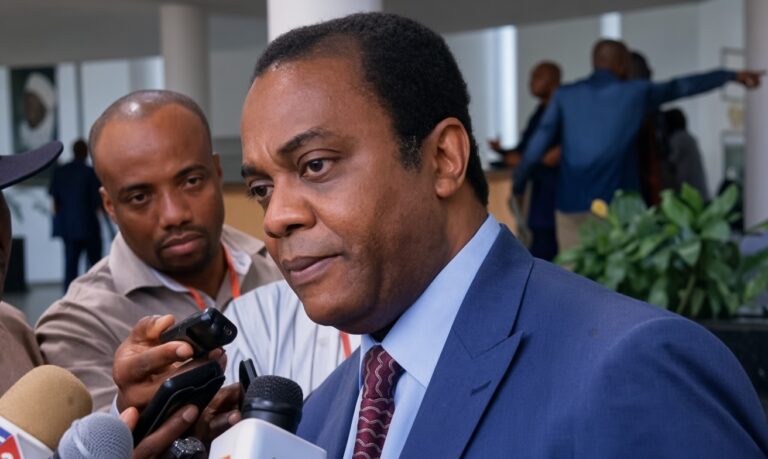
Two former presidents, Olusegun Obasanjo and Goodluck Jonathan, alongside former governor and presidential candidate of the Nigeria Democratic Congress (NDC) Mr. Peter Obi, have raised a fresh alarm over the state of Nigeria’s democracy, warning of a deepening institutional decline and demanding urgent reforms to safeguard the country’s democratic future.
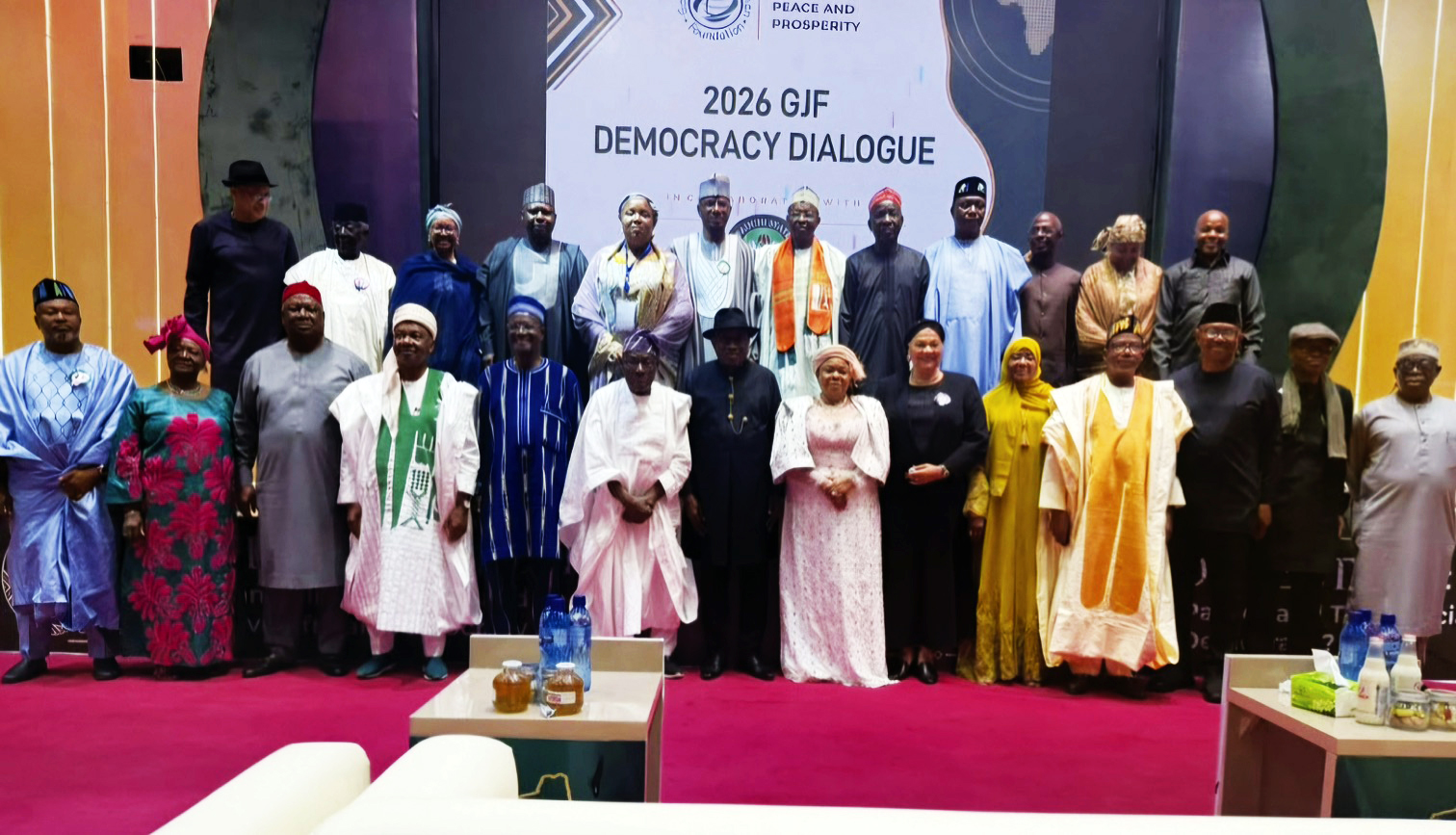
The trio spoke at the 2026 Goodluck Jonathan Foundation Democracy Dialogue in Bauchi, yesterday, where political leaders, constitutional experts and civil society actors examined the challenges confronting democracy in Nigeria and across Africa.
Their interventions focused on different aspects of the democratic system but converged on a troubling picture of a political order struggling with electoral credibility, excessive post-election litigation, weakening institutions, political exclusion and a winner-takes-all culture.
While Obasanjo questioned the suitability of the Western liberal democratic model adopted by African countries, Jonathan decried Nigeria’s growing dependence on the judiciary to settle electoral and political disputes. Obi, on his part, warned that the weakening of electoral and judicial institutions was putting the country’s democratic future at risk.
Obasanjo, who chaired the dialogue, argued that Nigeria and other African countries had largely inherited a democratic model that was not designed around their historical, cultural and political realities.
“The democracy we practice has no African context, no African content,” he said.
According to him, the imported model has encouraged a winner-takes-all political culture in which opponents are treated as enemies rather than legitimate participants in governance. “When you talk about loyal opposition in an African setting, opposition means enemy. Then do you have a loyal enemy? So, what do you do with your enemy? You crush him and destroy him, and that is what we have.”
He also criticised the first-past-the-post electoral system, arguing that a candidate could win by a narrow margin and subsequently exercise virtually total control over political power. “If you beat me by one vote, then you take it all and whatever I have does not matter.”
Obasanjo called for a broader rethink of democratic governance in Africa, insisting that the system must reflect the continent’s history, culture and values rather than simply replicate foreign political structures.
He also warned against allowing Nigeria’s diversity to become a source of division, saying the country’s ethnic, religious and cultural differences must be deliberately protected and managed.
“Nigeria is what it is because of our diversity. Remove diversity out of Nigeria and you will probably have the Republic of Oduduwa or the Republic of Danfodio. That will not be Nigeria. That diversity must be nourished and taken care of,” he said.
The former president further criticised the influence of money and inducements in politics and lamented the limited representation of women in political leadership since the beginning of the Fourth Republic.
Jonathan, however, focused on what he described as Nigeria’s unusual culture of post-election litigation and the growing role of the judiciary in determining political outcomes.
The former president said election disputes had become so common that politicians now appear to factor litigation into their electoral calculations.
“The Nigerian situation is extremely different from most other African countries. The kind of election litigation we experience here is uncommon. I can describe the Nigerian situation as a very anomalous one.” Jonathan recalled that a former deputy president of South Africa had expressed surprise during his tenure as vice-president that Nigerian politicians routinely challenged election results in court after losing elections.
Jonathan acknowledged the importance of an independent judiciary but expressed concern over declining public confidence in some political judgments.
He particularly criticised judicial intervention in internal party affairs, including disputes over party primaries.
“Courts now determine who becomes a party’s candidate and, in some cases, which political party should be recognised,” he said.
According to him, political parties should retain primary responsibility for selecting their candidates, while the judiciary should intervene where there are clear breaches of the law.
Jonathan suggested that in some highly controversial cases, returning the matter to voters could be preferable to allowing prolonged litigation to determine electoral outcomes.
“In some highly controversial cases, it is better for the election to go back to the people,” he said.
Obi, in his intervention, warned that the weakening of Nigeria’s electoral and judicial institutions could have consequences far beyond the current political generation.
Recalling his experience of challenging his presidential election result in court, Obi said the judiciary had previously demonstrated sufficient independence to give citizens confidence that justice could prevail irrespective of political interests.
He said he spent three years challenging his presidential election and obtained favourable judgments from judges he said he had never met.
However, Obi expressed concern that institutions established to protect democracy were increasingly being weakened by political interests.
He raised questions over alleged electoral malpractice involving academics, changes to electoral laws, religious leaders openly supporting politicians accused of wrongdoing and judicial decisions that, in his view, raised questions about institutional independence. “Where is our nation going?” Obi asked.
He warned that allowing democratic institutions to continue deteriorating would impose a burden on future generations.
“We need to reverse this, because the abuse we are allowing today will take its revenge on our children,” he said.
The three interventions came against the backdrop of continuing concerns over the credibility of elections, political accountability, institutional independence and public confidence in Nigeria’s democratic process. Taken together, their warnings went beyond calls for electoral reform, raising fundamental questions about the entire architecture of Nigerian democracy — how political competition is conducted, how opposition is treated, how elections are won and contested, how disputes are resolved and how democratic institutions can be protected from political interference.
Jonathan stressed that democracy functions as an ecosystem involving political parties, electoral bodies, security agencies, the judiciary, civil society, the media, election observers and voters.
The speakers therefore called for a broader reform agenda capable of restoring confidence in democratic institutions and ensuring that political power is determined by credible elections rather than money, institutional manipulation or prolonged courtroom battles.
The dialogue was attended by former Vice-President Namadi Sambo, Bauchi State Governor Bala Mohammed, constitutional experts and civil society representatives from across Africa.