Follow Us on Google

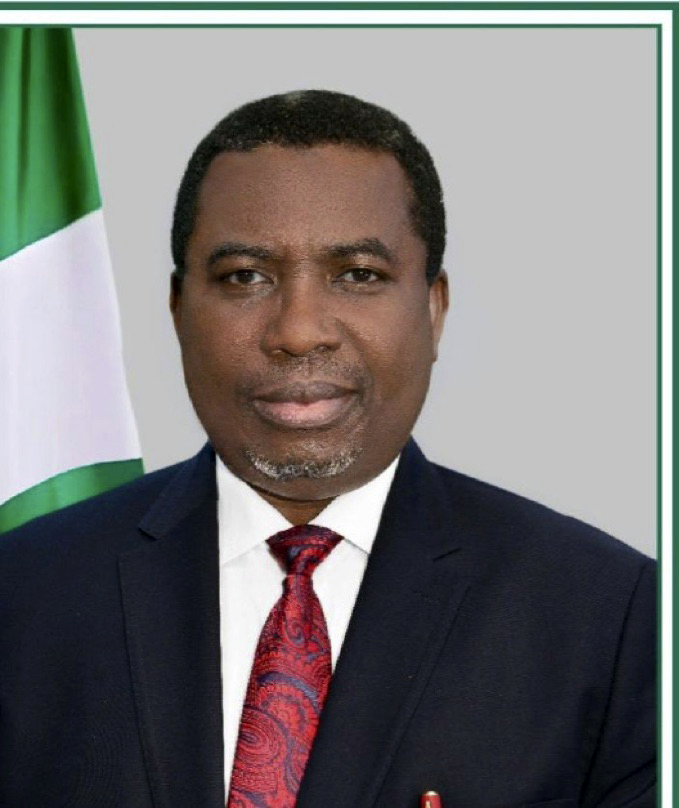
The intractable problem of illicit funds inflows into the country might have compelled the leadership of the Economic and Financial Crimes Commission (EFCC) to order bank employees to declare their assets before June 1, 2021. The new EFCC Chairman, Abdulrashed Bawa, who gave the directive after meeting with President Muhammadu Buhari in Abuja, explained that the exercise will check illicit funds transfers in the country. Bawa further reiterated that the order was in line with the Bank Employees, etc. (Declaration of Assets) Act 1986, enacted to ensure adequate measures in sanitising the nation’s financial system.
For instance, Sections 1 and 7 of the Bank Employees, etc. (Declaration of Assets) Act 1986, make it mandatory for every employee of a bank to make full disclosure of assets upon employment, and annually in subsequent years. Similarly, the penalty for violation of the Act, as spelt out in Section 7(2) includes imprisonment for a term of 10 years. “Any employee guilty of an offence under subsection (1) of this section shall on conviction be liable to imprisonment for 10 years and shall, in addition, forfeit the excess assets or its equivalent in money to the Federal Government,” the EFCC stated.
There is no doubt that illicit financial flows and other incidences of corruption constitute serious impediments to the growth of the Nigerian economy and national development. They account for low investor confidence in the country, scarcity of basic items, galloping inflation and rising unemployment among the youths. It is noteworthy that during the campaign, Buhari, among other things, pledged to tackle corruption and unemployment. However, since his assumption office, the spate of illicit financial flows and other factors might have frustrated his noble efforts to tame the two monsters. Apart from aiding terrorism in the country, illicit funds can also discourage foreign investors.
In December 2020, Nigeria was ranked 146th out of 180 countries in the 2019 Corruption Perceptions Index of Transparency International (TI). It was rated 148th in 2017 and the 14th most vulnerable country out of 125 countries on the 2020 Basel Anti-Money-Laundering Index.
Other News
Therefore, it is hoped that the new initiative by the EFCC will block some of the loopholes currently being exploited by unscrupulous players in the financial sector to undermine the economy through money laundering and illicit financial flows. There are fears that some of these illicit funds transfers could not have taken place without active connivance of corrupt bank officials. We urge for due diligence on the part of the anti-graft agency in executing the exercise. In other words, the exercise must be handled in a way that it does not create undue shockwaves in the banking system. We say this because the banks constitute a critical sector in the nation’s economy. Let the exercise be done without causing panic in the financial sector. At the same time, the EFCC directive should not be seen as targeted at some persons or groups.
Since banks play vital roles in the economy, everything humanly possible must be done to prevent them serving as conduit pipes for illicit funds inflows. The Central Bank of Nigeria (CBN) should move fast to check fraudulent practices in the banking system. We also believe that the banks have a role to play in checking illicit financial flows in the country. Diligent asset inventory is one of the ways the banks can check frauds among their employees.
The EFCC should not limit its searchlight on bank employees alone. There is need to extend the exercise to other financial institutions which can as well serve as vehicles for movement of illegal funds. The directive falls within the mandate of the EFCC.
Established in 2004, the EFCC has, among other functions, the investigation of all financial crimes including the advance fee fraud, money laundering, counterfeiting, illegal charge transfers, futures market fraud, fraudulent encashment of negotiable instruments, computer credit fraud and contract scam. It is also empowered to examine and investigate all reported cases of economic and financial crimes with a view to identifying individuals, corporate bodies or groups involved in any financial malfeasance. The anti-graft agency is empowered to also identify, trace, freeze, confiscate or seize proceeds derived from terrorist activities, economic and financial crime related offences or the properties the value of which corresponds to such proceeds.