Follow Us on Google
From Noah Ebije, Kaduna
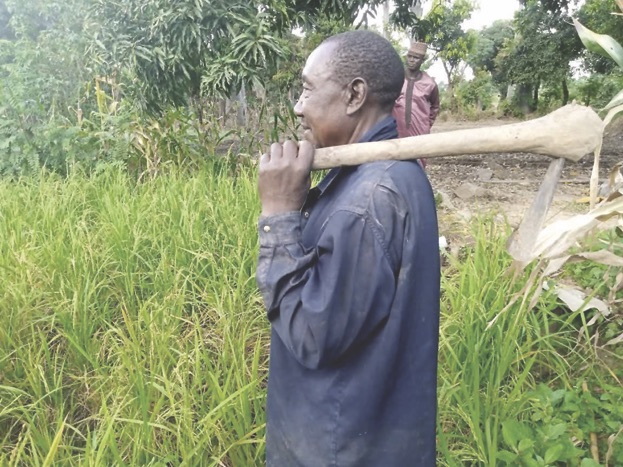
Under the unavoidable scorching sun in a farming community on the outskirts of Kaduna, Mallam Audu Rabo bends over his vegetable beds, carefully adjusting a narrow hose that drips water directly to the roots of his crops. Only a few years ago, this farmland would have been abandoned once the rains stopped.
But today, green plants stretch across the field, defying a dry season that once meant hunger and uncertainty.
By all indications, climate change is no longer a distant threat for Nigerian farmers; it is a daily reality shaping how, when and what they grow. Across Nigeria’s rural communities, prolonged dry seasons, erratic rainfall, rising temperatures and declining soil fertility have steadily undermined traditional farming systems that depended almost entirely on seasonal rains.
This reality was confirmed by Kaduna-based climate change researcher, Ibrahima Yakubu, head of Communication and Strategy at Science and Environment, African Climate Reporters, who spoke with Daily Sun on the growing pressure climate change has placed on farmers.
“Climate change has altered the farming calendar,” Yakubu said. “For farmers who rely solely on rainfall, the uncertainty has made agriculture increasingly risky. But what we are now seeing is resilience; farmers are innovating, adapting and embracing smarter ways of farming to survive.”
Investigations by Daily Sun revealed that, across several farming communities in Kaduna State, farmers are increasingly turning to smart farming, also known as climate-smart agriculture, as a survival strategy.
These practices combine indigenous knowledge, innovation and affordable technology to help farmers boost productivity while conserving water, soil and other natural resources, especially during the dry season.
For Mallam Audu Rabo, the shift has been life-changing. “Our happiness as farmers is that we no longer fear the dry season,” he said. “Once the rains end, many of us now cultivate vegetables, rice, maize, tomatoes and other crops throughout the dry months using smart irrigation.”
Across riverbanks and lowlands in Kaduna, low-cost technologies such as solar-powered water pumps, drip irrigation systems and rainwater harvesting structures are becoming increasingly common. These tools allow farmers to deliver water directly to plant roots, reducing waste and ensuring crops survive when rainfall is scarce.
According to Yakubu, irrigation has changed the meaning of the dry season for many farmers. “For many farmers, irrigation has transformed the dry season from a period of hunger into a period of opportunity,” he explained. “It stabilizes food supply and provides income when markets are less saturated.”
Beyond improving yields, Yakubu added that these systems reduce dependence on diesel-powered pumps, cutting fuel costs and lowering carbon emissions, an added environmental benefit.
Another critical adaptation observed by Daily Sun is the growing use of improved and drought-resistant seed varieties.
Farmer Dantijjo Maimasara, who cultivates maize and vegetables in Kaduna, explained that seed choice has become a survival decision.
“These crops mature faster, withstand heat stress and require less water,” Maimasara said. “Those qualities are very important now because the weather is no longer predictable.”
He noted that farmers planting early-maturing maize, rice and vegetable varieties now experience fewer losses during heat waves and prolonged dry spells.
“When we combine these seeds with proper planting schedules based on weather information, we are better prepared for delayed rains or early dry spells,” he added.
Other News
Yakubu agreed, stressing that seed selection is now inseparable from climate adaptation.
“Seed choice has become a climate decision. Farmers are learning that the right seed can mean the difference between profit and total loss,” he said.
Smart farming in Kaduna is not limited to technology alone. Farmers are also embracing soil conservation practices deeply rooted in sustainability.
Daily Sun observed increased use of mulching, organic manure, crop rotation and intercropping across farming communities. These methods help retain soil moisture, improve fertility, suppress weeds, and prevent erosion, critical benefits during dry-season farming.
“Reducing reliance on chemical fertilizers not only cuts costs but also protects the environment,” Yakubu explained. “Over time, healthier soils lead to better yields and stronger resilience against climate extremes.”
Access to climate information is also reshaping agriculture at the grassroots. Through mobile phones, radio programmes, extension services and community meetings, farmers now receive updates on weather forecasts, pest outbreaks and improved farming techniques.
“This flow of information enables farmers to decide when to plant, irrigate, harvest or apply pest control,” Yakubu said. “It reduces losses and improves efficiency. Knowledge is power; when farmers understand climate risks, they can plan, instead of reacting.”
Interestingly, Daily Sun gathered that women and young people are emerging as key drivers of smart farming in Kaduna, particularly in dry-season vegetable production.
In many communities, women-led farms now supply fresh produce to local markets when food is scarce, improving household nutrition and income. Youth involvement, often supported by digital tools and renewable energy solutions, is also helping modernize agriculture and reduce rural unemployment.
“These groups are proving that agriculture can be innovative, profitable and climate-resilient,” Yakubu said.
Despite the progress, serious challenges persist. Yakubu noted that limited access to finance prevents many farmers from acquiring irrigation equipment or improved seeds. Poor rural infrastructure, weak extension services and inadequate technical training also slow adoption.
“For too many farmers, smart farming is still out of reach, not because they don’t want it, but because they can’t afford it or lack adequate support,” he said.
On the path forward, Yakubu emphasized that scaling up smart farming requires urgent and coordinated action.
“Government at all levels must prioritize climate-smart agriculture by providing subsidies for irrigation equipment, improved seeds and renewable energy technologies such as solar pumps,” he said.
He also stressed the importance of strengthening extension services, expanding access to affordable finance through microcredit and cooperatives and giving special attention to women and youth farmers.
“Expanding climate information services, improving rural infrastructure and strengthening market access will reduce post-harvest losses and boost farmers’ incomes.
“With the right policies, partnerships and community engagement, smart farming can become a powerful tool for building climate resilience. It is not just about surviving climate change, it is about securing Nigeria’s food future.” Yakubu added.