Follow Us on Google

From Jude Dangwam, Jos
A childhood Christmas visit to a prison inmate became a lifelong memory for Sunday Bulus Ajayi, whose father took him to meet the man who would later become President of Nigeria. Decades after that encounter, he reflects on kindness, destiny and the Christian call to care for the vulnerable.
An ordinary Christmas outing for Sunday Bulus Ajayi in his childhood became an extraordinary moment that has remained with him for decades. What began as a family visit to Jos Prison turned into an encounter with, Gen. Olusegun Obasanjo, a man whose remarkable journey would take him from incarceration to the highest political office in Nigeria.

Sunday Bulus Ajayi, son of a retired Prisons officer, AIP Ajayi, who served in the Jos prison system as Assistant Inspector of Prisons (AIP) during the military era, recalled how his father gave him the opportunity to meet with Obasanjo on a Christmas Day, as a guest.
Recounting the experience to Daily Sun, Ajayi said the day began with the excitement that usually accompanied Christmas celebrations in the military barracks.
He said, he could not have imagined that the elderly man who welcomed him warmly, sat him on his lap and made promises about his future would one day become Nigeria’s President.
The memory has endured, not merely because of the identity of the man he met but also because of the lessons it holds about compassion, humanity, destiny and the importance of teaching children to care for others.
“I enjoy the memory of that Christmas morning, with loud music coming from our neighbours in the barracks. My dad ordered us to prepare for an outing. We dressed in our new Christmas clothes, ate our food and stood before the mirror, comparing our outfits with one another.
“Daddy eventually took us to the main gate of Jos Prison. When we arrived, my mind was clouded as we entered through the First Gate. I thought we were there for a haircut, because that was the only reason I knew we visited the prison.
“I touched my head and remembered that we had already had our Christmas haircuts. I felt relieved because the manual clippers used in those days were horrible. They pulled the hair and plucked it like a plant being uprooted,” he stated with nostalgia.
He explained that the family proceeded through another entrance and went to the left wing of the prison before arriving at a room where an elderly man was seated.
“On seeing us, the man called out loudly, ‘Sunday Ajayi!’ My father responded warmly, ‘Baba,’ before exchanging greetings with the man,” he recalled.
Ajayi recalled that his father had previously told them about the elderly man’s habit of exercising by running several rounds around a football field. But at that moment, the young Ajayi was more interested in the outing itself than in the significance of the encounter.
“Daddy said, ‘These are my children, Godfrey and Bulus.’ And the old man joyfully embraced us. They continued their excited discussion, while I was busy imagining that my father would take us to the old zoo, buy us ice cream and allow us to play on the swings.
“The old man sat me on his lap and told me that he would give me a wife. He made other promises that I can no longer remember. He also ordered that tea be prepared for us. I must confess that the tea tasted better than the one I usually drank at home,” he smiled.
For a child, the visit consumed a precious Christmas Day that could otherwise have been spent playing and enjoying the festivities. Yet, looking back as an adult now in his 60s. Ajayi considers the experience priceless.
What seemed like an ordinary visit to a prison inmate had become a story worth telling across generations. Years later, the significance of the encounter became even clearer when Obasanjo emerged from prison and went on to become President of Nigeria.
Obasanjo had been imprisoned under the military government of General Sani Abacha following his conviction for an alleged coup plot. After Abacha’s death in 1998, Obasanjo was released. He subsequently won the 1999 presidential election on the platform of the Peoples Democratic Party, ushering in Nigeria’s Fourth Republic on May 29, 1999.
The man who had once sat behind prison walls became the country’s number one citizen, serving two consecutive four-year terms from 1999 to 2007.
For Ajayi, the transformation remains a striking reminder that the circumstances in which people find themselves at a particular moment do not necessarily determine the course of their future.
The man he had known as a prison inmate later occupied Aso Rock, while the childhood memory of sitting on his lap remained with him long after the political landscape of Nigeria had changed.
Ajayi’s father, meanwhile, continued his prison service job for another 16 years before retiring. According to his son, he made attempts to visit Obasanjo at the Presidential Villa, hoping that the relationship established during those years might open another chapter in their lives.
But life took a different turn as Ajayi’s father died on February 13, 2023, nine years after his retirement. Despite his death, his son says the memory of that Christmas Day visit remains a treasured part of the family’s history.
Beyond the historical account, Ajayi interprets the experience through the lens of Christian faith, drawing a connection between visiting Obasanjo in prison and Jesus Christ’s teaching on caring for the vulnerable.
He describes the experience as a reminder of the biblical passage in Matthew 25:34-36, where Christ speaks of feeding the hungry, giving drink to the thirsty, welcoming strangers, clothing the naked, caring for the sick and visiting those in prison.
The passage reads in part: “I was in prison, and ye came unto me.” The teaching presents compassion not merely as an act of generosity, but as a responsibility to recognise the dignity of others, regardless of their circumstances.
In Matthew 25:38–40, those who served the needy ask when they had seen the Lord in such situations. The answer establishes the central message of the passage: whatever is done for the least of Christ’s brethren is done for Him.
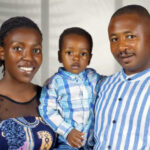
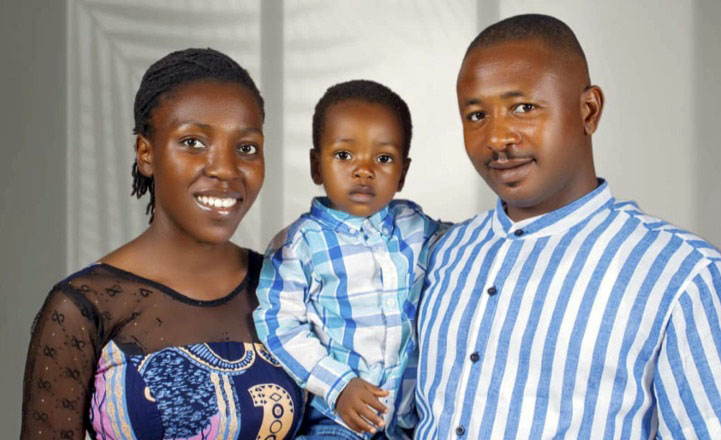
For the 37 years old Sunday Bulus Ajayi, married to Mrs Angela Sunday blessed with a son Titus Sunday Ajayi, this teaching gives deeper meaning to his resolve to recollect and shared his Christmas visit to the Jos Prison with Daily Sun newspaper.
Although the visitors went to see a man behind bars, he believes the encounter illustrates a wider spiritual truth. That acts of kindness towards fellow human beings are central to Christian discipleship.
His reflection also draws from Genesis 1:26, which speaks of humanity being created in the image and likeness of God, and Psalm 82:6, which describes human beings as children of the Most High. These passages, in his interpretation, reinforce the responsibility to treat others with dignity and compassion.
Ajayi further invokes Plato’s philosophical theory of Forms, which distinguishes the imperfect physical world from the realm of ideal forms. Through this comparison, Ajayi reflects on the enduring ideals of kindness, justice, peace and love, which people are called to embody in their everyday lives.
His message extends beyond prison walls to hospitals, orphanages, shelters and communities where people experience poverty, illness, loneliness and exclusion.
The young man said he observes that people often find it easier to associate with others during moments of celebration and success than during periods of hardship. Yet, he argues, the true measure of compassion is often revealed when someone is sick, detained, impoverished or otherwise in need of support.
The experience he said has strengthened his conviction that society must do more to encourage visits to people in prisons and hospitals, as well as provide support for widows, orphans and those without adequate shelter.
He cites Proverbs 22:2, which teaches that the rich and the poor share a common Creator, as a reminder that social status should never become a barrier to human solidarity.
Proverbs 19:17 similarly teaches that kindness shown to the poor is a service rendered to the Lord, while Proverbs 14:31 warns against oppressing the needy.
For Ajayi, these scriptures challenge people to move beyond religious declarations and demonstrate their faith through practical acts of love.
He also points to James 1:27, which describes pure and undefiled religion before God as caring for orphans and widows in their affliction and keeping oneself unspotted from the world.
His recollection further includes a visit to Jos Prison by the late former First Lady, Mrs Stella Obasanjo, during her husband’s presidency. He recalls that she took photographs with some prison officers, including his father, in the prison yard that faithful day.
The visit, he suggested, was another reminder of the importance of reaching out to people whose circumstances might otherwise cause society to overlook them. Ajayi said he remembered his father often said, “We are all prisoners.”
According to him, “as a child, I did not fully understand what the statement meant. With the passage of time, however, I have come to see it as a reflection on the limitations, struggles and uncertainties that bind human beings together.
“People may be separated by wealth, status, freedom or influence, but they remain vulnerable to circumstances beyond their control,” he noted
Looking back, Ajayi remains grateful to his father for taking him to meet Obasanjo at a time when he was too young to understand the historical significance of the encounter.
Without that decision, he says, he might never have had the opportunity to sit on the lap of a man who would later become President of Nigeria.
His father’s decision also gave him a personal story through which to reflect on the importance of kindness and the responsibilities people owe one another.
“This is the account of my true-life story,” Ajayi said, affirming that the encounter remains one of the most remarkable memories of his childhood. He expressed hope that the story will reach Obasanjo and provide an opportunity for them to meet again.
“Baba OBJ, if this story reaches you, I need to see you again. Myself and the wife you promised me (smiles) and son long to meet you again. We live a Farin Gafa in Jos. I will want to sit on that lap once again not as a child but as a son to receive the wisdom of your grey hairs,” he stated.
But beyond the hope of a reunion, Ajayi said he wants the recollection to serve a greater purpose, encouraging parents to take their children along when performing acts of kindness, so that the values of compassion, love and care can be passed from one generation to another.
He maintained that in a society where people in distress can easily be forgotten, he believes that teaching children to visit and support the vulnerable is one way of building a more humane future for the country.
Ajayi’s story began with a Christmas morning, a prison visit and a child who thought he was going for a haircut. It continued with an unexpected embrace, a cup of tea and a promise made by a man whose destiny would later unfold in ways the boy could not have imagined.
Decades later, the memory has become more than a personal anecdote. It is a reflection on the unpredictability of life, the enduring value of human relationships and the Christian conviction that “no act of genuine kindness is insignificant.”