Follow Us on Google


By Faheem Lawal
The Central Bank of Nigeria (CBN) has said its economic reforms are beginning to deliver results, with inflation falling to 14.63 per cent in September 2026 from 34.8 per cent in November 2024.
The bank also said the reduction of the Monetary Policy Rate (MPR) from 26.5 per cent to 23 per cent was part of efforts to improve monetary policy effectiveness while sustaining the fight against inflation.
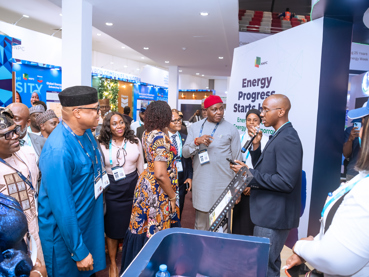
Director, Stakeholder Engagement and Institutional Relations Department, CBN, Mrs. Hakama Sidi Ali, disclosed this on Thursday while speaking at the Bank’s Special Day at the 40th Lagos International Trade Fair.
Sidi Ali, who represented the CBN Governor, Olayemi Cardoso, said the Bank had, over the past three years, pursued reforms to restore monetary discipline, improve foreign exchange market operations and rebuild confidence in the economy.
She acknowledged that despite the progress recorded, households and businesses were still grappling with high costs, adding that the CBN remained committed to achieving price stability and creating a more predictable business environment.
According to her, economic stability is important because it enables businesses to plan production, determine prices, manage cash flows, negotiate contracts and make long-term investment decisions.
On the foreign exchange market, she said the introduction of the Electronic Foreign Exchange Matching System (EFEMS) and the Nigerian FX Code had strengthened transparency, improved price discovery and promoted discipline in foreign exchange transactions.
She added that the 2026 Foreign Exchange Manual had provided clearer guidelines for businesses and financial institutions, particularly in trade documentation, export transactions and cross-border payments.
She urged importers and exporters to understand the new requirements and work with their authorised dealer banks to ensure proper documentation and processing of transactions.
The CBN director said Nigeria’s growing digital payment infrastructure was another important development for businesses, disclosing that instant payment platforms processed about 11.2 billion transactions in 2025.
She said the Bank was working to make payment systems more efficient, secure and interconnected, while initiatives such as the Pan-African Payment and Settlement System would ease cross-border payments and strengthen trade within Africa.
According to her, these developments would help Nigerian businesses take advantage of opportunities under the African Continental Free Trade Area (AfCFTA).
On banking reforms, Sidi Ali said the ongoing recapitalisation programme was designed to strengthen banks and improve their capacity to provide funding for businesses, support international trade and withstand economic shocks.
However, she admitted that access to affordable loans remained a major challenge for businesses, particularly micro, small and medium-sized enterprises (MSMEs).
She called for greater collaboration among financial institutions, government policymakers and private sector operators to address the funding gap.
Sidi Ali also urged Nigerian businesses to reduce their dependence on crude oil and explore opportunities in agriculture, manufacturing, technology services, creative industries and other non-oil exports.
She said the country had significant potential to earn more foreign exchange from these sectors but stressed that businesses must improve product quality, packaging, standards and competitiveness to penetrate international markets.
She advised exporters to understand the requirements of their target markets and develop strong commercial relationships capable of sustaining demand for their products.
Speaking on the importance of the Lagos International Trade Fair, she described it as a platform for businesses to meet prospective buyers, establish partnerships, exchange ideas and explore new markets.
She urged exhibitors to look beyond displaying their products and use the fair to build relationships that could translate into lasting business opportunities.
The CBN official further stressed the need for regular engagement between the Bank and the business community, noting that effective economic policies required clear communication and feedback from those affected by them.
She said the CBN was strengthening its engagement with businesses, professional associations and financial institutions to understand their challenges, identify implementation gaps and provide clearer explanations of its policies and regulatory requirements.
Sidi Ali reaffirmed the Bank’s commitment to monetary and financial system stability, efficient payment systems and a transparent and orderly foreign exchange market.
She congratulated the Lagos Chamber of Commerce and Industry on the 40th anniversary of the trade fair, which has brought together businesses, investors and trading partners over the past four decades.