Follow Us on Google
By Damilola Fatunmise
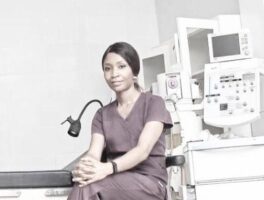
When Dr. Amaka Patricia Ehighibe walked into her first rotation as a junior surgery resident, she was already accustomed to standing out; the only female resident in her cohort during her Junior Residency, she would go on to become the only female Senior Resident in Plastic Surgery, then Chief Resident of Surgery, then Chief Resident of Plastic Surgery; and, upon her appointment as a Consultant Plastic and Reconstructive Surgeon at the Federal Medical Centre, Jabi, Abuja, the only female surgeon employed at the institution at the time. Each milestone was an achievement, and a reminder of how much ground was left to be covered.
The journey through those firsts was not without friction. In a profession historically dominated by men, the expectations placed on Dr. Ehighibe as the sole woman in her training environment were rarely said out loud, but they were always there: “There was a constant expectation for you to prove yourself,” she recalls. “The men could get upset but if you did, it was your hormones. So, I learnt to always think things through such that when I spoke, I was likely putting forward a superior argument that could not be linked to the state of my ovaries at that time.” It was an adaptation, that shaped her into a more deliberate surgeon and leader.
Her approach to navigating those spaces was equally considered: “I learnt not to try to be a man,” she says. “You can’t be better at being a man than the men. So I embraced being a woman in surgery by being competent and precise. Firm but compassionate.” It is a philosophy that has defined her conduct in the operating theatre, and shaped her understanding of what female leadership in surgery must look like.
Other News
Yet Dr. Ehighibe is equally clear that individual resilience alone cannot resolve what is, at its root, a structural problem. “Surgery has traditionally been male dominated, and leadership pathways are often shaped by longstanding institutional cultures and networks that may unintentionally exclude women from mentorship, sponsorship, and decision-making opportunities,” she says.
She has experienced this firsthand, pointing to the double standard applied to assertiveness in women, the weight of invisible expectations, and the absence of flexible training structures as persistent obstacles that extend far beyond any one woman’s experience. “I have experienced this so many times and have had to change my approach when I saw the situation sliding downhill” she adds.
“Advancing women into surgical leadership is therefore not only a gender issue, but also a healthcare systems issue,” she argues. Diverse leadership, in her opinion, improves mentorship, workforce sustainability, advocacy, patient care, and policy development, and the costs of its absence are borne not only by the women locked out, but by the patients who never benefit from their presence. It is a perspective that places her story well beyond a personal narrative of emergence, and into a broader argument about what Nigerian medicine stands to gain by making room for its women.
“I literally am standing on the shoulders of giants,” Dr. Ehighibe reflects. Being a surgeon who has spent her career being the only woman in the room, she has witnessed firsthand how the pipeline of female surgical talent in Nigeria remains stubbornly thin, and the rise in diversity within the field is news that cannot come too soon.