Follow Us on Google
•When right information can save life
For years, Nigeria’s fight against HIV has been framed around familiar weapons testing, treatment, condoms and other medical interventions. But as prevention options expand and the country pushes towards epidemic control, health experts say another weapon is becoming increasingly powerful: accurate information.
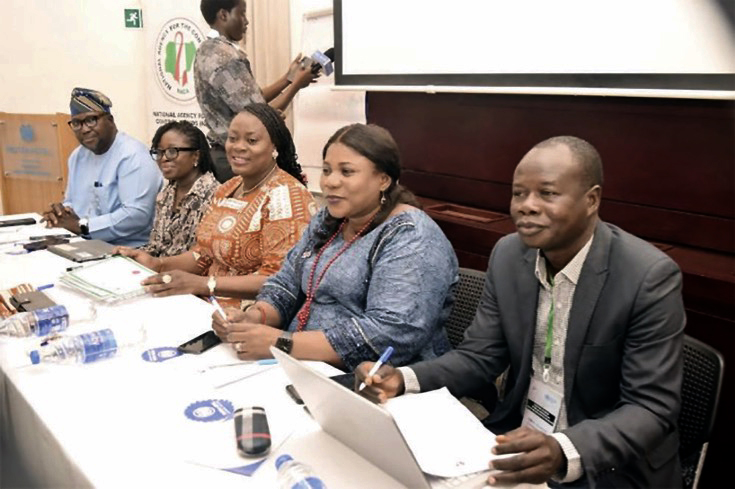
At a two-day media workshop organised by the National Agency for the Control of AIDS (NACA) in collaboration with the World Health Organisation (WHO), experts, government officials and implementing partners delivered that the battle against HIV cannot be won in hospitals and clinics alone. It must also be fought in newsrooms, on radio and television, and across social media platforms where millions of Nigerians, particularly young people, now get information.
Speaking, Director General, NACA, Dr Temitope Ilori, stressed that prevention must remain at the heart of Nigeria’s HIV response.
Ilori said although about 1.3 per cent of Nigerians are living with HIV, more than 98 per cent remain HIV-negative, making prevention critical to sustaining the country’s progress towards HIV epidemic control by 2030.
“We are on target regarding epidemic control, but to stay on target we need everybody on deck. We need everybody to work together. Undetectable equals untransmittable,” she stated.
She stressed that Nigerians should understand the prevention choices now available to them and know how, when and where to use them. Ilori stated that responsibility places the media at the centre of the country’s HIV response.
She reminded participants that the media does more than report events. “They shape opinions, influences behaviour and can either strengthen public health or deepen misinformation, stigma and discrimination. Media can build and media can break.”
She stressed that every headline, social media post, radio programme and online video has the potential to influence how Nigerians understand HIV and how they respond to prevention and treatment.
Beyond HIV testing, a new prevention arsenal
Ilori continue: “Nigeria has moved beyond relying solely on condoms and behavioural interventions, with new prevention technologies such as oral pre-exposure prophylaxis (PrEP), injectable PrEP and post-exposure prophylaxis (PEP) increasingly forming part of the country’s prevention arsenal.”
She said PrEP had become an important additional prevention option for people at increased risk of HIV infection, noting that when used correctly, it could reduce the risk of sexually acquired HIV by about 99 per cent.
She further stressed that PrEP was not intended for every Nigerian. “We are not saying every Nigerian should use PrEP, but we’re saying those that are most at risk, most vulnerable to contracting HIV will have this option.”
She also expressed concern over declining condom use, particularly among young people, urging sexually active Nigerians to adopt safer sexual practices. “For the young people particularly that are sexually active, we say please play safe, wear condoms,” she said.
Explaining the broader prevention approach, WHO public health and health supply chain specialist, Halima Momodu, described it as combination prevention the use of multiple prevention methods that allow individuals to choose options appropriate to their circumstances. “These include condoms and lubricants, HIV testing, treatment as prevention, prevention services for people who inject drugs, PrEP and PEP.
“PrEP has emerged as one of the most significant developments in HIV prevention,” Momodu explained, stressing that it involves the use of antiretroviral medicines by people who are HIV-negative to reduce their risk of acquiring HIV.
According to her, Nigeria now has multiple PrEP options, including daily oral PrEP and long-acting injectable options. She highlighted a two-monthly injectable option containing cabotegravir and a six-monthly injectable option containing lenacapavir.
The expansion, she said represents a major shift in prevention. “For people who find daily pills difficult to maintain, long-acting injections could offer greater convenience and help address adherence challenges.
She however cautioned that convenience must not become a reason to abandon other prevention measures. “PrEP protects against HIV, but does not prevent pregnancy or other sexually transmitted infections. Condoms therefore remain important in comprehensive sexual-health protection.”
PrEP, PEP, treatment: Know the difference
Momodu said: There is need to understand the difference between PrEP, PEP and HIV treatment. “PrEP, pre-exposure prophylaxis is taken before potential exposure to HIV. It is designed for people who are HIV-negative and may be at substantial risk of acquiring HIV.
While PEP, post-exposure prophylaxis is taken after possible exposure. “Unlike PrEP, it is an urgent intervention that should be started as soon as possible, ideally within 24 hours and no later than 72 hours after exposure. PEP may be considered following situations such as sexual assault, condom failure or other significant exposure to potentially infected blood or body fluids.”
She highlighted rape as an important area of HIV prevention that must not be overlooked. “Survivors may delay seeking help because of fear, shame, stigma or confusion. But delaying care can mean losing the opportunity to benefit from time-sensitive PEP.
“Rape is never the survivor’s fault, and anyone exposed through sexual assault should be encouraged to seek medical care immediately.
Other News
“Antiretroviral treatment, on the other hand, is for people living with HIV. Modern HIV treatment can suppress the virus to very low levels, enabling people living with HIV to live healthier lives and, when viral suppression is maintained, preventing sexual transmission.”
Also, WHO Technical Officer for HIV, Viral Hepatitis and Sexually Transmitted Infections, Dr Oluwafunke Odunlade, further stressed that people seeking PrEP should first undergo HIV testing and professional assessment.
She said adherence remained critical to effectiveness, with people using oral PrEP needing to take their medication as prescribed, while those on long-acting injectable options must return for their injections at the recommended intervals.
Odunlade also noted that people living with Hepatitis B could benefit from oral PrEP because some of the medicines used are also active against Hepatitis B. Long-acting injectable options, she added, could be more convenient for people who might struggle with daily medication routines.
But she cautioned that PrEP should not be seen as a replacement for condoms or other HIV and sexually transmitted infection prevention measures.
Killing myths that fuel stigma
While medical advances have transformed HIV prevention and treatment, misinformation remains one of the virus’s most persistent enemies. Momodu debunked common myths that HIV can be spread through handshakes, hugs, sharing food or drinks, tears, sweat or saliva, stressing that ordinary social contact does not transmit HIV.
She also challenged the belief that HIV is a punishment from God or the result of witchcraft, stressing that HIV is a viral infection caused by the human immunodeficiency virus not divine punishment, witchcraft or a moral judgment on an individual.
“Such misconceptions are far from harmless. They can fuel stigma, discourage people from testing and make people living with HIV afraid to seek treatment or disclose their status.
“This is where the power and danger of information becomes most apparent. A sensational headline, misleading social media post or inaccurate broadcast can reinforce fear and prejudice. Conversely, clear and evidence-based reporting can encourage testing, promote prevention, challenge myths and help people seek treatment without shame.”
Experts at the training urged journalists to provide accurate, accessible and evidence-based HIV information, stressing that media practitioners remain important in setting the public health agenda and shaping attitudes towards diseases associated with stigma.
For Nigeria to achieve epidemic control by 2030, they said the country must therefore fight on two fronts: expand access to effective prevention technologies while ensuring that Nigerians have the information needed to make informed choices.
“The country now has more HIV prevention options than ever before. But the success of those innovations will depend not only on availability, affordability and access, but also on whether people understand them.”
They unanimously reiterated that the next battle against HIV may therefore not be fought only in hospitals, laboratories and clinics but it will also be fought in newsrooms, radio studios, television programmes and on smartphones where information can either become a powerful tool for prevention or another barrier to ending HIV as a public health threat.
PrEP not for promiscuity
Also, Prevention Coordinator, AIDS Healthcare Foundation (AHF), Aruk Ene stressed that accurate information is essential to reducing new HIV infections and misconceptions about prevention.
Ene said PrEP was not a drug for promiscuous people, but a preventive option for HIV-negative persons who wanted to remain negative.
She said, “PrEP is not for promiscuity. It is for persons who are negative and still want to remain negative. Those who think they will be exposed should also go for PrEP.”
She also urged people who had been exposed to HIV through rape, risky sexual activity or occupational accidents to seek immediate medical intervention.
According to her, people who suspect exposure should visit the nearest health facility within 24 hours for appropriate intervention to prevent them from acquiring HIV.
Ene, who works in HIV testing and counselling, shared her personal experience of an occupational exposure while testing a client who was later diagnosed with HIV.
She said she accidentally pricked herself while conducting the test and immediately commenced post-exposure medication, which she took for 28 days before undergoing another HIV test.
“I knew the next action to take. I was just calm because I knew the next action to take,” she said, adding that people without experience in HIV prevention might become frightened after exposure.
She advised such persons not to panic or delay seeking assistance, but to proceed immediately to a health facility for help.
Ene also stressed that HIV was not a death sentence, urging people living with the virus to continue taking their medication even when they become undetectable. “Even when you are undetectable, it doesn’t mean that the virus is completely gone. It’s still there,” she said.
She urged people living with HIV to adhere to their treatment and not allow the infection to define their lives, stressing that they could still achieve their aspirations.
The AHF coordinator further advised Nigerians to reduce risky sexual activities and use protection, saying prevention and early intervention remained critical to curbing HIV transmission