Follow Us on Google
By Merit Ibe [email protected]
Despite being one of the highest producers of leather and finished leather products in Africa with a projected revenue of $1 billion by 2025, Nigeria’s leather industry is crawling below average, owing to challenges of importation, poor patronage, policy failure, and broken value chain activities.
The industry, expected to become a game-changer for the economy by improving the country’s foreign exchange earnings, boosting growth and providing employment, is presently being hampered by harsh environment.
Though the Director- General, Nigerian Institute of Leather and Science Technology (NILEST) Zaria, Muhammad Yakubu, recently stated that exports of Nigerian leather products were about $800 million between 2018 and 2019, it later declined to $650 million in 2020 due to COVID- 19.
With the projection that by the year 2025, revenue from the leather products exports will hit $1 billion, the DG said, Nigeria had already crossed half of $650 million to $800 million this year.
He said the total trade of the leather products was presently between $300 and $400 billion globally, Nigeria could account for 15 to 20 per cent or hit $20 billion by 2025.
Yakubu disclosed that every week, more than 20,000 pairs of shoes and different high quality leather materials are exported to African, Asian and European countries from South-East, South-West and Northern parts of Nigeria.
Yakubu lamented the high cost of imported processing materials, which he said was responsible for the spike in the prices of most Nigerian leather products compared to the foreign ones.
“For instance, now you can get a leather of 1 square meter costing about $5. But, by the time you add up production costs, the cost of processing may rise to about $30.
“So, you may end up buying imported leather rather than buying leather processing materials.”
Yakubu projected that Nigeria could attain high level production of leather in the world if science and technology were accorded special attention, especially in the area of manufacturing.
“Our local industries must be revived and SMEs must be assisted with capital and training just like what obtains in Asian countries.”
Taking Aba leather industry, as a case study, the industry, which is located at Abia State is made up of producers of shoes, bags and trunk boxes, occupying about 14 clusters across the market, including Powerline, Imo Avenue, Bakassi, Aba North Shoe Plaza, Omemma Traders and Workers, ATE Bag, Nwogu Avenue and Ochendo Industrial Market.
Chief Blessing Enweremadu, Vice President, Inter Governmental Relations, Aba Chamber of Commerce Industry Mines and Agriculture (ACCIMA), who spoke specifically on Aba leather industry, applauded the state of the industry, saying Aba leather industry has been known as a major producer of shoes and leather products.
He estimated that there are over 400,000 people employed in the industry. No matter how it is estimated, the Aba leather industry provides jobs, creates wealth and tax revenue to the government.
“This is a very big industry. Most times, we have issues with data but there are too many people who are involved in leather production here. This is not something any government can afford to ignore.
“If the private sector population is 1million, the leather industry is taking about 400,000.” He lamented lack of raw materials, which are majorly hide and skin. “There is no way they can keep producing without raw materials, which is leather.
“We don’t have the hide and skin. Government is supporting in the area of loans and grants to help them upgrade to boost the industry. Several times they had invited SMEs for loans and grants to help them upgrade.
“Most of us don’t wear foreign shoes any longer. The industry in Aba is doing well.”
Enweremadu suggested that the establishment of a leather industry, that will be government-owned, will go a long way. “Government is planning to create more clusters at various locations within Abia State.
“There are machines for production. The state governor, Dr Okezie Ikpeazu, imported a lot of machines through the people that went to China for training, whom he sponsored to acquire skills and add value. Some prefer to use manual. But if they are in need of equipment at any point in time, they know what to do and where to go. ACCIMA will make sure they are directed to the right place.
“We can sought them from China, Europe, Italy and government is ready to support them for duty free.
On patrinise, he said: “Our military and para military patronise those products. The problem is that they are not meeting up with the order. We are encouraging more youths to join, so that we can meet up with the challenge of producing more goods.
“We export most of our shoes. Just that they export them and rebrand them as made in Brazil or Italy, which is wrong. The idea is that most Nigerians don’t like patronising Nigerian products. The mentality is bad. We should be proud of our products here. They are proud of foreign shoes. They are brought back here and sold in higher rate.”
It is an irony that Nigeria exports hides, goats and cow skins to Europe, but leather makers import them from China and various parts of Africa.
Stakeholders believe that as much as the export produce revenues to tanneries, it robs Aba shoemakers of quality raw materials needed to produce finished shoes, bags and trunk boxes.
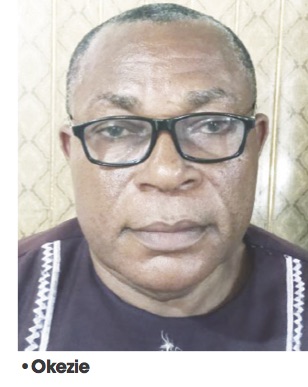
In his different view, Chairman, SMEs Group of the Lagos Chamber of Commerce and Industry (LCCI), Daniel Dickson-Okezie noted that the leather industry is the backbone of the nation’s economy and just like other sectors have challenges, it is also faced with various challenges impeding its growth.
He queried why the country was importing when there are companies that are into the business here. “It has been a major challenge to the industry in Nigeria. The Aba industry is thriving in the production of shoes and leather materials, with machines and materials. They are doing well and are ready to do business.
“The question is to what extent are we leveraging on value addition to improve that sector so as to subsequently improve our export earnings.
“Most of our leather go to Italy and Spain, who are the largest manufacturers of leather materials. Our Nigeria leather production has about 71 percent of goods that go to Italy and Spain according to 2021 report.
“That goes to say we are still behind time in the area of value addition in the leather industry. Nigeria could develop a thriving leather industry in a place like Aba in Abia, but we are yet to leverage on the performance to improve on the export of finished goods.
“The major function is to create an enabling environment for businesses to thrive. Importation is reducing the sales and turnover and Nigerians have the mentality that the best leather materials come from Italy, Spain, Brazil and others.
“Government needs to encourage our local producers. When government imports what we have in the country, that means our local producers are competing with those foreign countries in an unfair circumstance.
“The environment is not encouraging. Access to funds is a major set back to businesses here. The basic idea behind financial inclusion is the availability of funds.
“If a government from the state develops the wide expanse of land with equipment, loans to SMEs, gets investors and calls the place a leather village, that will make a difference, not to talk about other issues like multiple taxes, poor power supply, among others.
The Nigerian mentality of not buying made-in-Nigeria products must be changed. Our military shoes, belts and leather accessories must be purchased here to encourage our local production.”
Dr Nathan Owhor, a Development Expert berated government’s policy failure, which has been one of the major causes of the slow growth of the industry.
“Policy failure has been a bane in the economy.
“They came out with an Executive Order, called 003. It was meant to address the problem of patronage. Which means all government parastatals would be encouraged to patronise locally produced goods. That is what the executive order is meant to address. And if that has been taken seriously, the story today would have been different for us in the leather sector.
“Like we always say that the leadership is supposed to lead by example. So, if they see these policies as problem solving, you then start the implementation from the top. Direct the Federal Executive members, to ensure that they wear made-in-Nigeria occassionally. There should be a legislation to back it up.
“The legislators will also obey the Order. Then you see, the chunk of it all is through the implementation by the Nigerian Army, Police, Air force, Navy and other paramilitary forceslike the customs, immigration, federal road safety commission, civil defence, unity school and NYSC.”
The leather accessories of all these organisations are enough to provide 50 per cent boost and market to the local producers in Nigeria, but implementation has been an issue.