Follow Us on Google
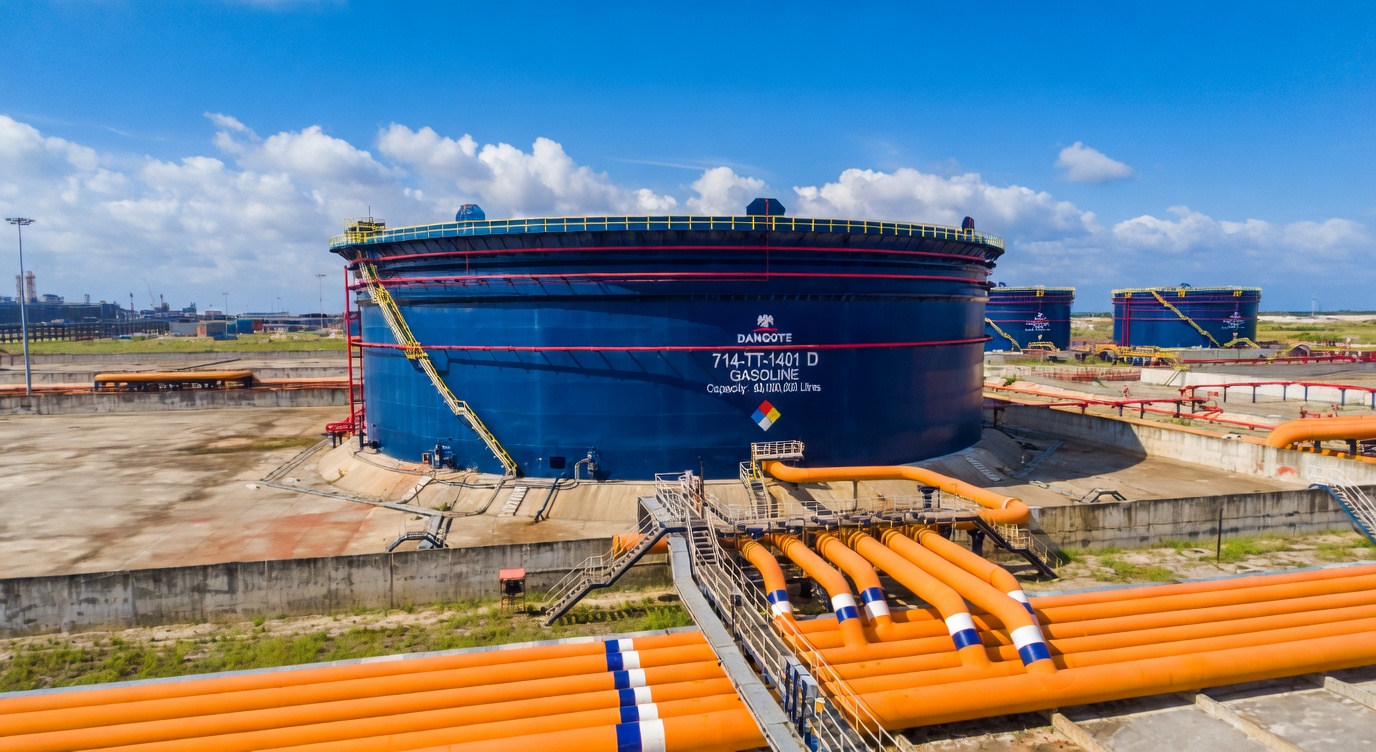
Nigeria’s lingering domestic crude supply challenges have been laid bare following Dangote Petroleum Refinery’s importation of its first crude cargoes from the United Arab Emirates (UAE).
The development underscores the refinery’s growing reliance on foreign feedstock as persistent domestic supply shortages continue to undermine crude deliveries from Nigeria.
The UAE crude imports come barely days after Daily Sun exclusively reported that the 700,000-barrel-per-day refinery was receiving only five crude cargoes monthly instead of the 13 cargoes required under the naira-for-crude arrangement.
The shorfall exposes a 62 per cent supply shortfall that has forced the refinery to increasingly seek alternative crude sources abroad.
According to S&P Global Commodity Insights, the refinery has secured two cargoes of UAE Murban crude, marking the first time it will process Middle Eastern crude since commencing operations.
Until now, the refinery had relied primarily on Nigerian crude, complemented by imports from the United States and other African producers.
The procurement follows improving crude export flows from the Gulf after an interim peace agreement between the United States and Iran eased concerns over shipping through the Strait of Hormuz, making Middle Eastern crude more accessible to global refiners.
The latest purchase reflects Dangote Refinery’s determination to guarantee uninterrupted operations amid Nigeria’s lingering crude supply constraints.
Although the refinery has an agreement with the Nigerian National Petroleum Company Limited (NNPC) Limited to receive between 13 and 15 cargoes of Nigerian crude monthly under the naira-for-crude initiative, deliveries have remained inconsistent due to production challenges and operational disruptions affecting key export terminals.
The supply gaps have repeatedly compelled the refinery to source crude internationally to sustain production and meet growing demand for refined petroleum products.
Other News
The UAE cargoes also align with Dangote Refinery’s long-term strategy of broadening its crude slate and enhancing operational flexibility as it prepares to expand refining capacity from about 700,000 barrels per day to 1.4 million barrels per day by 2028.
At that level, the facility would be capable of processing nearly 80 per cent of Nigeria’s current crude oil output.
Chief Executive Officer of Dangote Refinery, David Bird, had earlier disclosed that the company intends to increase the proportion of heavier crude grades in its feedstock mix.
“We definitely want to heavy up the barrel,” Bird said, adding that the refinery plans to become an active participant in crude blending and could process as much as 30 per cent Middle Eastern crude on each refining train after the planned expansion.
Data from S&P Global Commodity Insights indicate that Nigerian crude accounted for about 70 per cent of the refinery’s imports in 2025, while approximately 24 per cent originated from the United States. The addition of UAE crude further diversifies its procurement strategy and reinforces its transition into a fully merchant refinery capable of sourcing the most commercially competitive crude grades globally.
Industry experts, however, noted that the move does not represent a shift away from Nigerian crude but rather a strategic effort to reduce supply risks, maintain high refinery utilisation rates and ensure steady production of petrol, diesel, aviation fuel and other refined products for domestic consumption and export.
The Daily Sun report, citing the African Energy Council (AEC), revealed that the Dangote Petroleum Refinery is operating at only about one-third of its crude oil requirement, underscoring the severity of the domestic supply shortfall.
The AEC report lamented that the refinery running at a shortfall is not because the feedstock doesn’t exist in Nigeria, but because the system supplying it has a vested interest in keeping the import window open.
AEC added that the decision of the Dangote Petroleum Refinery to file a suit against the Federal Government, NNPC and Downstream regulator is less a legal story and more a governance issue.
“When your mandated crude suppiler competes with you in the same market, a shortfall of eight deliveries per month stops being a logistics problem and starts looking like a structural one.” The report added that the Petroleum Industry Act(PIA) 2021 was supposed to settle this.