Follow Us on Google
By Chinelo Obogo, [email protected]
From March 31, domestic airlines will battle a new storm. On that date, the Aviation Ground Handling Association of Nigeria (AGHAN) would begin implementing a 400 per cent in hike handling charges. The development is already robbing the Airline Operators of Nigeria (AON) of sleep as their members are battling suffocating challenges like costly aviation fuel, naira devaluation and scarcity of foreign exchange. These issues have made it very difficult for themto fly their airplanes overseas for mandatory maintenance.
According to them, adding a 400 per cent hike in ground handling services would be a death knell, hence the need to intreface with the service providers to address the issue.
Hopes are on the horizon that conversations around crashing ground handling charges would yield a positive result.
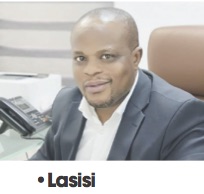
At a recent interview with Daily Sun, the Group Executive Director, Commercial and International Business, Nigerian Aviation Handling Company (NAHCO), Saheed Lasisi, emphasised the critical need to review the handling rates, citing the potential impact on domestic flight operations. He highlighted the interconnected nature of the aviation ecosystem, stressing that neglecting domestic services could jeopardise the entire industry. On the complaints of the AON, he revealed that there were ongoing discussions with the body towards a mutually agreeable solution on the proposed handling rates.
Increase in ground handling rates
What we did two years ago was for both domestic and foreign airlines. In the case of domestic carriers, we had the agreement that we would not charge them as high as we did with foreign carriers, which to me is reasonable. The international carriers are billed in dollars, while the payment for domestic operators is in naira. For a Boeing 737 aircraft for an example, the minimum I charge the international carriers is $1,271 for an hour turnaround, but for domestic carriers with the same aircraft brand and turnaround time, we only charge them N70, 000. You too can see the gap.
Today, the N70, 000 being paid by the domestic operators is not even enough to fuel the equipment that we use for that turnaround to service the B737 and other equipment like conveyor belts, passenger steps, Ground Power Units (GPU), Passenger Controller Unit (PCU), pushback and other equipment. And fuel is just a component of the component. I still have my labour and overhead costs, among other several costs.
With the current rates, I can tell you we are subsidising the rates for domestic operators. Meanwhile, the domestic operators have increased their air fares. As at Monday, I went online and one of the cheapest flights I saw was N150, 000 from Lagos to Abuja on the economy seat. That is the reality. The aviation fuel that they were buying at N400 or N500 a year ago, has increased to over N1, 000 per litre. So, you can’t blame them for any increase, otherwise, they are going to close operations.
If we don’t review the handling rates, it might get to a time that we may not be able to operate domestic services. Aviation is an eco-system; you cannot say because you are getting money from international operators, you won’t operate domestic again. So, we are discussing with the umbrella body of indigenous operators; the Airline Operators of Nigeria (AON) on the review and I am sure we will get to a common ground.
Ground handling companies in negotiation with airlines over rates
Based on the International Civil Aviation Organisation (ICAO) recommendations, you have to make some consultations. We have consulted with the Nigeria Civil Aviation Authority (NCAA), highlighted the facts before the apex regulatory authority in the industry. Also, the umbrella body of the domestic operators, we are meeting with them, too. The AON also brought in their own positions. So, we are discussing and I am sure next week again, we will meet with them again to continue our negotiations. So far, we are consulting with the necessary authorities.
We have not written any airline to notify them of any review in the current rates. We only wrote the regulator (NCAA) and the umbrella body of domestic operators (AON). It is only after the ongoing consultations that we intend to approach individual airlines. However, a particular airline has written a petition against us, but that airline neither showed up nor sent a representative for the meeting with the AON, so, I don’t know what basis the airline is now writing to the National Assembly, the Ministry of Aviation and Aerospace Development and the Federal Competition & Consumer Protection Commission (FCCPC). We saw a copy of the letter but we never wrote to the airline. We are just waiting for the respective authorities to write us and we will be willing to tell them the steps that we have taken, negotiations with fellow members and others. Even the AON said that they recognise the challenges we are going through and the fact that a committee has been formed shows they want us to discuss.
How increase in groundhandling rates would affect air travelers
Flying is a necessity for those who want to fly. About two years ago, a one-way ticket was about N40, 000, but today, you cannot even get any ticket at the rate of N70, 000. You can go online and check. One-way ticket is about N150, 000 now. Like I said earlier, paying N70, 000 to handle an aircraft, is not even enough to procure diesel for the turnaround. That is just one component of my total costs.
The good thing is that the AON understands this challenge, they know it is justifiable, but they wanted us to reduce the rates. As it is, we are discussing and I am sure in the next few weeks, we will reach a common ground. We are not immune from the present economic challenge and I tell people, this is not just about Nigeria, every other economy is facing the same challenge. We all know that some global economies have gone on recession now. I am sure this time will also pass us over. Our costs have increased. What we budgeted for diesel was about N600 to N700 for instance, but today, as at last week, we bought it at N1,400 per litre. Our Ground Support Equipment (GSEs) all work on diesel and our cold rooms and stores have to be powered 24 hours daily. We need to maintain a lot of things for 24 hours; we are in a safety environment.
Like is said earlier, we are not increasing the international rates because they are charged in dollars. I think we care covered to an extent in the international market. Can you compare the N70, 000 that we handle the domestic airline operators with $1,200 that we charge the international airlines? And they are the same equipment with same turnaround period. You can see that the difference is huge. The N70, 000 we presently charge is not up to $50 at the moment.
We are not saying we want to charge the domestic airline operators same $1,200 that we charge international airlines that use same machine as theirs, but because of the frequencies and the local contents, we have to support our operators. These are private companies and not government agencies that can decide to subsidise their clients. We are also in business to make little profit and with lots of responsibilities. We also have our staff to train, pay and need to acquire new equipment.
Custom duty waivers
Custom duty waivers would have been the best thing that happen to the ground handling companies as 95 per cent of our GSEs are imported. You have to change naira to foreign currencies and this is a huge amount of money. I have to import materials to be able to render the services that we are rendering.
Waivers would have assisted us to save some money and divert such to other developmental projects, but unfortunately, we get zero waivers. If we are invited by the National Assembly for instance, we will open our books, tell them what we charge on the international scene and also let them see what we charge on the domestic scene.
I don’t have the figure to quote a specific amount of money we spent on customs duties or the amount of money that we would have saved subsidy payment, but I what I can tell you that for every item that we import, we pay between 15 to 20 per cent of the total cost of procurement as custom duties. For instance, you can buy a pushback at $500,000, 20% of that is about $100,000 in duty payment in naira. That is just one equipment. You may buy $5 million equipment and you have to pay customs duties on this.
Our equipment acquisition in NAHCO is in phases. The phase one of the exercise is completed now and we are in phase two. In 2023, we spent about $9 million on equipment acquisition because it takes about a year to manufacture our equipment by the manufacturers. So you can do your calculation on duty payments by NAHCO.
Collaboration among ground handling companies
I am sure that is one of the things AGHAN, which is the umbrella body of ground handling companies should be thinking of in the next phase of its exercise for the ground handlers because this makes sense for us. For example, in some of these offline airports like Sokoto, Katsina, Gombe and the rest, what you need is just to have equipment leasing company, then rent equipment through them. It is cost effective for us, rather than buying equipment every year. If that actually happens, what you just need to do is to import an equipment that is not available and this will save a lot of forex for us.
NAHCO’s export, packaging facilities
The packaging centre has been completed and handed over by the contractors. We have an in-house team, which we call the takeoff team. The stage we are in now is just to put the resources together, carry all the necessary government agencies along; Nigeria Custom Service (NCS), the Quarantine, National Drug Law Enforcement Agency (NDLEA), National Agency for Food and Drug Administration and Control (NDLEA) and others. Our plan is just to process only perishables. The idea is that if anybody is bringing any perishable for instance from Port Harcourt, Yola or anywhere, you can have access to this facility to store your goods before you start processing them the following day and they go to the warehouse for the aircraft to come and pick them up. Our plan is to start from April 1. 2024.
Government’s assistance
As a responsible organisation, we fulfill all our obligations to the government. We pay our charges, levies and taxes when due. What I would want the government to do is to treat all the investors in the sector equally, and not just for a particular player or sub-sector of the industry. Without the ground handling companies, no airline can take off or land successfully. We have trained personnel to do the kind of job that we do. Our staff are certificated. We can do weight and balance successfully and arrange them accordingly. Whatever the government is doing for the aviation sector should cut across everyone, not just for the airlines.