Follow Us on Google
From Abel Leonard, Lafia
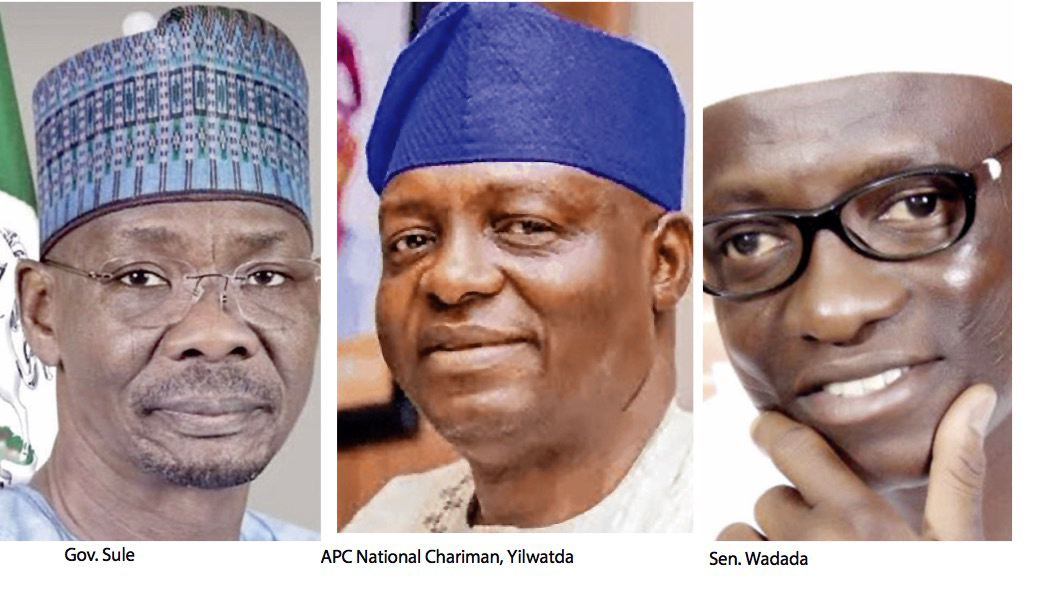
In 2018, Senator Umaru Tanko Al-Makura backed Abdullahi Sule’s governorship ambition in Nasarawa State, sparking accusations of imposition from rival aspirants, including, ironically, Senator Aliyu Wadada, who was among those who rejected what was then described as a stitch-up. Sule won the primary, became governor, and the party moved on.
Six years later, history has not just repeated itself in Nasarawa, it has done so with a bitter twist. The same Governor Sule now stands accused of the very imposition politics that once birthed his own emergence. And the man leading the resistance is the same Al-Makura who put him there.
“What is happening today is a reversal of roles,” one political analyst in Lafia told Daily Sun. “The defender of the 2018 process is now accused of violating it.”
The immediate trigger is Governor Sule’s public endorsement of Senator Wadada as his preferred successor ahead of the 2027 governorship election, a move the governor reportedly reinforced with a visit to President Bola Tinubu at the Villa.
What was designed to streamline succession politics and project unity has instead cracked the APC open, drawing in aspirants, youth groups, party elders and street protesters in a crisis that is widening by the day.
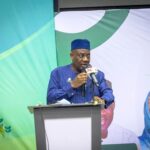
Al-Makura was unsparing in his response. He described the endorsement as “an aberration” and “a little too hasty,” insisting that only a properly conducted primary can produce a legitimate flagbearer. “There must be a primary. The people should decide,” he said.
But it was his next disclosure that carried the most political charge: he had not been consulted before the endorsement was made public. “I was never consulted before any candidate was taken to the Villa,” he stated, words that landed in Nasarawa’s political circles like a grenade.
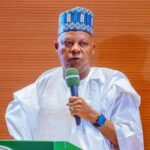
Sule did not flinch. In a combative interview on Channels Television’s Politics Today, he pushed back against any suggestion that his political rise was Al-Makura’s doing. “He did not bring me into office. He is not my godfather,” the governor declared. Then came the line that has since become the most quoted remark of the entire crisis: “I was not picked from the dustbin.”
The personal edge of that statement, its barely contained indignation, tells you something about how deep this rivalry runs, and how much more than a primary endorsement is at stake.
Control, continuity and a second term calculation.
To understand why Sule is pushing so hard for Wadada, you have to understand the arithmetic of second-term politics in Nigeria. No sitting governor engineers his successor out of pure altruism. The calculus is straightforward: a governor who controls who comes after him retains relevance, protects his legacy, and shields himself from political vulnerability once he leaves office.
Sule has framed his preference in the language of zoning equity, arguing that political fairness requires the governorship to rotate to the Western Senatorial Zone, a position that conveniently aligns with Wadada’s profile. He has also alleged that secret consultations are ongoing in private residences involving former Inspector-General of Police Mohammed Adamu, who is widely believed to enjoy Al-Makura’s quiet backing. “Wadada represents a political ideology aligned with my vision for continuity,” Sule said.
His opponents read that language differently. For them, “continuity” is a coded word for control and what the governor is really building is a political architecture designed to outlast his tenure.
The aspirants refuse to blink
Other News
Despite the governor’s very public backing, the other major aspirants have not budged. Former IGP Mohammed Adamu, former NASENI Executive Vice Chairman Mohammad Sani Haruna, and former State Accountant-General Ledyi Zaaka have all obtained APC governorship nomination forms and made clear they are going nowhere.
Adamu was pointed in his response. The party constitution is supreme, he said, and no aspirant should be elevated above others before primaries are conducted. “We remain fully committed to the contest and will participate in a free, fair, and competitive primary,” his camp stated.
Haruna positioned himself as a technocratic alternative, arguing that governance competence and administrative experience, not elite endorsements, should drive candidate selection. Zaaka called for full inclusion, urging that delegates and grassroots members, not power brokers, should determine the outcome.
Their collective refusal to withdraw has complicated Sule’s strategy considerably. An endorsement only delivers its intended effect if it produces withdrawal, if rivals read the message and stand down. When they don’t, as in Nasarawa, the endorsement instead becomes a rallying point for resistance.
From living rooms to the streets
The crisis has moved beyond party meetings into communities. Youth groups have staged protests in Lafia, Doma and the Dedere Development Area. At one gathering, youth leader Abdullahi Alhassan Liman drew a line: “We are not against any aspirant, but we are against imposition. Let everyone go to the field and test their strength.”
Another protester, Musa Yakubu, was grimmer in his warning: “If they impose any candidate again, many of us will not participate.”
Pro-Wadada voices have pushed back. Youth coordinator Muhammed Sani defended the governor’s move as strategy, not manipulation. “Wadada has structure and capacity. What the governor has done is leadership.
The split among youth, historically the APC’s most mobilisable constituency in Nasarawa, is perhaps the most telling indicator of how far this crisis has spread.
Adding further combustion is a thread of identity politics surrounding Wadada himself. Some community groups have raised questions about his indigeneity to Nasarawa State. Supporters dismiss this as a political instrument rather than a factual concern, pointing to his two terms in the House of Representatives and his current Senate seat as evidence of deep roots. “You cannot serve the state at that level and still be called a stranger,” one party stakeholder told Daily Sun.
APC State Chairman Dr. Aliyu Bello has attempted to contain the fallout, convening a press briefing at City Hall in Lafia where he affirmed that primaries will hold, all aspirants remain valid contestants, and no endorsement overrides the party’s constitution. “Governor Sule’s endorsement is personal. It does not change the process already in motion,” he said, appealing for calm.
It was a necessary intervention. Whether it is a sufficient one remains to be seen.
“The APC is sitting on a political fault line,” Lafia-based commentator Aboshi Emmanuel warned. “If mishandled, this could affect its dominance in Nasarawa.”
What began as one governor’s endorsement of one candidate has become something far larger — a battle over who controls the APC’s soul in Nasarawa, and whether internal democracy in Nigeria’s ruling party is a genuine commitment or a slogan deployed selectively. The answer, delivered through the primaries, will define the party’s fortunes not just in 2027, but well beyond.