Follow Us on Google
From Juliana Taiwo-Obalonye, Abuja
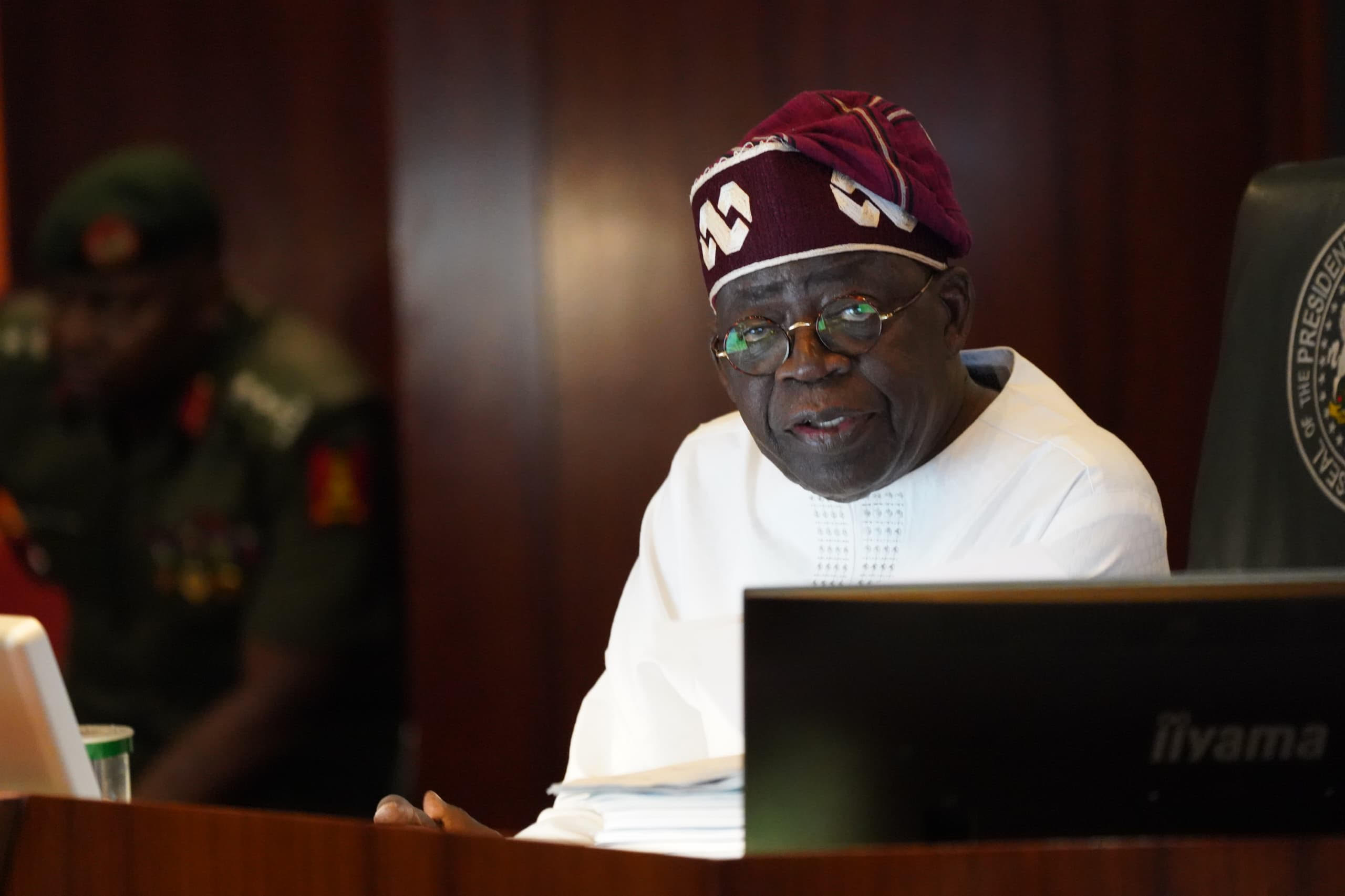
President Bola Tinubu has emphasised the imperative of efficient and integrated African borders, warning that fragmented markets hinder industrial scale, weaken negotiation power with global players, and leave economies vulnerable to external shocks. Speaking, yesterday, in Abuja, at the launch of the Customs Pact – Partnership for African Cooperation in Trade, he stressed that true integration “enables large-scale industrialisation, collective bargaining strength and resilient supply chains.”
Represented by Vice President Kashim Shettima, President Tinubu underscored Nigeria’s unwavering commitment to constructing an Africa where borders facilitate economic opportunities, rather than impede them. Describing borders as critical levers of continental progress, he said: “Nigeria remains firmly committed, structurally and operationally, to building an Africa that trades by design, where integration is practical, measurable and effective. Our ambition is simple: a continent where borders facilitate opportunities rather than inhibit them.”
He cautioned that no matter a nation’s resources or talents, these become meaningless if trapped inside inefficient boundaries and fragmented markets. On this, he stated:
“Fragmented markets cannot achieve industrial scale, negotiate effectively with global powers, or withstand external shocks. Integration, however, enables large-scale industrialisation, collective bargaining strength, and resilient supply chains.”
Pointing to Africa’s pioneering step through the African Continental Free Trade Area (AfCFTA), Tinubu highlighted that execution and practical outcomes are now vital. Success, he said, would be measured by tangible improvements such as reduced border-crossing times, dependable local currency settlements, and smooth movement of goods across borders.
“Our vision must translate from conference halls to the daily experiences of traders, manufacturers, logistics operators and farmers,” he declared.
The President reviewed Nigeria’s reforms under his administration, including unifying the foreign exchange window, removing fuel subsidies to boost infrastructure funding, and modernising port operations with 24-hour cargo clearance. He emphasised coordinated institutional efforts:
“The Nigeria Customs Service now advances digital clearance systems and risk-based inspections. The Nigerian Ports Authority drives port efficiency. The Central Bank enables local-currency settlements through PAPSS. The Standards Organisation harmonises product standards. NEPC and NEXIM Bank strengthen export readiness and provide financing.”
These collective reforms have yielded measurable impacts, with intra-African trade projected to rise from 15% in 2023 to 25% by 2030. Nigeria’s non-oil exports to African markets grew by 38% year-on-year in 2024, while cargo clearance times at major seaports dropped by about 30%.
Looking forward, President Tinubu announced the upcoming launch of Nigeria’s National Single Window digital platform, set for initial rollout in March 2026, and full operation by December. This system will allow businesses to submit import and export data once via a unified portal, speed clearance with risk-based compliance, and reduce cargo clearance time from 21 days to under seven.
“Fully aligned with AfCFTA digital frameworks, the National Single Window positions Nigeria as a continental standard-bearer for customs digitalisation and seamless intra-African commerce,” he said.
Other key voices at the event stressed support for trade barrier dismantling and modernisation. Nigeria’s Finance Minister’s representative called for continued reforms to boost trade and border business friendliness.
Earlier, the Minister of Finance and Coordinating Minister of the Economy, Wale Edun, represented by the Minister of State for Finance, Doris Uzoka-Anite, urged relevant authorities in Africa to continue to dismantle barriers that hinder trade and revenue generation.
She highlighted the importance of customs modernisation—such as digitisation, coordination, and advanced tools—for boosting investor confidence, reducing costs, and enhancing competitiveness. She emphasised that efficient customs systems are vital for realising the transformative potential of the African Continental Free Trade Area (AfCFTA), which promises a single market of over 1.4 billion people. He reaffirmed Nigeria’s commitment to collaborate on customs reforms to ensure seamless trade, accelerate regional growth, and build sustainable prosperity across Africa.
She stressed that the Federal Government of Nigeria remains committed to supporting modernisation initiatives within customs administrations and aligning with global best practices aimed at creating a business-friendly environment.
For her part, the Minister of Industry, Trade and Investment, Jumoke Oduwole, said that under President Tinubu’s decisive leadership, the administration has achieved a unified exchange rate, strengthened fiscal discipline, and is on course to accelerate regional economic integration under the Renewed Hope Agenda.
She maintained that Nigeria’s commitment to AfCFTA implementation remains unwavering, while urging participants to build an Africa that trades more with itself.
Secretary-General of the World Customs Organisation (WCO), Ian Saunders, underscored the unifying role of customs in a continent aiming for greater intra-Africa trade through initiatives like the African Continental Free Trade Area (AfCFTA).
Other News
Saunders pointed to Africa’s promising economic outlook, citing the African Development Bank’s projection of 3.9% growth in 2025, and noting that 21 countries are expected to grow above five per cent this year. He stressed the potential of AfCFTA to significantly increase exports and revenue, stating, “Cross-border transactions… are at the core of customs responsibility.” He stressed the importance of managing trade volumes, market access, and business predictability, tasks that customs handle daily, worldwide.
The WCO’s mission, Saunders explained, is to provide leadership by developing standards and building capacity to facilitate legitimate trade, collect revenue appropriately, and protect society. He praised the conference’s agenda for aligning with these goals, focusing on eliminating non-tariff barriers and addressing challenges such as transportation infrastructure and transit costs. “In the agenda of this conference lie the potential to do better,” he said.
Acknowledging that not all challenges can be solved at the conference, Saunders called it a critical opportunity for policymakers and customs leaders—“trade architects and trade builders”—to collaborate. He thanked African customs directors for their long-standing engagement with the WCO and their efforts to adopt global standards. He also expressed appreciation to political leaders for creating space for multilateral partnerships.
Saunders reaffirmed WCO’s commitment to supporting African customs through capacity building and technical guidance aligned with AfCFTA requirements, emphasising that “while much work has been done, there remains much more to do.” He outlined the need for national administrations to optimise the expertise they receive and leadership to consolidate gains.
Executive Vice President of Afreximbank, Kanayo Awani, affirmed the positive impact of customs modernisation initiatives adopted by various African customs administrations, including Nigeria.
She highlighted the significant progress Africa has made under the AfCFTA, with 54 signatures and 49 ratifications, emphasising, “the speed with which this agreement was ratified is a clear demonstration of our collective political will and decisive action.” She stressed that while the legal framework is established, “implementation cannot happen without the active participation, engagement, and support of customs officials.”
She brought attention to trade facilitation challenges as a critical drag on Africa’s industrialisation and competitiveness, noting, “According to our data, 75% of delays in the movement of goods are due to trade facilitation issues, including border procedures, while only 25% is attributed to infrastructure gaps.” Awani cited examples such as multiple unofficial checkpoints along major trade routes in West and East Africa, causing long transit times and high costs, contrasting these with successful reforms like reduced transit times and costs in corridors where modernisation was implemented.
Regarding Nigeria, Awani praised the Nigerian Customs Service’s transition to the Nigerian Integrated Customs System and the B. Odudu Unified Customs Management System, describing the latter as “an indigenous home-grown digital platform designed to streamline clearance processes and enhance efficiency.” She said these reforms have resulted in clearance times dropping up to 40%, and customs revenue growing from 3.2 trillion in 2023 to a projected 6.2 trillion in 2024. The introduction of programmes such as the advanced ruling and the Authorised Economic Operator (AEO) programme have also improved predictability and reduced trade disputes.
Awani highlighted Afreximbank’s supportive role, including initiatives like the African Collaborative Transit Guarantee Scheme, which replaces costly multiple transit bonds with a single technology-enabled bond, aiming to save, at least, $300 million annually in transit costs. She mentioned ongoing partnerships with regional organisations such as COMESA and the East African Community and expressed confidence that Nigeria could champion similar schemes in the ECOWAS region.
The Comptroller General, Nigerian Customs Service, Bashir Adewale-Adeniyi, called on relevant authorities and stakeholders across Africa to embrace cross-country trade facilitation and integration, stressing, “We cannot continue to work in silos.”
He said the event aims to strengthen dialogue and mutual understanding between customs administrations and the private sector across Africa. “This one is different,” he remarked, “we’re not here to deliver speeches to each other. We’re here because we’ve reached a point where Customs administrations across Africa need to stop being spectators in the AfCFTA story and start being co-authors.”
Adewale-Adeniyi highlighted the importance of customs as custodians of trade data, holding crucial information that drives continental trade objectives. He noted that the success of AfCFTA depends on customs leveraging their data to serve the continental agenda. He also stressed the imperative of regional ownership and collective discipline, stating: “What we do with this continental agreement cannot be driven from outside the continent; it must be anchored in African realities, led by African institutions, and sustained by African commitment.”
He acknowledged the efforts behind organising the C-PACT event, expressing confidence in the participation of 464 delegates from 28 countries, including senior customs officials, diplomats, and private sector leaders, demonstrating strong commitment to making AfCFTA operational.
Adewale-Adeniyi concluded with a call to action: “We cannot continue to work in silos. Our trade finance mechanisms, customs procedures, payment systems, and regulatory frameworks need to speak to one another. That integration is what will translate policy ambition into operational reality.” He urged delegates to leave the conference with concrete ideas to advance customs modernisation and trade facilitation, underscoring that “this is the beginning of something important. Let’s make it count.”
The Secretary-General of AfCFTA, Wamkele Mene, assured that the secretariat will work closely with the NCS to ensure that the objectives of C-PACT unfold into a pleasant reality.
He credited Adeniyi for his leadership in advancing the AfCFTA vision, stating, “It is fitting that we are in Abuja, where the AfCFTA was born through the Abuja Treaty in 1991, and, today, through the effort of Comptroller General Adeniyi, we are beginning to see the results of that vision.”
Mene highlighted the indispensable role of customs authorities in implementing AfCFTA, emphasising, “the leadership role of customs authorities is absolutely essential.” He pointed to specific AfCFTA provisions relying heavily on customs, including Customs Cooperation, Trade Facilitation, and Transit annexes, particularly in enforcing rules of origin and product identification.
He expressed the secretariat’s commitment to collaborating closely with customs and the private sector to reduce trade costs and bureaucracy, enabling economic operators to access African markets efficiently. Mene mentioned advancements like the AFCFTA electronic tariff book, transit documents, and an upcoming continental digital platform for certificates of origin.
He applauded Nigeria’s progress, referencing the Nigerian Bureau of Statistics report that Africa is now Nigeria’s largest export destination. He also praised the partnership with the World Customs Organisation for introducing digital trade technologies.