Follow Us on Google
From Okwe Obi, Abuja
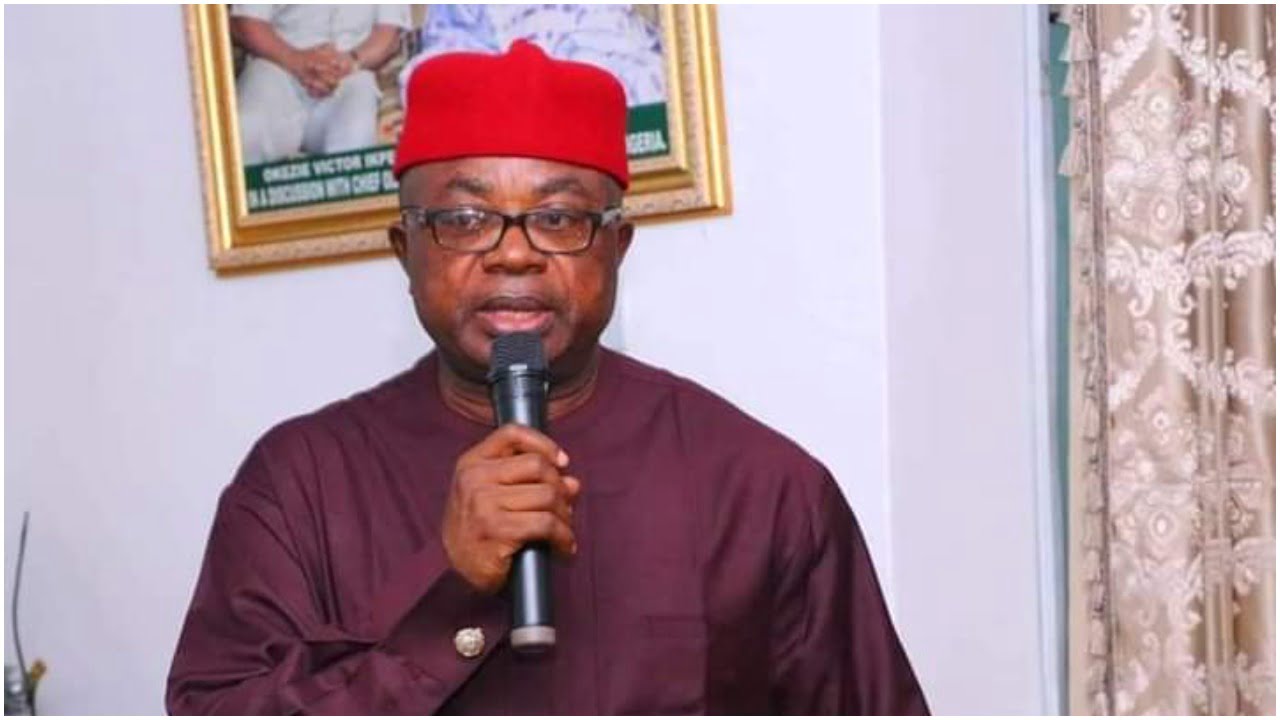
A Former member of the House of Representatives and President of Globe Legislators International, Sam Onuigbo, has challenged African leaders to take charge of the various initiatives adopted for the mitigation of Climate Change.
He noted that Africa’s climate challenge is no longer restricted to the question of vulnerability, but has also become a question of agency, stressing that “for decades, Africa has rightly insisted that the continent has contributed the least to historical greenhouse-gas emissions while suffering some of the most severe climate impacts.
Onuigbo, who spoke at the Fourteenth Conference on Climate Change and Development in Africa (CCDA-XIV), holding at the United Nations Conference Center, Addis Ababa, Ethiopia, maintained that “that argument remains valid and must continue to shape demands for climate justice, finance, technology transfer, adaptation support, and loss and damage.”
With the theme, “From Pledges to Implementation: African Agency and the Belem-Antalya-Addis Roadmap,” this year’s summit attracted dignitaries from across the world.
Onuigbo commended the ClimDev-Africa Programme and the institutions providing the leadership and partnership behind this conference — the African Union Commission, the United Nations Economic Commission for Africa, the African Development Bank, the Pan-African Climate Justice Alliance (PACJA), and Afreximbank — for creating this platform for dialogue, reflection and collective action.
Formulating three key areas for special focus for African leaders, he remarked: “Africa that is home to critical minerals and is surrounded by oceans and seas, must move from climate participation to climate agency by setting the tone and shaping the rules, institutions, agencies, finance, and implementation pathways that affect its future.
“Implementation is now the real test of climate ambition — pledges must become laws, budgets, projects, accountable institutions/agencies, and measurable outcomes for African people.
“Africa’s climate leadership must be built through African institutions and agencies, capital, and authority — with fair international finance supporting, not controlling, the continent’s development pathway.”
According to Onuigbo, the moment before Africa now requires something more: a shift from presenting climate priorities to exercising climate agency.
He recalled how Nigeria’s former Head of State, General Murtala Mohammed, on January 11, 1976 at the Extraordinary Summit of the Organisation of African Unity in Addis Ababa, declared “Mr. Chairman, Africa has come of age … The fortunes of Africa are in our hands to make or mar.”
And, turning to the audience, Onuigbo, who sponsored Nigeria’s legacy Climate Change Act in 2021, asserted: “Fifty years on, that charge is the argument of this presentation, not its ornament. Africa’s climate future will not be granted by pledges made elsewhere, nor rescued by interventions we wait for.
“It will be built, financed, governed and defended by Africans, on terms Africa itself has written. Whenever the continent has waited for outside validation, progress has been slow and conditional. Where it has moved first — in advancing independence for African countries, in markets, in institutions, in the very map by which the world sees us — it has changed outcomes.”
He disclosed that no other continent holds a greater promise for the sustenance of life than Africa, contending that the twin concepts of conservation and protection have become central to what becomes of the global environment in the years to come.
“I am glad that the theme of this Fourteenth Conference, “From Pledges to Implementation: The Belem–Antalya–Addis Roadmap,” speaks to a fundamental challenge facing Africa and the global climate regime and captures perhaps the most important transition in contemporary climate conversations: how do we move beyond commitments and negotiations to build the laws, institutions, financing mechanisms and practical solutions capable of delivering results?
“I come to this conversation from a legislative perspective, as the sponsor of Nigeria’s Climate Change Act 2021, and the President of GLOBE Legislators with the conviction that climate ambition must ultimately be translated into effective governance, institutional action and measurable development outcomes.
“It is from this perspective, and in direct continuation of the African Leaders’ Addis Ababa Declaration on Climate Change and Call to Action — adopted at the Second Africa Climate Summit in this same city a year ago, on the premise that Africa is “not here to beg” but here with solutions — that I wish to reflect on how Africa can strengthen its agency in shaping global climate governance: not only by advancing its priorities, but by contributing ideas, institutions and practical solutions that move the Africa agenda from pledges to implementation.”
Citing Nigeria’s Climate Change Act 2021 as a practical example of this shift from priority to agency, he explained that the Act translates climate ambition into law and governance, emphasizing that it establishes a statutory framework for climate action, creates institutional responsibility through the National Council on Climate Change (NCCC), which anchors climate coordination at the highest level of government.
Further, Onuigbo disclosed that by placing the Council under the Presidency and making the President its chair, “the Act responds to a common governance problem in Africa: inter-agency rivalry, or “peer jealousy,” where ministries and agencies compete for visibility, budgets, and authority instead of coordinating delivery.”
The President of GLOBE Legislators International noted with glee that for more than three decades, international climate diplomacy has strengthened the language of ambition — conventions adopted, agreements negotiated, NDCs (National Determined Contributions) submitted, net-zero commitments announced.
“But,” he added, “the central question before Africa today is different: it is no longer whether governments recognise the climate crisis, but whether the institutions, financing, technologies and political will needed to implement those commitments actually exist — and who controls them.”
While noting that climate priorities describe what Africa needs, Onuigbo discovered that “Climate agency defines what Africa decides, designs, builds, finances, governs, and defends for itself. It means Africa must not only attend global climate negotiations or be represented in their outcomes; it must help author the rules, institutions, financing mechanisms, and implementation pathways that determine the future of climate action.”
He maintained that the distinction matters, because participation means Africa is present at the table just as representation means Africa’s interests are counted in declarations, boards, communiqués, and negotiating texts.
“Agency is different. Agency means Africa sets terms rather than merely responding to terms set elsewhere. It means designing instruments rather than qualifying for instruments designed by others. It means deciding who assesses, who approves, who disburses, and who benefits. A continent can be well represented in a system it does not shape. Climate leadership means moving from being consulted to being the author,” he asserted.