Follow Us on Google

• Farmers in South-West, North-East raise alarm over rising feed prices, dwindling profits
• Industry operators seek subsidies, single-digit loans, warn of job losses, food insecurity
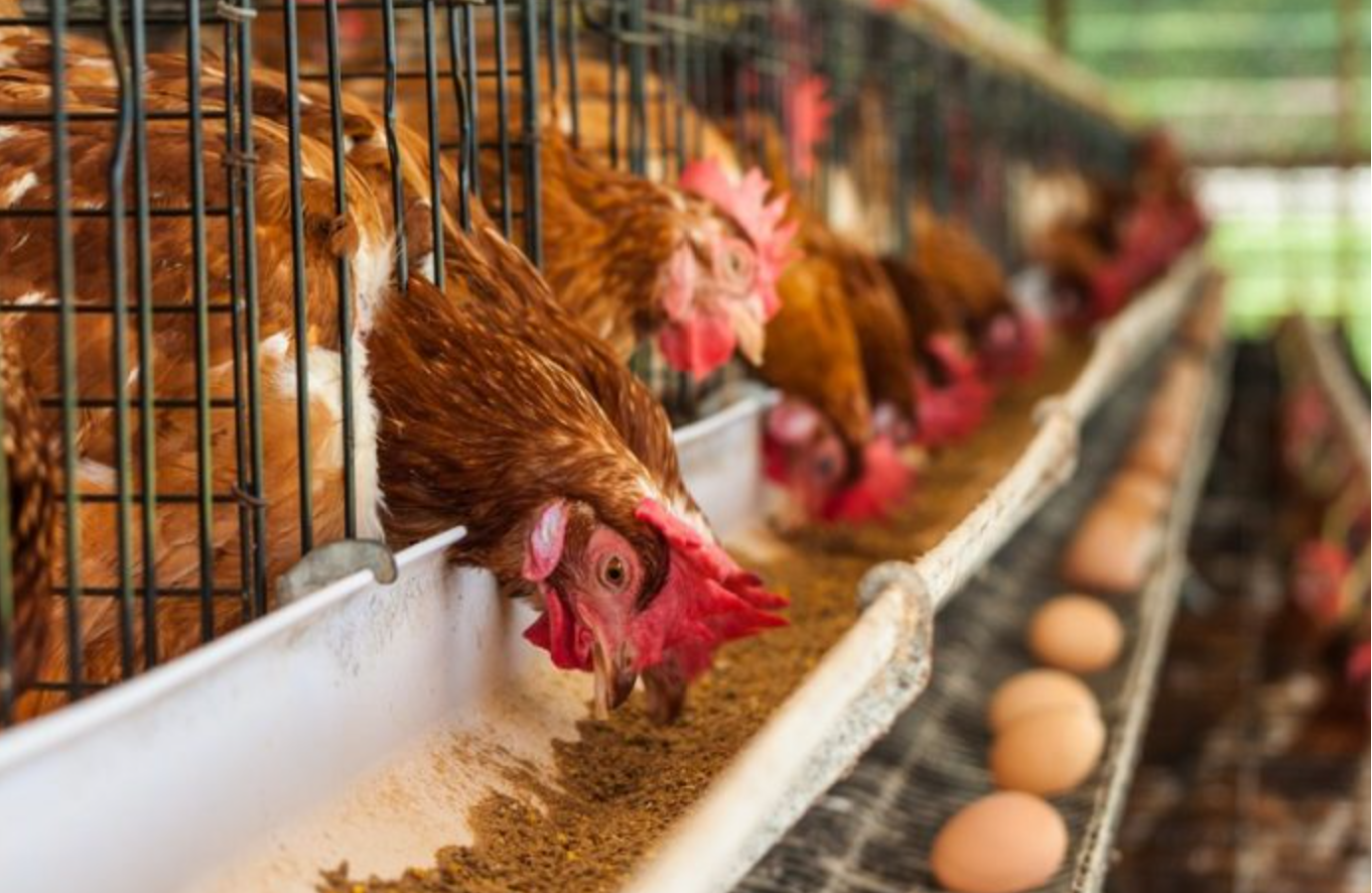
Spike in poultry production costs, shrinking profit margins and declining consumer purchasing power are threatening the survival of poultry farming across Nigeria, forcing operators to shut down farms or reduce production while households struggle to afford chicken, meat, fish and other sources of protein.
Reports from Osun, Ondo, Ekiti, Borno, Yobe and Adamawa states indicate that rising prices of poultry feed, day-old chicks, vaccines, transportation and other essential inputs have pushed many small-scale farmers out of business, with those still operating reducing their flock sizes, rationing feed or selling below profitable levels to avoid further losses.
The situation has also spread to the consumer market, where rising food costs and weakened purchasing power are forcing households to reduce meat portions, substitute eggs for beef and chicken or prepare meals without animal protein.
While poultry farmers across the South-West and North-East are appealing for government intervention to prevent further closures, traders and consumers in Lagos say the high cost of meat and other protein sources has continued to affect household budgets, despite occasional reductions in the prices of some products.
Chairman of the Poultry Association of Nigeria (PAN) in the South-West, Oluleye Olugbeja, warned that the industry faced a serious threat unless the Federal Government intervened to reduce feed costs, improve access to credit and provide insurance against disease outbreaks.
Olugbeja, who put the industry’s value at N4.2 trillion and its employment contribution at 25 million jobs, said feed alone accounted for about 75 per cent of production costs, leaving farmers with little room to absorb further increases.
“If government can release grains from the national reserve at subsidised price, give single-digit loans from Bank of Agriculture, and support insurance against disease, farmers can survive.
“Otherwise, this N4.2 trillion industry that gives 25 million jobs will collapse,” he warned.
In Ekiti State, Chairman of PAN, Alonge Oluwasetemi, painted a disturbing picture of declining production, disclosing that only between 15 and 25 per cent of the association’s members were still operating at optimal capacity.
He attributed the development largely to the high cost of feed and the inability of consumers to pay prices that would enable farmers to recover their investments.
“Feed now accounts for about 75 per cent of production cost, making it impossible for farmers to break even when consumers cannot afford the products,” he said.
A poultry farmer in the state, Daniel Ajayi, said a bag of feed that previously sold for N9,000 now cost between N20,000 and N23,000, while maize and soya, the major ingredients used in feed production, had tripled in price.
According to him, the increases have forced many smallholder farmers to reduce their flock sizes, resort to alternative local feed or abandon poultry production altogether.
The situation has also affected traders. A broiler seller at Oja Oba Market in Ado-Ekiti, Funmi Ajayi, said she previously sold about 100 birds daily but now struggled to sell 30 because of declining demand.
“People don’t have money to buy. A medium chicken that was N3,500 is now N7,000 and customers are negotiating N4,000. Farmers now struggle to sell or even offer birds on credit,” she said.
A veterinary doctor in Ikere-Ekiti, Femi Olabode, raised another concern over the quality of poultry feed, alleging that some manufacturers had reduced the proportion of essential ingredients to protect their profit margins.
“Maize should be 50 per cent of feed but now they put 35 per cent to make profit.
“So, birds don’t gain weight, layers produce 50 per cent instead of 90 per cent. This increases mortality and disease risk. It is a vicious cycle,” he said.
In Osun State, PAN Chairman Alaba Towoju said poultry farmers were struggling with the rising prices of feed, day-old chicks and pullets, which he said now sold for about N2,000 each.
He accused some feed millers of failing to pass the benefits of government-subsidised maize to farmers, calling for closer monitoring of agricultural intervention programmes.
“Poultry farmers buy feed at high prices from feed millers and are later forced to sell their products below profitable levels, leaving them in perpetual losses.
“Maize supplied by the government to support poultry farmers often ends up with feed millers, who allegedly increased prices, making it difficult for farmers to afford feed.
“Government should closely monitor the distribution of subsidised maize to feed millers to ensure that the benefits are passed on to farmers through affordable feed prices,” he said.
Chairman of the All Farmers Association of Nigeria (AFAN) in Osun, Wahaab Bello, acknowledged previous government interventions, including the FADAMA III programme and the distribution of chicks and feed, but maintained that more assistance was necessary.
He said feed manufacturers were also contending with expensive raw materials and should not bear sole responsibility for rising prices.
“High cost of feed is the major challenge facing poultry farmers while the prices of ingredients used in its production are also high.
“Feed sellers cannot be entirely blamed for the high prices because the raw materials required for production are equally expensive.
“The government should intervene by reducing the cost of agricultural inputs and providing grants to ease farmers’ operational challenges,” he said.
In Ondo State, Joshua Sunday Ayantayo, SIWE Coordinator at the Federal College of Agriculture, Akure, said raising 50 birds to marketable size now required at least N400,000, excluding losses arising from mortality and other expenses.
Ayantayo, who is also a poultry farmer, said some operators were cutting corners on vaccination because they could no longer afford both feed and medication.
“Those who have been raising 1,000 are reducing to around 500, some are reducing from 500 to 300.”
He called for subsidies on feed production and greater support for farmers cultivating maize and other raw materials required by the industry.
However, Chief Executive Officer of Wholesome Chicken Farm, Akure, Tayo Ayorinde, said rising production costs were not the only factors responsible for the difficulties confronting poultry farmers.
He identified poor farm management, inadequate marketing arrangements, disease outbreaks, theft and corruption in government intervention programmes as additional problems undermining profitability.
According to him, farmers who maintain good production standards, enforce biosecurity measures and plan their marketing properly can remain profitable despite the prevailing challenges.
A poultry inputs dealer in Akure, Aminat Olaitan, said a bag of finisher feed now sold for between N22,000 and N24,000, compared with N16,000 to N18,000 previously.
She said weekly sales at her store had fallen from between eight and 10 bags to fewer than four, reflecting the reduced purchasing capacity of poultry farmers.
Similarly, Chief Executive Officer of PearlFak Limited, Abiola Fakinlede, blamed expensive diesel, poor roads and rising transportation costs for the persistent increase in feed prices.
“From July to date, feed prices have been going up drastically, and within a single week, the price can change more than once,” she said.
Fakinlede explained that some farmers had resorted to purchasing half bags of feed and rationing what they bought, a practice she said was affecting bird growth and egg production.
Other News
“When farmers come to buy feed, instead of buying full bags, many end up buying half bags, which forces them to ration the feed and causes their birds to suffer,” she added.
The difficulties are equally pronounced in the North-East, where poultry farmers in Borno, Yobe and Adamawa states warned that continued increases in production costs could force more operators out of business.
In Adamawa, a poultry farmer in Yola-South, Haruna Ismail, said the price of day-old chicks had increased from between N980 and N1,050 in 2025 to N2,270.
He said a bag of poultry feed previously sold for between N16,000 and N18,000 but now cost between N21,600 and N23,000, while some poultry medicines had risen from N400–N800 to between N1,800 and N2,000.
Ismail said the increases had compelled him to reduce the number of birds he raised and adjust expenditure on feeding and medication.
Another farmer in Yola-North, Peace Samuel, said the cost of raising birds for six to seven weeks had made poultry farming increasingly unprofitable.
“After rearing birds for six to seven weeks and feeding them at such high costs, it will be fair to sell at N20,000 each.
“But some people may prefer to buy beef for N10,000 instead of chicken,” she said.
Samuel added that farmers sometimes had to reduce their selling prices to attract buyers because keeping mature birds longer would mean additional expenditure on feed.
She identified coccidiosis, Newcastle disease and Gumboro as other threats to poultry production, warning that delayed treatment could lead to high mortality and financial losses.
In Biu, Borno State, the Manager of Shettima Farms in Tum, Shettima Isa, said the price of a bag of feed had risen from N10,000 to N18,000, while broilers sold for between N8,000 and N12,000, depending on their sizes.
“This is increasingly becoming unbearable because you will spend huge money on feeds and vaccines and end up selling the broiler for between N8,000 and N12,000 depending on their sizes.
“We hardly make enough profit, and so many stopped the business, and many jobs were lost too because it’s a value chain.
“If the government will support poultry farmers in Biu and in the entire state, we will have more jobs created and have more food for Nigerians,” he said.
Another farmer in Biu, Usman Kabiru, said he had abandoned poultry farming because of high feed costs and poor market prices but would consider returning if the government subsidised essential inputs.
In Yobe State, a poultry farmer in Potiskum, Isa Bawa, said feed prices had risen sharply over the past four to five years, from between N5,000 and N7,000 per bag to N23,000 for starter feed and N21,000 for finisher feed.
Another farmer, Usman Maidede, said the rising costs had reduced the number of poultry producers in the area, sometimes resulting in shortages of eggs and birds.
“When the price is high, the farmers rear less, which in turn causes less availability for the buyers,” he said.
A farmer and dealer in poultry feed and medicines, Godwin Dedan, urged the government to subsidise feed ingredients, support local maize and soybean production and establish affordable feed-milling facilities.
He also advocated low-interest loans and grants to enable smallholder farmers to purchase chicks, feed, vaccines and other inputs.
Meanwhile, the effects of rising food production and distribution costs are being felt by consumers in Lagos, where households are adjusting their diets and cutting expenditure on meat, chicken and fish.
Investigation at Oyingbo, Ijora Olopa, Ikotun and FESTAC markets showed that although some chicken and fish prices had declined intermittently, many households continued to struggle with the cost of animal protein.
A mobile butcher, Abubakar Sodiq, said beef prices had increased from N6,000 per kilogramme in August to N8,000, attributing the increase to fuel prices and the cost of purchasing cattle.
He said portions of slaughtered cattle that previously cost about N60,000 now sold for between N100,000 and N120,000, sometimes reaching N130,000.
Another butcher at Oyingbo Market, Musa Danjuma, said a lap of meat now sold for between N30,000 and N45,000, compared with about N25,000 in August, while a neck portion cost N10,000.
At Ijora Olopa Frozen Food Market, a chicken trader, Mahmoud Ganiyat, said a carton of soft chicken sold for N41,000, while other varieties ranged from N52,000 to N54,000.
She said fluctuations in prices had affected demand and forced her to reduce her stock purchases from 200 cartons to 150.
Another trader, Akeem Abdullahi, said a carton of fryer chicken had declined from between N41,000 and N42,000 the previous week to N39,000, while hard Orobo chicken had fallen from N62,000 to N52,000.
He attributed the fluctuations to supplier prices in Cotonou, adding that some customers now purchased half a kilogramme instead of one kilogramme.
An egg trader at Ijora Olopa, Rokibat Hamzat, said a crate of small eggs sold for N5,800, while larger eggs cost N6,200, with individual eggs selling for between N200 and N250.
Another trader, Williams Chinaza, said a crate sold for N6,500, compared with about N7,000 previously, attributing the fluctuations to feed, transportation and supply costs.
Despite these occasional price reductions, consumers said the cost of providing adequate protein for their families remained a challenge.
A graphic designer residing on Governor’s Road, Ikotun, Olayinka Oluwafemi, said a piece of beef that previously cost N100 now sold for N200, forcing him to reduce his meat consumption by about 80 per cent.
He said he had increasingly turned to eggs as a cheaper alternative.
A cosmetics seller in FESTAC, Chidinma Samuel, said her family’s expenditure on meat had risen from between N3,000 and N3,500 to between N5,000 and N6,000.
She said a large catfish previously purchased for N3,500 now cost N5,000, forcing the family to occasionally prepare meals without meat.
Another consumer in Mushin, Adebanke Agbo, said she substituted eggs whenever she could not afford meat or chicken. “Once you prepare a tasty stew and add eggs, you are good to go.”
Agbo, however, lamented that even eggs, which were previously considered a relatively affordable source of protein, had become expensive for many households.
Across the affected states, farmers maintained that unless the government addressed the cost of feed, agricultural inputs, transportation and access to affordable credit, more poultry businesses could shut down, worsening unemployment and putting additional pressure on food supplies.
They called for cooperative feed-milling facilities, subsidised grains, improved access to single-digit loans, disease insurance and closer monitoring of agricultural support programmes to ensure that interventions reached their intended beneficiaries.