Follow Us on Google

• Ruling party cites N4trn debt settlement, reforms; Atiku says excuses cannot light homes
• ADC candidate demands accountability, promises to scrap electricity tariff bands
From Juliana Taiwo-Obalonye and Ndubuisi Orji, Abuja
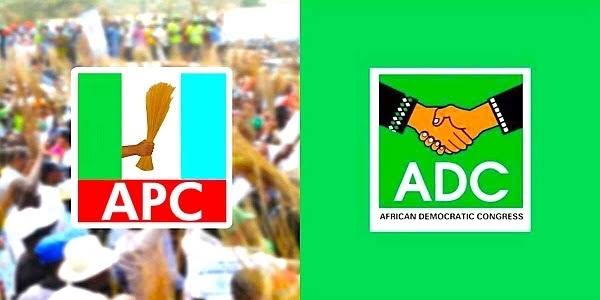
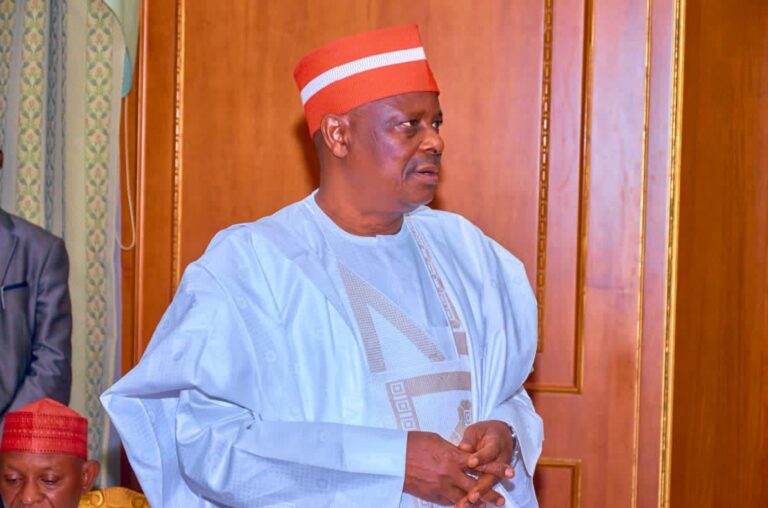
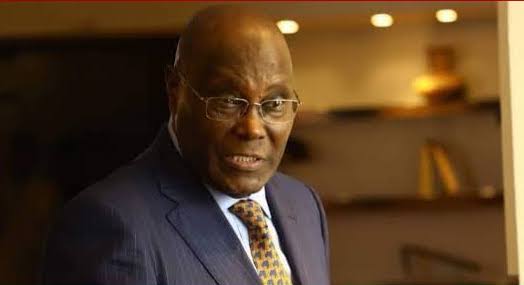
The All Progressives Congress (APC) Presidential Campaign Council’s acknowledgement that Nigeria’s electricity crisis remains unresolved has intensified the political confrontation over President Bola Tinubu’s 2023 campaign promise to provide steady power, with former Vice President Atiku Abubakar insisting that the President must account for his pledge or face rejection at the 2027 polls.
While the APC defended the administration’s electricity reforms, N4 trillion debt settlement programme and infrastructure investments as evidence of progress, Atiku dismissed the interventions as insufficient, arguing that laws, bonds and project announcements could not substitute for reliable electricity in Nigerian homes and businesses.
At the centre of the controversy is Tinubu’s declaration during the 2023 presidential campaign that Nigerians should not vote for him again if he failed to provide constant electricity within four years, a commitment the APC now says must be considered alongside the structural challenges inherited by the administration and the measures taken to address them.
The ruling party’s Presidential Campaign Council, through its spokesman, Dele Alake, acknowledged on Sunday that efforts to resolve the country’s longstanding electricity problems remained unfinished, but insisted that the administration had made progress in addressing the financial, regulatory and infrastructure deficiencies affecting the sector.
“Fixing the electricity market and power sector is ongoing work,” Alake said, maintaining that the President’s performance should be assessed against improvements in electricity supply, metering, infrastructure and the stability of the electricity market.
Atiku, however, rejected the explanation, accusing the ruling party of attempting to reinterpret a straightforward campaign commitment at a time Nigerians continued to grapple with blackouts, estimated billing, high electricity tariffs and the rising cost of alternative power.
In a statement issued by the Director of Strategic Communication of the African Democratic Congress (ADC) Presidential Campaign Council, Phrank Shaibu, the former Vice President said Tinubu had voluntarily invited Nigerians to judge his performance on electricity supply before considering his re-election and should therefore be prepared to account for the promise.
“The APC should spare Nigerians the spectacle of celebrating paperwork while homes and businesses remain in darkness. After three and a half years, families still struggle to keep their homes lit.
“Traders and small business owners spend scarce resources on alternative power, yet struggle to keep their businesses alive. Nigerians are billed for electricity they cannot rely on. President Tinubu promised steady power and an end to estimated billing. That promise has not been kept,” he said.
The exchange has brought the administration’s electricity record into sharper focus ahead of the 2027 general elections, with the APC seeking to demonstrate progress through legislation, financial interventions and infrastructure projects, while the ADC candidate insists that the relevant measure of performance is the availability and affordability of electricity to consumers.
Recalling Tinubu’s campaign undertaking, Atiku said the President had left Nigerians in no doubt about the standard by which he expected to be judged.
“When President Tinubu campaigned in 2022, he made an unmistakable commitment. He said: ‘If I don’t give you constant electricity for four years, when I come back for a second term, don’t vote for me.’
“Nigerians have lived through those four years. They do not need his campaign council to interpret his words for them. They need him to answer for them,” he stated.
Alake, however, argued that public commentary on the pledge had frequently ignored the concluding part of Tinubu’s declaration, in which he undertook to provide adequate explanations if he was unable to fulfil the promise before seeking another mandate.
The APC spokesman maintained that the administration had not abandoned the commitment, but was pursuing reforms intended to address longstanding structural and commercial problems that had undermined the electricity industry for decades.
He identified the Electricity Act, 2023, signed by Tinubu on June 9, less than two weeks after assuming office, as one of the administration’s major interventions.
According to him, the legislation liberalised the electricity sector, expanded opportunities for private investment and enabled state governments to participate more actively in electricity generation, transmission, distribution and regulation.
He said seven states — Lagos, Enugu, Abia, Ekiti, Oyo, Kaduna and Niger — had begun taking advantage of the law by establishing electricity regulatory agencies and attracting private investment.
Alake also disclosed that the administration inherited more than N6 trillion in accumulated legacy debts in the power sector between 2015 and 2025, a financial burden he said had weakened electricity generation companies and gas suppliers.
To address the problem, he said the Federal Government established a N4 trillion bond programme to settle verified debts owed to 21 generation companies and gas suppliers, with the first and second tranches raising more than N1.2 trillion.
He maintained that the intervention was necessary to improve liquidity, restore confidence in the electricity market and enable operators to sustain generation and attract additional investment.
Atiku, however, challenged the administration to demonstrate how the financial arrangements had translated into improved electricity supply, arguing that settling outstanding debts was not equivalent to expanding generating capacity or providing steady power to consumers.
He alleged that the administration had not constructed new generation infrastructure of its own to increase national electricity capacity, insisting that the government could not present debt settlement arrangements as fulfilment of its campaign promise.
“His administration has not built a single new generation infrastructure of its own to increase Nigeria’s power capacity. Yet it has floated a multitrillion-naira bond programme to settle legacy debts owed to generation companies, without showing Nigerians how this financial intervention has produced the steady electricity they were promised.
“Paying old debts is not the same as building new power infrastructure. Bonds cannot be presented as a substitute for power in people’s homes,” he said.
The disagreement also extended to the administration’s efforts to end estimated billing, another undertaking Tinubu made during the 2023 electioneering campaign.
Alake said the government introduced the Presidential Metering Initiative to address a deficit of more than seven million electricity meters, adding that over 1.5 million customers had been metered in the past three years.
He argued that the initiative demonstrated the administration’s commitment to improving billing transparency, reducing disputes between consumers and distribution companies and strengthening accountability in the electricity market.
Other News
Atiku countered that the continued existence of estimated billing and unreliable supply showed that the administration had yet to deliver the improvements promised to electricity consumers.
He also criticised the service-based tariff system, under which customers are classified into Bands A, B, C, D and E and charged different rates according to their designated electricity supply categories.
According to him, Band A consumers in many areas pay about N209.50 per kilowatt-hour before Value Added Tax, while charges for other categories vary according to the state and electricity distribution company.
He argued that consumers were being subjected to increasing electricity costs without corresponding improvements in reliability, forcing households and businesses to spend additional money on generators, petrol, diesel and other alternative energy sources.
“Across Nigeria, consumers are placed in Bands A, B, C, D and E and charged different rates. In many areas, Band A customers pay about N209.50 per unit before VAT. Rates for the other bands vary by state and electricity provider. Yet across every band, the same hardship endures: the power fails, but the bill arrives.
“No family should have to weigh the cost of electricity against the cost of food. No business should be left to pay more while receiving less,” he stated.
Defending the tariff reforms, Alake said the service-based classification was introduced to improve the financial viability of electricity distribution companies, strengthen cash flow within the market and reduce the Federal Government’s subsidy burden.
He nevertheless acknowledged the challenge of balancing cost-reflective tariffs with affordability, saying the administration would continue exploring measures to protect low-income households while ensuring that electricity operators remained financially sustainable.
Atiku also demanded clarification of the government’s reported plan to end electricity subsidies from 2027, particularly the implications for consumers already struggling with high energy costs.
He said assurances that there would be no immediate tariff increase were insufficient without a clear explanation of how subsidy withdrawal would be implemented and who would ultimately bear the financial burden.
The former Vice President further raised concerns over Value Added Tax on electricity and provisions of the Nigeria Tax Act for a five per cent surcharge on certain fossil fuels, including petrol and diesel.
Although he acknowledged the government’s position that the surcharge had not been activated and would require a ministerial order, he maintained that Nigerians deserved an explanation of its potential implications.
“Meanwhile, Nigerians face VAT on electricity, and the Nigeria Tax Act provides for a five per cent surcharge on certain fossil fuels, including petrol and diesel. The government says the surcharge has not been activated and would require a ministerial order.
“At a time when families already struggle to meet the cost of energy, Nigerians deserve to know why another potential charge has been placed before them,” he said.
On electricity infrastructure, Alake disclosed that Tinubu had reviewed the Presidential Power Initiative inherited from former President Muhammadu Buhari’s administration and signed an acceleration agreement with German partners in December 2023.
According to him, the Federal Executive Council approved the first batch of contracts in December 2024 for the upgrade of five Transmission Company of Nigeria substations in major electricity load centres.
He said the projects were nearing completion and would be commissioned before the expiration of Tinubu’s first term.
The council, he added, approved another batch of projects in June 2026 for the construction of eight new substations and the upgrade of four existing facilities.
Alake also listed plans to modernise the more than 60-year-old Osogbo Grid Control Centre and construct an East-West super grid among measures intended to strengthen transmission capacity and improve the stability of electricity supply.
He cited solar electricity projects being implemented through the Rural Electrification Agency for universities, hospitals and rural communities as further evidence of the administration’s efforts to expand electricity access.
Atiku, however, maintained that the approval of projects and announcement of investment programmes could not be equated with electricity already delivered to homes, schools, hospitals and businesses.
“Dele Alake’s statement cannot light a home. Signing a law is not electricity. Raising a bond is not electricity. Approving a project is not power delivered. Nigerians cannot cook, study, work or sustain a business on announcements.
“President Tinubu invited Nigerians to judge him by his performance. They have done so. What they seek is simple: reliable electricity they can afford, and a government that keeps its word,” he said.
Outlining his own proposed alternative, the ADC presidential candidate promised to work with state governments and electricity regulators to abolish the existing tariff band classification system if elected President.
He said his administration would introduce a framework that prioritised affordability, transparency and accountability, while ensuring that electricity companies were held responsible for the quality and reliability of supply delivered to consumers.
According to him, an ADC administration would work “to abolish the present band system and replace it with a fair, transparent and affordable framework that protects households and holds power companies accountable for the electricity they deliver.”
“Steady power that Nigerians can afford will be a national priority,” he added.
Alake, however, insisted that Tinubu remained committed to his electricity campaign promise and would present Nigerians with the administration’s scorecard, including reforms undertaken, projects completed and outstanding challenges, as he sought a second term in 2027.
He maintained that the President’s record should be assessed in the context of the difficulties inherited by the administration and the interventions being implemented to improve electricity supply across the country.