Follow Us on Google

By Omoniyi Salaudeen
Ogun State Governor, Prince Dapo Abiodun, as the Chairman of the Southern Governors’ Forum, hosted a joint meeting of the Southern Governors’ Forum and the Southern Nigeria Traditional Rulers Council on Wednesday, November 26, 2025. The meeting took place at his residence in Iperu-Remo. The initiative was a unique historically event, marking the inaugural joint meeting between the two powerful bodies. While Southern Governors have met regularly, most notably with the Asaba Accord in 2021, traditional rulers operated in parallel, often meeting separately or having fragmented interactions primarily within their own states.
The uniqueness of the Iperu-Remo dialogue lies in the institutional merger of two distinct pillars of authority. For the first time, the forum created a single, unified regional platform where the executive power of the 17 governors directly aligned with the grassroots moral and cultural authority of the paramount traditional rulers. The primary goal was to formalise the role of traditional institutions in the modern governance structure, especially concerning security. This is part of the broader move to decentralise intelligence and leverage the traditional custodians who are closest to the people.
Consequently, the meeting produced a comprehensive, action-oriented blueprint with specific institutional commitments: the Zonal Security Fund and the Unified Intelligence-Sharing Framework. By creating a Southern Regional Council for security and development, the joint session intends to bring a strong, single voice and a collaborative strategy to tackle the region’s most pressing challenges.
The most far-reaching resolutions of the joint session included state police, security fund and enhanced regional cooperation. For effective policing of local communities, the Forum strongly reiterated its call for the establishment of State Police, compelling the creation of a Zonal Security Fund to be financed by member states for joint operations and capacity building. The establishment of the Fund is a critical, tangible outcome of the joint meeting, moving regional security cooperation beyond rhetoric into a financially backed, institutionalized structure. This is arguably the most concrete step toward regional financial autonomy on security. The fund will be financed by contributions from all member states to support. It is a commitment to financial sustainability and technological integration for security, giving the Southern Governors the resources to enhance their regional security networks and reduce reliance solely on the federal security apparatus.
The fund is essential to supporting the adopted Intelligence-Sharing Framework, helping in procuring modern communication equipment, surveillance technology, and vehicles for regional and local security outfits. Modern communication equipment ensures all states and security outfits can communicate seamlessly. It will also facilitate capacity building and training of personnel of regional security outfits like Amotekun and community surveillance units. It will help in deploying real-time monitoring and digital intelligence systems to link all southern states for rapid threat response and data exchange.
Additionally, states were urged to formally integrate traditional rulers into their security councils and strengthen traditional councils through operational and financial support. By so doing, the meeting cemented a powerful political partnership and a strategic alignment on security and development for the entire Southern region. By formally incorporating them into security architectures, the governors intend to leverage their proximity to the people and their critical intelligence-gathering capabilities to control criminalities in their respective domains. This directly empowers the traditional rulers, enabling them to play a more effective role in their newly formalized security and governance roles at the grassroots level.
The formal incorporation of traditional rulers into State Security Councils positions them as primary feeders of grassroots and local intelligence. They are closest to the people and can provide early-warning signals that traditional security agencies often miss. The framework aims to integrate intelligence gathered by local security outfits, hunters’ associations, and community surveillance units. According to the plan, the Zonal Security Fund will be used to equip these local groups with the necessary communication tools to feed information directly into the digital system.
Over the last 15 years of troubling security concerns, absence of a framework for community policing has rendered the government’s effort to contain insurgency and terrorism ineffective, perfunctory and sometimes contradictory. State police supported by modern communication and surveillance technology will not only facilitate unified intelligence sharing, it will also promote real-time monitoring and coordinated responses.
Other News
This signifies a crucial shift from the uncoordinated security operations toward a more collaborative and grassroots-focused approach to governance in Southern Nigeria. The impressive turn out of Southern Governors chaired by Abiodun underscores the urgency of the need for the review of strategy to contain the spread of banditry, kidnapping and ransom-taking which have become a lucrative business. As widely reported, 11 Governors and 4 Deputy Governors were present. The traditional rulers, whose inclusion was central to the meeting’s significance, were led by top monarchs from all zones. The core focus was a strategic, unified response to insecurity, leveraging grassroots structure.
The imperative of state police was unanimously reaffirmed as a constitutional necessity for addressing complex security challenges and ensuring effective security across diverse terrains. The meeting essentially created a unified front—melding the executive power of the governors with the moral and cultural authority of the traditional rulers—to champion the call for true federalism and regional self-determination on security matters.
These resolutions speak directly to the South’s collective stance within the Nigerian federation. The joint meeting produced a strong affirmation of national unity and political direction, anchored by a significant show of support for the current Federal Government. It was a reaffirmation of regional unity, as the leaders strongly condemned what they described as orchestrated attempts to sow discord, division, and disinformation within the South. The initiative reassured citizens that Southern Nigeria remains united and indivisible, committed to peaceful coexistence across ethnic, religious, and cultural lines, pledging to continue speaking with one voice on matters of national interest.
For successful implementation of these initiatives, the intelligence-sharing framework is the technological and procedural backbone that will make the zonal security fund and the integration of traditional rulers truly effective. It moves security cooperation from ad-hoc communication to a structured, real-time digital system.
Beyond that, the proposed plan calls for a real-time digital intelligence system to link all southern states for rapid response. This acts as a centralized digital hub for all collected data.
A key resolution of the joint session is the institutionalization of monthly zonal security coordination meetings of the security advisers to ensure a formal, regular process for reviewing shared intelligence, planning joint operations, and administering the zonal security fund. By having a unified platform for sharing data on border protection, crime hotspots, and the movement of criminals, the framework enables security outfits in neighbouring states to launch coordinated responses across state lines almost instantly.
Above all, the framework links the local eyes, traditional rulers, with the technological ears and mouth – digital systems and security advisers – to create a single, unified security command structure for the entire Southern region.
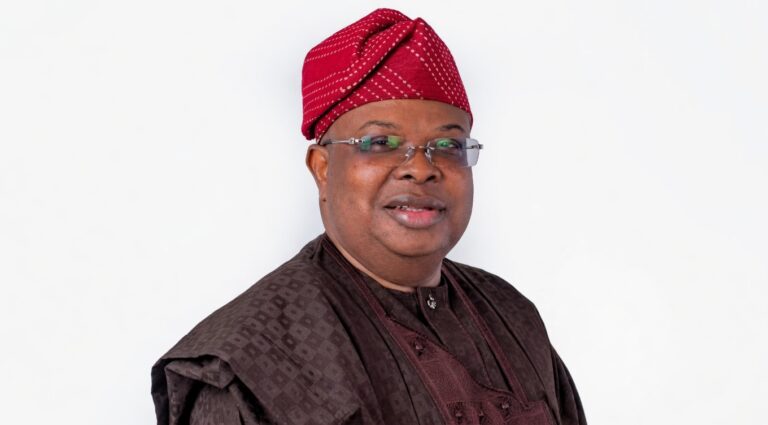
Governor Dapo Abiodun made history for having the honour and privilege of hosting the joint meeting of two distinct pillars of authority.