Follow Us on Google

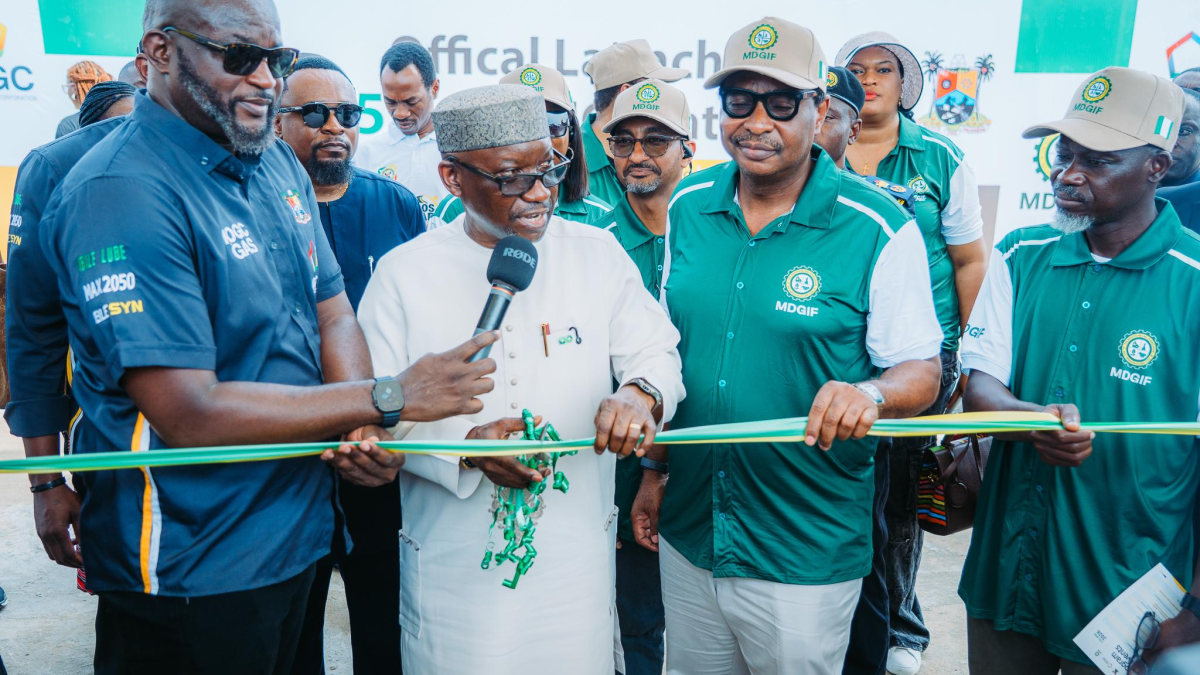
Lagos launches five new CNG stations
______________________________________________________________________
By Adewale Sanyaolu
The Midstream and Downstream Gas Infrastructure Fund (MDGIF) is stepping up efforts to attract private sector and foreign investments to bridge Nigeria’s estimated $200 billion gas infrastructure funding gap over the next decade.
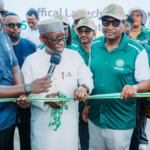
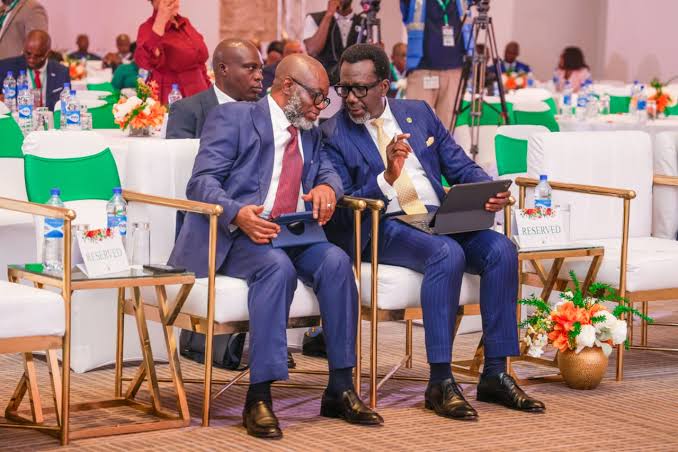
The Executive Director of MDGIF, Mr Oluwole Adama, disclosed this at the commissioning of five Compressed Natural Gas (CNG) daughter and last-mile retail stations established by Ibile Oil and Gas Corporation (IOGC) in collaboration with MDGIF, located in Abule-Egba, Oko-Oba, Ajah, Ogolonto and Idimu, all in Lagos.
Adama said the scale of investment required to develop Nigeria’s gas infrastructure was beyond the financial capacity of the fund, making partnerships with development finance institutions (DFIs), foreign investment funds and private sector players critical to achieving the country’s gas development objectives.
According to him, MDGIF is positioning itself as a catalytic institution to de-risk investments, unlock additional financing and encourage businesses to commit capital to infrastructure projects across the gas value chain.
He explained that the fund’s mandate went beyond providing direct financing, stressing that its primary responsibility was to create an enabling environment for investments in gas processing plants, gas capture projects, pipelines, CNG refuelling stations, terminals and storage facilities.
“An estimate a few years ago put the investment required to close Nigeria’s gas infrastructure deficit at about $20 billion annually for 10 years. That is approximately $200 billion. What MDGIF can do is limited in terms of the resources available to us, so we see ourselves as a catalytic agent,” he said.
Adama disclosed that the fund had secured a $500 million debt facility and was pursuing additional financing arrangements, including risk guarantees, to attract more investors into the sector.
He said MDGIF had engaged the United States Development Finance Corporation (DFC) on opportunities to mobilise further funding for gas infrastructure projects in Nigeria.
The objective, he explained, was to reduce investment risks, particularly at the early stages of project development, and unlock larger pools of capital from international financiers and private investors.
Adama also disclosed that the fund had supported more than 25 infrastructure projects, with about 18 already commissioned in less than two years.
Other News
He noted that the development of gas infrastructure required considerable time, involving project design, engineering, equipment manufacturing, shipping, port clearance and construction, adding that Nigerians should recognise that such investments could not be delivered overnight.
Earlier, the Minister of State for Petroleum Resources (Gas), Ekperikpe Ekpo, said the Federal Government was intensifying efforts to increase domestic gas utilisation and expand infrastructure to make natural gas more accessible to Nigerians.
He disclosed that domestic gas supply had increased from about 1.6 billion cubic feet to 2.2 billion cubic feet daily, attributing the improvement to growing investments in the sector and the government’s policy direction under President Bola Tinubu.
According to him, the government is working with private sector investors to address infrastructure and supply challenges, noting that increased demand for gas would continue to attract investments into the sector.
The minister stressed that government alone could not establish the infrastructure required to deepen gas utilisation, making private sector participation indispensable.
He commended MDGIF for its catalytic role in supporting infrastructure development and attracting investments into the gas sector.
Also speaking, the IOGC Managing Director and Chief Executive Officer, Mr Tayo Gbajumo, said the corporation was expanding its CNG infrastructure in Lagos as part of its mandate to establish 15 stations across the state.
He disclosed that five additional stations had been commissioned in Abule-Egba, Ajah, Oko-Oba, Idimu and Ogolonto, while the remaining six were at various stages of completion and expected to be commissioned by the first quarter of 2027.
Gbajumo said the facilities were designed to improve access to affordable energy, reduce transportation costs for businesses and households, and support the adoption of CNG-powered vehicles.
The five stations, supported by MDGIF, have a combined storage capacity of 45,640 standard cubic metres and are expected to serve approximately 8,400 vehicles daily at full capacity, according to Adama.
Gbajumo commended the Federal Government, the Lagos State Government and MDGIF for their support, saying the partnership demonstrated the importance of collaboration between government institutions and industry stakeholders in expanding gas infrastructure.