Follow Us on Google

From Fred Ezeh, Abuja
The Federal Government has unveiled plans to begin a phased intervention in two states (identity undisclosed) with the highest burden of child stunting, as part of efforts to reverse Nigeria’s worsening malnutrition crisis and improve the nutritional status of children across the country.
It said the proposed intervention would involve ministers and officials from key sectors working with state governors to establish measurable targets, agree on funding responsibilities and monitor implementation through regular performance reviews.
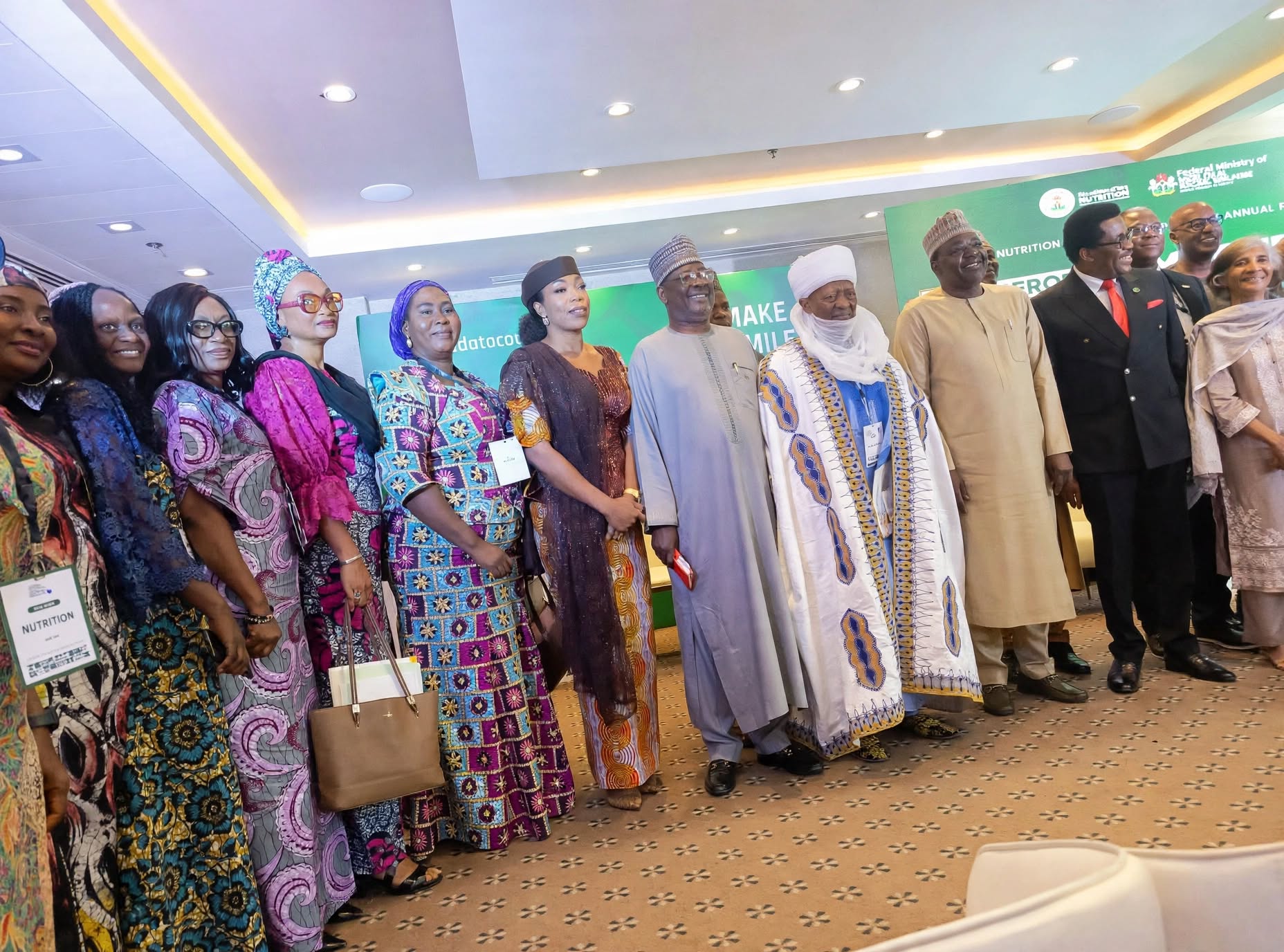
The Deputy Chief of Staff to the President, Senator Ibrahim Hassan Hadejia, disclosed this at the nutrition side event of the 2026 Health Sector-Wide Joint Annual Review (JAR) in Abuja, where he represented Vice President Kashim Shettima, Chairman of the National Council on Nutrition.
The nutrition side event was held under the theme “From Commitment to Impact: Reaching Every Community with Nutrition”, as part of the 2026 JAR, themed “Make Reform Data Count.”
In his address, Hadejia said the Federal Government was determined to move beyond policy declarations to concrete action, noting that about 40 per cent of Nigerian children under five were stunted, according to the 2023–2024 Nigeria Demographic and Health Survey.
He said President Bola Tinubu’s Renewed Hope Agenda placed human capital development at the centre of national development, stressing that nutrition was fundamental to achieving that objective.
According to him, nutrition should not be treated as social expenditure but as national infrastructure, given its implications for health, education, productivity and the country’s long-term development.
He said the Federal Executive Council (FEC) had approved the National Policy on Food and Nutrition and the National Nutrition Bill for transmission to the National Assembly, urging lawmakers to give the proposed legislation speedy consideration.
Hadejia said the Nutrition 774 initiative was designed as a delivery framework to bring together all tiers of government and relevant sectors to improve nutrition outcomes in every local government area.
He identified the lessons from Nigeria’s engagement with Ethiopia’s nutrition programme as sustained political leadership, bottom-up planning, predictable financing, multisectoral coordination and disciplined use of data.
The Minister of State for Health and Social Welfare, Dr Iziaq Adekunle Salako, in his remarks, said the health system must become a major platform for delivering nutrition interventions at the community level.
He described undernutrition as a major contributor to maternal and child morbidity and mortality, insisting that nutrition services should be integrated into routine primary healthcare activities, including antenatal care, immunisation, community outreach and maternal and child health services.
Other News
Salako said the Federal Government had recruited more than 15,000 community-based health workers and retrained nearly 80,000 frontline health workers, providing an important platform for expanding nutrition services.
He urged state governments to prioritise nutrition commodities in their budgets and supply chains, including through matching funding arrangements such as the Child Nutrition Fund.
The minister said the ministry would work with the Office of the Vice President and the Ministry of Budget and Economic Planning to incorporate nutrition indicators into the health sector’s results framework and JAR scorecard.
He added that the success of the initiative would ultimately be measured by improvements in the nutritional status of mothers and children, rather than merely the number of health facilities established or renovated.
The Permanent Secretary of the Federal Ministry of Health and Social Welfare, Daju Kachollom, in her remarks, said tackling malnutrition required coordinated action beyond the health sector, involving agriculture, education, water and sanitation, social protection and other relevant sectors.
She said the National Council on Nutrition had adopted the National Policy on Food and Nutrition 2026–2035, while the health sector was implementing the National Strategic Plan of Action on Nutrition.
Kachollom called for stronger financing, improved data and accountability, community ownership and the expansion of proven interventions, including mother-to-mother support groups to promote optimal infant and young child feeding.
She said the commitments made by governments must translate into clearly defined responsibilities and measurable deliverables across the country’s 774 local government areas.
A Senior Special Assistant to the President on Public Health, Uju Rochas Anwukah, while outlining the Federal Government’s implementation approach, said the intervention would begin with two high-burden stunting states before expanding to others.
The official said ministers responsible for budget and national planning, health, agriculture, livestock and water resources would engage governors and their teams to agree on priorities, responsibilities and financing at federal, state and local government levels.
She insisted that progress would be monitored through scorecards, with reviews scheduled at three, six and nine months, while reports on key indicators would be presented to the National Council on Nutrition.
The President’s aide said the approach drew lessons from Ethiopia, particularly the importance of clear targets, aligned political leadership, data-driven prioritisation and accountability.