Follow Us on Google

From Priscilla Ediare, Ado-Ekiti
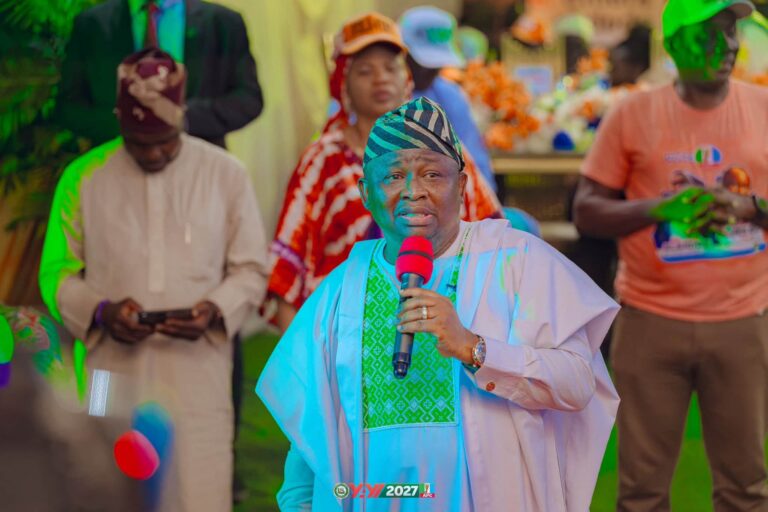
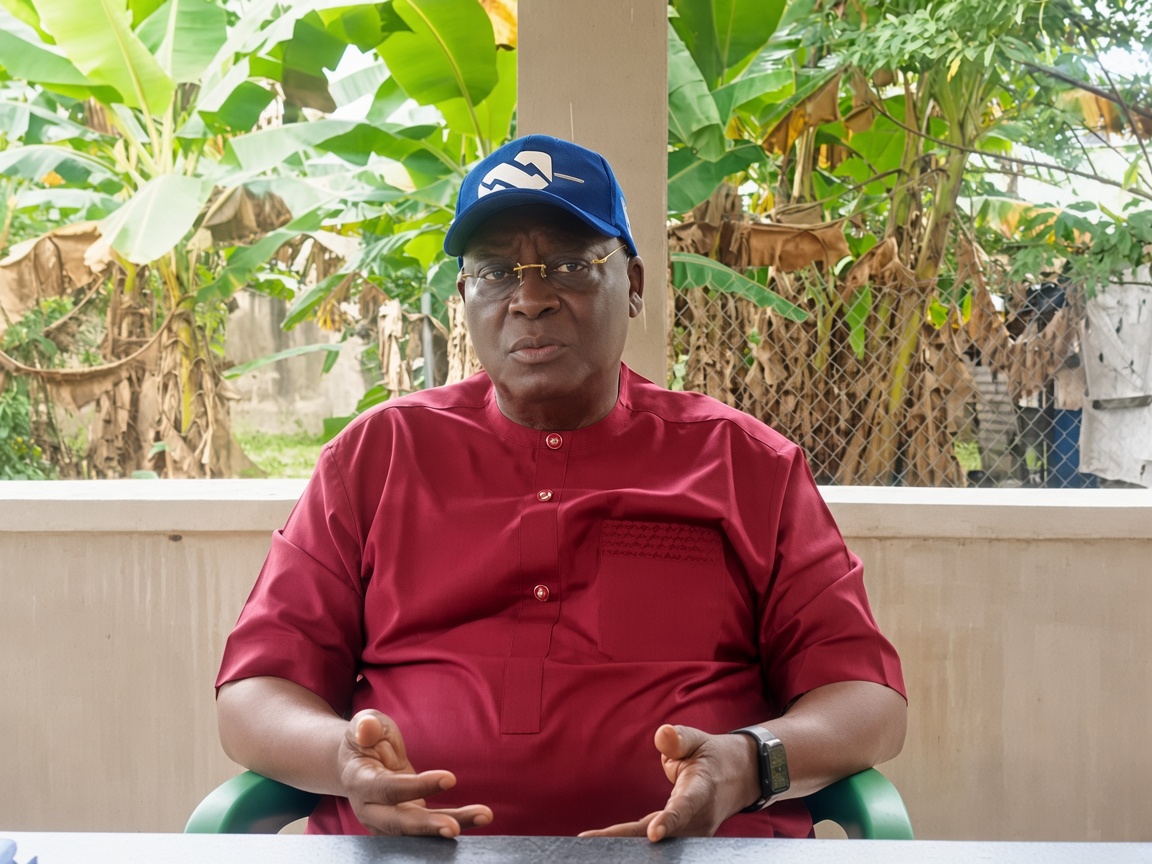
Senator Dayo Adeyeye, the Chairman of the Nigerian Ports Authority (NPA), has predicted that President Bola Tinubu of the All Progressives Congress (APC) will secure victory in all the 36 states of the federation in the 2027 presidential poll.
Adeyeye, who is also the National Chairman of the South-West Agenda for Asiwaju (SWAGA), declared that the African Democratic Congress (ADC) and other opposition parties lacked the electoral strength and political structure to defeat President Tinubu and the ruling APC in the January election.
‘ADC has no sitting governor or meaningful control of any state that could give it the political advantage required to challenge Tinubu. ADC will not win any state.’
Dismissing suggestions that the APC was afraid of the opposition, he described such a claim as unfounded, saying the ADC had no sitting governor or meaningful control of any state that could give it the political advantage required to challenge Tinubu. He added that its presidential candidate and former Vice-President, Atiku Abubakar, had no strong political base, even in his home state of Adamawa.
Speaking with newsmen on the 2027 election and the political situation in the country on Wednesday in Ado-Ekiti, the Ekiti State capital, Adeyeye said the opposition parties, including the ADC, which he posited had weak political strength at both state and National Assembly levels, did not have what it takes to dislodge the incumbent party.
He maintained that political influence, established structures and the support of influential political stakeholders remained important determinants of electoral success.
‘How can the APC be afraid of anything with the political atmosphere we have now? I said over three months ago that President Tinubu was likely to win all the 36 states, and I am becoming increasingly convinced that it will happen.
‘ADC is a party without a governor in any of the 36 states. How many members does it have in the National Assembly? How many state assemblies does it control? You cannot compare a party without a demonstrable political structure with the APC.
‘If I go to the executive today, the people that have been following me for a long time, they still have confidence in me. I say it openly. They will still go where we are going,’ he said.
The NPA chairman said Atiku’s political predicaments were complicated by the absence of strong backing from his home state, alleging that neither the Adamawa State governor nor prominent political figures in the state had demonstrated substantial support for his presidential ambition.
‘Atiku is from Adamawa, but the governor of his state is not supporting him. The legislature in the state has not witnessed any significant movement to the ADC. How do you intend to challenge and defeat an incumbent president when you cannot establish a formidable political base in your own state?’ he asked.
Adeyeye explained that SWAGA was established to consolidate President Tinubu’s political base in the South-West, stressing that a strong home support system was essential for any presidential candidate seeking national acceptance.
According to him, Tinubu had built a formidable political foundation across the South-West, and the president’s support base had continued to expand beyond the region.
Responding to the economic hardship in the country, Adeyeye acknowledged that many citizens were struggling but argued that public dissatisfaction with living conditions had existed in different periods of the country’s history.
The former federal lawmaker said Nigerians had consistently complained about rising prices, recalling that even during his childhood, people regularly compared the cost of goods and services with prices in previous years.
He, however, defended Tinubu’s economic policies, particularly the removal of the fuel subsidy and the unification of the foreign exchange market, which he noted had prevented the country from sliding into a deeper economic crisis.
The NPA boss argued that the country was approaching economic collapse before Tinubu assumed office in May 2023 and maintained that the president’s decisions helped prevent a deeper economic crisis.
‘If the president had not initiated the policies that he embarked on when he came to office, like the removal of fuel subsidy, like floating the naira to find its own balance in the foreign exchange, Nigeria would have sunk into the abyss,’ he said.
Adeyeye claimed that the administration of former President Muhammadu Buhari had reached a point where it could no longer sustain fuel subsidy payments, adding that the Federal Government faced serious financial constraints before the change of administration.
He said the Monetary Policy Committee had communicated the financial difficulties surrounding subsidy payments to the previous administration, while the government also struggled to meet its financial obligations to the National Assembly and state governments.
According to him, the previous administration relied on artificial financial arrangements and currency management practices that he described as economically unsustainable.
He recalled the prolonged fuel scarcity experienced by Nigerians, in which motorists spent hours and sometimes days queuing at filling stations.
Adeyeye said motorists were often forced to depend on black-market operators along the roads, where fuel was sold in small quantities at significantly higher prices.
He also recalled incidents in which people suffered losses and some individuals and properties were burnt during the period of fuel scarcity.
‘Those were terrible things. Those were terrible days for Nigeria,’ he said.
He maintained that, although fuel prices had increased following the removal of the subsidy, the present situation was preferable to the previous period, when motorists could hardly find fuel to buy.
According to him, Nigeria must acknowledge the difference between an economy where fuel is available at a higher price and one where citizens cannot readily access the product regardless of the amount they are willing to pay.
Adeyeye described the current economic situation as a period of resetting, arguing that the previous economic structure was unsustainable and would eventually have pushed the country into a more severe crisis.
He also defended the foreign exchange reforms, saying the current system had made foreign currency more accessible to legitimate businesses and manufacturers.
He argued that manufacturers previously struggled to obtain foreign exchange for importing raw materials, while politically connected individuals allegedly benefited from preferential allocations from the Central Bank of Nigeria (CBN).
Adeyeye specifically criticised the foreign exchange allocation system under the former CBN Governor, Godwin Emefiele, alleging that some beneficiaries obtained foreign currency at about N400 to a dollar and resold it on the parallel market for between N700 and N800.
He said the arrangement allowed a few privileged individuals to profit from public resources at the expense of ordinary businesses and the wider economy.
According to him, the current foreign exchange system is increasingly subject to market forces rather than discretionary allocations to politically connected individuals.
‘If now you have an economy that is operated by the laws of economics, not a voodoo economy that is subject to the whims and capricious offerings of greedy rent-seekers, then you must commend Asiwaju Bola Ahmed Tinubu for putting Nigeria on the right path,’ he said.
Adeyeye acknowledged that the cost of living remained high but maintained that the reforms had increased the financial resources available to state governments, enabling them to meet some of their obligations to workers and pensioners.
He said many state governments were now better positioned to pay workers’ salaries, settle pension obligations and clear outstanding gratuities.
He submitted that pensioners who now receive their entitlements, despite the high cost of goods and services, were in a better position than those who faced lower prices but had no regular pension payments.
He also highlighted the Nigerian Education Loan Fund (NELFund), saying the student loan scheme had reduced the financial pressure on parents whose children were studying in tertiary institutions.
Adeyeye said the availability of student loans had provided additional support for families struggling to meet the cost of university education.
He also commended Tinubu over the relative industrial peace in public universities, arguing that the current administration had addressed some of the longstanding issues responsible for prolonged strikes by the Academic Staff Union of Universities (ASUU).
He recalled that for decades, university students experienced repeated disruptions to their academic programmes, with some students spending as many as eight years on courses originally designed to last four years.
Adeyeye said he had personally experienced the challenges of university administration when he served as Pro-Chancellor of Ekiti State University in 2015.
He recalled that university workers presented several demands, including unpaid allowances and other outstanding entitlements, but the institution lacked the financial resources to meet them.
He said the workers threatened to embark on strike, but the university management explained that it did not have the funds to settle the outstanding payments.
Adeyeye added that the university subsequently increased lecturers’ salaries by almost threefold and cleared several outstanding allowances, helping to restore industrial peace, under the Tinubu administration.
He argued that the absence of ASUU strikes since 2023 deserved commendation, particularly because it had allowed students to complete their academic programmes without repeated interruptions.
‘Since 2023, we have never had ASUU strike. We must commend the president. No matter what you want to say, just be objective,’ he said.
He added that students admitted into four-year programmes in 2023 should be able to complete their studies within the expected period, describing uninterrupted academic calendars as an important achievement for the country’s younger generation.
Adeyeye, who expressed optimism that Tinubu would be re-elected, said he was prepared to campaign across the country to achieve his re-election ambition.
‘I am absolutely confident and ready to campaign anywhere for Tinubu. I believe he deserves massive support in the 2027 election, and I predict that he will win in all the states of the federation,’ he said.