Follow Us on Google

Offenders risk six months to two-year jail term
_______________________________________________________________________
By Doris Obinna
The Federal Government has unveiled a multi-pronged action plan to tackle food contamination and harmful food-handling practices blamed for 50 million foodborne illnesses and 53,000 deaths in Nigeria.
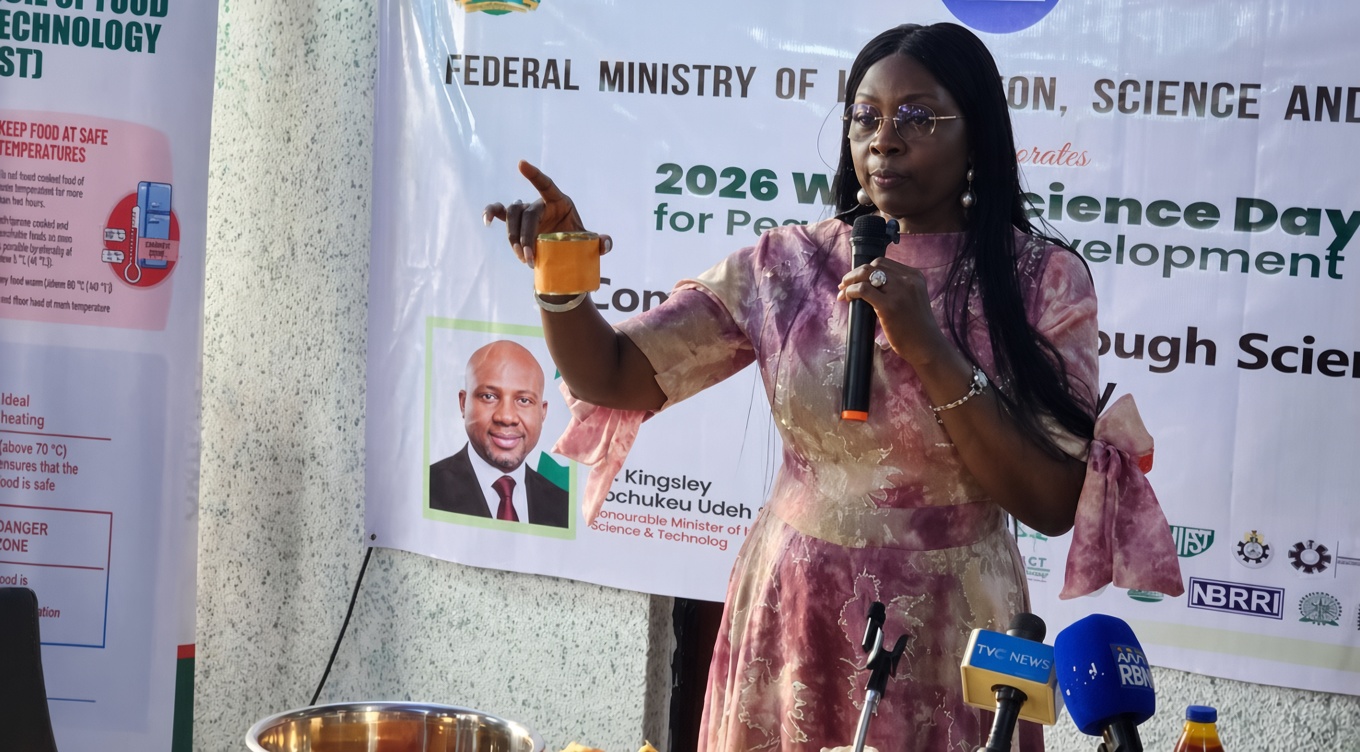
The Minister of Innovation, Science and Technology, Dr Kingsley Tochukwu Udeh, disclosed this on Tuesday in Abuja, warning that unsafe food had become a growing public health threat requiring urgent intervention and stricter enforcement.
He said the World Health Organisation (WHO) reported in June that 866 million people worldwide suffered foodborne illnesses in 2021, resulting in 1.52 million deaths, including 143,000 children under five. The global economic burden was estimated at $310 billion.
Udeh noted that unsafe food could cause more than 200 diseases, ranging from diarrhoea to cancer, citing recent tragedies in Nigeria, including the deaths of five family members in Kogi State in August after consuming fufu processed from cassava flour, and 49 fatalities in Ondo State in September linked to methanol-contaminated locally prepared alcoholic and herbal drinks.
The minister warned that the government would work with the Ministry of Justice and the Attorney-General to prosecute offenders involved in food contamination and adulteration, adding that convicted persons could face jail terms of between six months and two years.
Other News
He commended the Registrar of the Nigerian Council of Food Science and Technology (NiCFoST), Mrs Veronica Ezeh, for her efforts to rid the country of unsafe and adulterated food products.
Earlier in her address, Ezeh identified dangerous practices, including the use of calcium carbide to ripen fruits artificially, the application of dichlorvos, popularly known as Sniper, on beans and grains, the use of paracetamol to tenderise meat, the treatment of cassava with detergents and bleaching agents, and the adulteration of palm oil with the prohibited Sudan IV dye.
She warned that such practices could contribute to serious health conditions, including liver cirrhosis, kidney diseases, cancer and damage to other vital organs.
Ezeh said the government’s action plan included strict enforcement of Sections 243–245 of the Criminal Code Act, the creation of a Food Science and Technology professional cadre across federal, state and local governments, and the promotion of modern technologies for food safety.
Other measures include mandatory sealing and packaging of food products, stakeholder conferences, stronger collaboration among regulatory agencies and the adoption of NiCFoST’s Food Safety Procedure Manual, launched last year.
The registrar also called for the employment of more food science and technology professionals, insisting that the more than 3,000 graduates produced annually in the country should be engaged by the three tiers of government to strengthen food safety surveillance and enforcement.