Follow Us on Google

By Vera Wisdom-Bassey
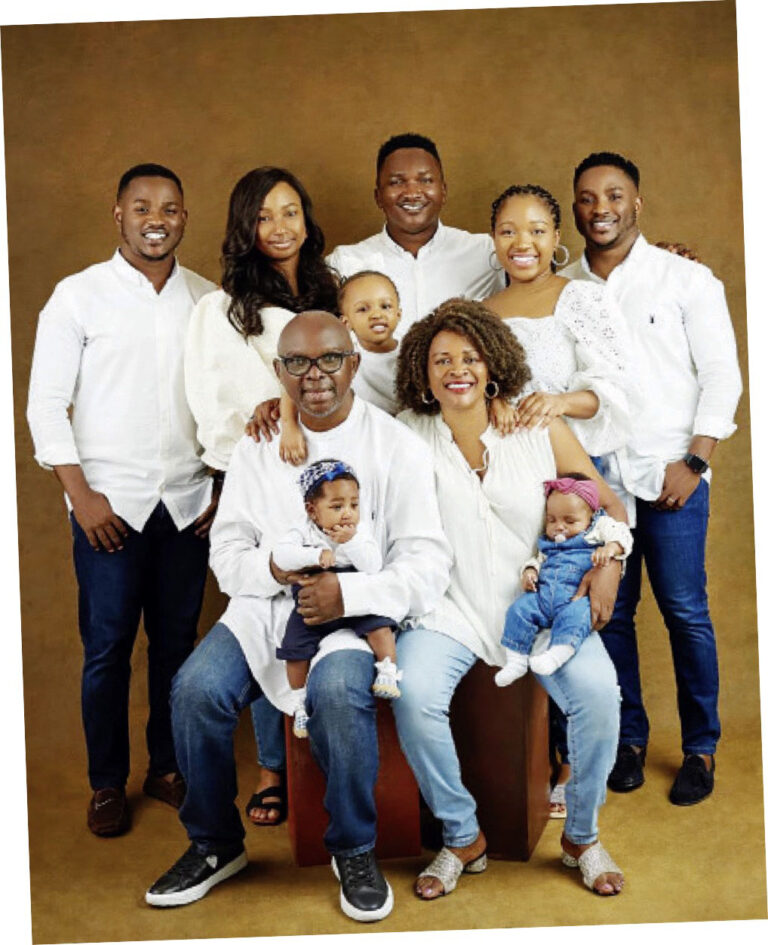
Christian Chukwuka, Founder and CEO of Abounding Grace Foundation, lived in Europe for 30 years before coming back home to engage in the business of ex-convicts rehabilitation. That was after he was released from a Swedish prison for a drug trafficking offence. A father of seven children from different women, he was sentenced to 15 years imprisonment. But he was released through a state pardon. This came after he had served for eight years. In this interview, he told the story of what really happened, how he found himself in jail and how he and his organisation have been helping other ex-prisoners to find their feet after serving out their jail terms.
You were in Europe for years. How did you come home to set up an office here in Nigeria?
I was in Europe for 30 years but because of the enormous work we saw in Nigeria especially among our youths, I decided to come home. They are completely out of order. Like them, I once messed up my life. I did all sorts of bad things like they are doing today. I want to use my own life story as a warning and an example to help them come out of errors.
Tell us the story of your life.
I was brought up in a very poor family. There was no money to send me to school. As a result, I struggled to survive. We are seven in the family; that is to say, my mother and father gave birth to seven of us. I was the fourth child. But I was the most stubborn or rebellious. I didn’t listen to my parents. This led me to join a bad gang which had no sense of direction. This act almost ruined my life. Before long I found myself in Europe.
What was life like with you while in Europe?
When I was there, I found out that with the kind of education that I had, I could not fit into the society. I had only primary six education but I could not go far in life with it
How did you get to Europe in the first place when you had only primary six education?
When I was living with my parents, I was quite young, they sent me to Cameroon to serve someone there as an apprentice. In the end, he did not settle me. I came back to my parents. They sent me to another person living in Maiduguri. He too did not settle me. I told my mum, that I had to find something doing. I told her that I was tired of serving other people. In 1984 she sold everything she had, including her jewellery and raised about N10, 000 for me to start life. Then it was a big money. I moved to Lagos and opened a business. With the help of friends and colleagues, I relocated to the Gambia. I would buy things from Nigeria and take to South Africa and go back to Gambia where I was based. But after a while, I found out I was not making the kind of money I wanted. Greed was there. I wanted to become a millionaire overnight. This desire pushed me to get a Gambian passport to travel to Europe to look for greener pastures. But getting the Gambian passport wasn’t easy. I had to sell my birthright, renounce my name and acquire a Muslim name before I could get a flight ticket to Sweden.
Tell us what happened when you eventually got to Sweden
While there, they wanted to deport me because they later found out that I was not a Gambian. They believed that I was a Nigerian and that my passport was a fraud. They called the Gambian Immigration office to confirm their suspicion. They said yes that I was a Nigerian before I naturalised as a Gambian national. That was how they allowed me to continue to stay there. But in Sweden, life was not what I expected. It was tough, so tough that I registered with the refugee camp in order to survive. I claimed that my father and mother were dead and that I had to one to help me. I told all kinds of lies. Yet this could not help me. From the camp, I went to look for an old woman to marry. She was 12 years older than I was. I brought her to Nigeria and we got married. That was how I got my papers and had my European citizenship. But after that, I went into the drug business, pushing cocaine from one part of the world to the other and making money from it. It was in the course of doing that, that I was arrested, tried and handed down 15 years imprisonment. But after eight years God showed me His mercy. I came out of that prison a changed person.
How?
There is something called parole. If you behave well they will give you pardon. But I wasn’t behaving well. I was doing all sorts of things while in prison. In my cell room I was watching pornography. We had laptops and videos and films. I still had that laptop with me till today. I was watching TV when something happened. An American preacher came up and it was as if he was talking to me. That was how everything about me changed. A few days later the prison authorities came into my room to tell me that the state had pardoned me. I thought it was a joke. But it wasn’t.
How did you start this work?
Later, God gave me the vision to help prisoners. That is was how I came back to Nigeria in 2013. It has been nine years now. These days I spend the greater part of my life in Ghana and South Africa helping prisoners to stop crimes.
How many prisons have you visited so far in Nigeria?
I have visited 225 but Nigeria has 246
What has been the impact?
Great impact, I would say. This is because we established skill acquisition centres in every prison we visited. We taught them carpentry work, hairdressing, soap making and barbing. We invest by teaching them vocational skills inside prison. When they come out, we engage them by getting workshops for them so that they don’t go back to crime.
I understand you people receive support or subvention from the government. How true is this?
No, the government does not support us. We have never sought government help. We don’t know how that works.
How do you raise funds then, especially for the skill acquisition centres you talked about?
Some prisons have halls. But they do not have tools, so we equip their halls and supply things like sewing machines. We also supply barbing tools in many places. Ours is a non-governmental organisation. Our friends in Europe support us financially. But when we exhaust the funds we have, we wait until another one comes in before we continue our work. The reason you were able to track down this interview is that the money with us had been exhausted. If not, we would have been somewhere in Sokoto or Maiduguri working. In these places, they are expecting us to come and help them because the prisoners need to be engaged with something to do. Otherwise, they would become restless and uncontrollable. We give them something to eat as well as tell them my story. We minister to them health-wise. We get doctors and nurses to treat them. We take care of babies born in prisons. We also take care of their mothers. What we do costs us a lot of money.
But have you made any attempt to let the government know what your organisation is doing, to get them to buy into it?
To be honest with you, I have sent several letters to some senators whose direct contacts I have. But they would read those letters and ignore them. I don’t want to mention their names. They don’t care. I have sent letters to three governors whose contacts I have. But they have not responded up till now. So, I don’t know how else to go about the matter. I even sent them videos of what we are doing to watch. I have over 70 workers and 70 per cent are Nigerians. There are governors, senators and members of the state’s House of Assembly who have heard of the noble work we are doing. But they don’t care. We’re looking for people to partner with us; we are an accountable organisation.
Could you compare Nigerian prisons or correctional centres with others you have been to abroad?
Nigerian prison is like being in hell. I have not been to hell. But I know that it must be a devastating place. I don’t intend to go there. But I know that Nigerian prisons are nothing to write home about. I have served in foreign prisons, and visited prisons in Ghana, Kenya, Liberia and South Africa. South African prisons are far better than Nigerian prisons. The only one I can compare it with is Swedish. In fact, with the exception of South Africa, all other African prisons are hell on earth. I have documentary evidence to prove this. They are like the ones in Haiti in the Caribbean.
Now, to the big question: how far can your organisation go to help ex-inmates get a handle on life after serving out their jail terms?
The problem we have is that we don’t have enough funds to establish them. But those who have learnt skills, we help to establish with between N300, 000 and N400, 000.
Is that a loan?
No. We give others up to N100, 000 depending on what they learnt. For those who were disciplined and behaved well while in prison, we spend a lot of money to rehabilitate them. We rent houses for them. It’s like where I am using now as an office. We rented it for one lady, an ex-convict from Edo State. We rent the place for N550, 000 because she had two children. But this is where we kept them before she got married. We unite many of them with their families. We give them something to live on. We do this in order to prevent them from going back to crime. Once they do so, we will never have a good society.
How do you spend your leisure hours?
I don’t have leisure hours because I spend most of my time in prison. I wake up at night and work. You can confirm these facts from my wife. That is why I have bats in my eyes. I hardly sleep. I edit my videos and do my graphics.
Where did you learn all these?
I studied them while in prison. Everything about me is self-education.
What can the government do to make our prisons true correctional centres?
The government should draw up a programme to reform ex-prisoners. They should give them a sense of belonging. They should create activities that would make them stop crime. They can give some assistance to what I am doing.