Follow Us on Google
• Explores implications for mutual learning between Nigeria and China
From Aidoghie Paulinus, Abuja
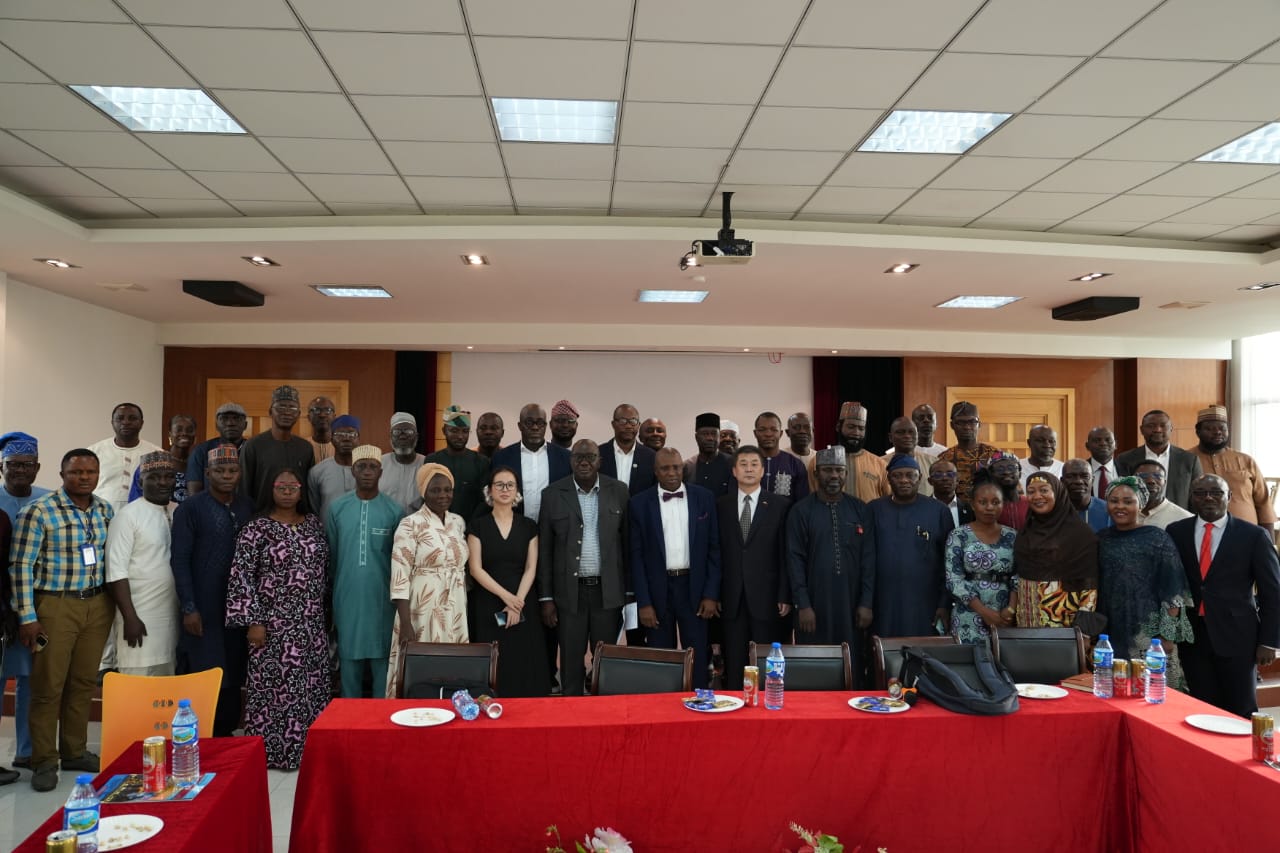
The Centre for China Studies (CCS), on Thursday, held a dialogue on the governance of China and knowledge sharing in Nigeria-China cooperation.
The roundtable dialogue also examined the implications for mutual learning between nationals of both countries.
Speaking during the dialogue, the Director of the Centre for China Studies, Charles Onunaiju, recalled that in September 2024, on the occasion of President Bola Ahmed Tinubu’s state visit to China and his participation in the Summit of the Forum on China-Africa Cooperation (FOCAC), Nigeria and China elevated bilateral cooperation and consequently established a “comprehensive strategic partnership” and committed to “building a high-level China-Nigeria community with a shared future”.
The two sides, Onunaiju said, issued a 19-point joint statement outlining cooperation and engagement across diverse fields, where they agreed not only to broaden and deepen the areas in which they are already active but also to accelerate the pace of cooperation and open fresh frontiers.
He also said President Tinubu, on his return from the state visit, established the Directorate of the Nigeria-China Strategic Partnership (NCSP) within the Presidency to provide strategic direction for the engagement, which is viewed as highly consequential among Nigeria’s international partnerships.
He stated that, earlier, Nigeria and the Chinese government had established an intergovernmental committee, a framework for coherent dialogue and consultations on all issues of mutual cooperation between the two countries.
Onunaiju further recalled that on May 1 this year, China’s zero-tariff treatment for all goods from the 53 African countries with diplomatic relations with Beijing took effect, opening a new vista for the structural transformation of economies in the region, historically burdened by single-commodity, monoculture economic structures.
He added that infrastructure development, agricultural modernisation, capacity building, industrial and production-capacity cooperation, trade and investment, as well as cultural and educational exchanges, are among the areas in which the two sides have made considerable progress.
“Knowledge and experience sharing, mutual learning, civilisation dialogues, and explorations of the histories, ideas and contemporary thinking of both sides are important frontiers that are open to further development in Nigeria-China bilateral cooperation.
Other News
“‘The Governance of China’ and ‘Selected Readings’, compendiums of the written and spoken works of the General Secretary of the Communist Party of China (CPC) and President of the People’s Republic of China, contain important perspectives on the contemporary governance of modern China.
“Against the ideologically motivated insinuations in the West that China’s governance is ‘opaque’ and ‘secretive’, these volumes, which have been translated into major languages across the world, actually place issues concerning the governance of modern China in the public domain.
“Highlights of these issues include theoretical exploration aimed at understanding the laws of social development and relating general principles to the specific context of a country’s social and historical conditions, with the implication that policy is not casually formulated. It is an intimate but rigorous process of interrogating and deconstructing reality with a determination to identify approaches that fit the historical and contemporary conditions of a particular country,” Onunaiju said.
Addressing the gathering, the Counsellor at the Embassy of the People’s Republic of China in Nigeria, Wang Jun, said that, as experts from universities, research institutions, intelligence bodies and systems who have long been dedicated to academic research and knowledge creation, the participants represented the very best of intellectual endeavour.
“On behalf of the Chinese Embassy in Nigeria, I extend warm congratulations on the successful hosting of this event and express my sincere appreciation for your active participation. The focus of today’s dialogue is Xi Jinping: The Governance of China series.
“This volume systematically articulates the core principles, essence and practical requirements of Xi Jinping Thought on Socialism with Chinese Characteristics for a New Era. It offers important windows into understanding the logic behind China’s development, governance and strategic innovation. For example, the concept of targeted poverty alleviation outlined in the books emphasises tailored measures for households and individuals.
“China has successfully lifted nearly 800 million rural residents out of poverty. This philosophy and methodology hold significant practical value for Nigeria and other African countries in their efforts to reduce poverty and promote inclusive development. Another key idea is the concept that lucid waters and lush mountains are invaluable assets.
“It stresses a balance between economic growth and environmental protection. This has enabled China to pursue a path of green, low-carbon and high-quality development while offering valuable insights for African countries seeking sustainable development during modernisation. President Xi Jinping has clearly stated that China is ready to share its governance experience with Africa and support every country in exploring development paths suited to their national conditions,” Wang said.
In his remarks, the Provost of the Anti-Corruption Academy of Nigeria and Director of the Centre for Contemporary China-Africa Research, Prof. Sheriff Ghali Ibrahim, said the two books by Chinese President Xi Jinping are collections of his speeches, writings and interviews.